The current vaccine schedule in the United States may not be optimal, the Food and Drug Administration’s top vaccine official said in a new interview.
The FDA is part of the Department of Health and Human Services (HHS). Another HHS division, the Centers for Disease Control and Prevention, sets the immunization schedule, which contains more vaccines and doses than many other countries, such as Denmark.
“I’ve seen some pundits claim that Denmark can get away with a different schedule because they’re a smaller country,” Prasad said. “That’s illogical. Denmark is connected to all of Europe. It would be like arguing that Boston could have a different vaccine schedule than the rest of the Eastern Seaboard if we made it its own nation.”
Monarez said she would only sign off on changes if she were presented with evidence backing them, and said she was not.
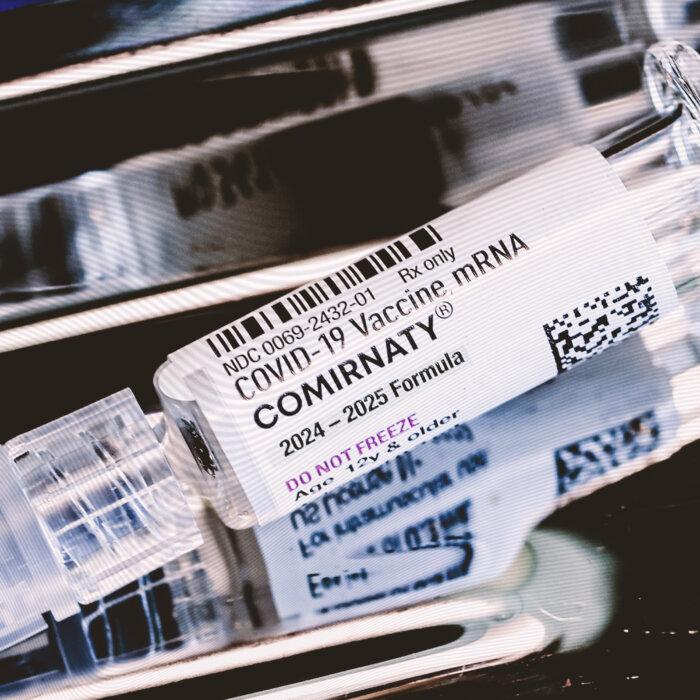

“The childhood vaccine schedule has been vetted and validated through science and evidence,” Monarez said.
If children receive vaccines when recommended by the schedule, they receive multiple shots across multiple visits.
“I think the president has a deeper point about the evidence to support combination and concomitant administration. By background, combination vaccines combine two or more into a single vial or shot, while concomitant administration means administering two or more at the same visit. Historically, FDA has had stronger levels of evidence for combination than concomitant administration, but that is changing,” Prasad told the Free Press.
Measles, Hepatitis B Vaccines
Trump also proposed delaying the hepatitis B vaccine, which is currently on the immunization schedule at three doses in early childhood, or two doses for adolescents, and taking separate vaccines against measles, mumps, rubella, and chickenpox rather than combination vaccines.“I think the president is 100 percent correct that it is prudent to take the chickenpox shot separately,” Prasad said.
He said that Trump and the Advisory Committee on Immunization Practices (ACIP) were right to question whether hepatitis B shots should be administered to babies born to mothers who tested negative for hepatitis B, noting that some other countries do not give the vaccine to such children.
Trump’s comments drew criticism from some, including the American Academy of Pediatrics.
Prasad said that Trump was offering personal advice and not trying to compel anyone to follow that advice. When asked whether Trump’s comments would drive vaccine hesitancy, Prasad said people are getting fewer vaccines due to the imposition of COVID-19 vaccine mandates during the pandemic.
“We will have more vaccine hesitancy for a generation. The president’s comments are not the driver of what we are seeing,” he said.
“The FDA is steadfast in its commitment to rigorous, gold-standard science in the approval of vaccines, ensuring that every decision reflects the highest standards of safety and effectiveness. Science requires continual review and adaptation; when health recommendations become outdated or no longer align with the latest evidence, it is the responsibility of public health officials to make the necessary changes,” an HHS spokesperson told The Epoch Times in an email on Wednesday.
“Dr. Prasad’s comments underscore the open-mindedness that true gold-standard science demands, and that the health of our citizens depends upon. At this time, HHS and FDA cannot comment on potential future policy changes.”