Texas Governor Signs Law Requiring Warning Labels on Some Foods

Companies making products with certain additives must include a warning label starting in 2027 disclosing the inclusion of the additives.
Texas Governor Signs Law Requiring Warning Labels on Some Foods
A woman looks at products in the aisle of a store in Waco, Texas, in a file photograph. Tony Gutierrez/AP Photo
Zachary Stieber
Zachary Stieber
Senior Reporter
|Updated:
0:00

Texas is requiring companies to add warning labels to some foods, under a bill signed into law by Gov. Greg Abbott.

The Texas Make America Healthy Again (MAHA) legislation, modeled on federal MAHA efforts led by Health Secretary Robert F. Kennedy Jr., mandates companies making products with certain additives, such as the artificial dye citrus red 2, include a warning label starting in 2027 disclosing the inclusion of the additives.
Other additives include potassium bromate, which is in many breads; titanium dioxide, used as a whitening agent in candies and other products; and additional dyes such as green 3.

The label must state that “this product contains an ingredient that is not recommended for human consumption by the appropriate authority in Australia, Canada, the European Union, or the United Kingdom.”
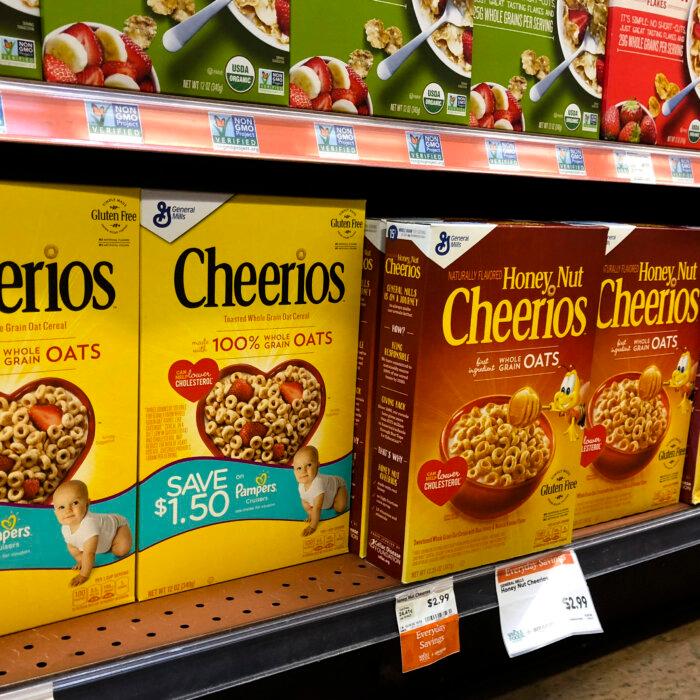
The requirement means “consumers are informed and can make better choices for their families,” state Sen. Lois Kolkhorst, a Republican who sponsored the bill, wrote on social media platform X.
The U.S. Food and Drug Administration previously allowed companies to use nine of these artificial dyes. It has since banned three, including red 2, and is working with firms to stop using the other six.
Artificial dyes have been linked to issues such as increased hyperactivity in children.

Some on List Allowed

The full list contains 44 additives. Some, such as blue dye No. 1 and butylated hydroxytoluene, are allowed in Australia, Canada, the European Union, and the United Kingdom, according to the Consumer Brands Association, a food industry trade group, and Thomas Galligan, a scientist with the Center for Science in the Public Interest.

“I don’t know how the list of chemicals was constructed,” Galligan said. “Warnings have to be accurate in order to be legal.”

Kolkhorst did not respond to requests for comment.

In addition, the legislation contains regulatory loopholes that could prevent certain ingredients from being labeled at all, said Melanie Benesh, an analyst with the Environmental Working Group, an activist organization that focuses on toxic chemicals. For example, the food additive azodicarbonamide, known as ADA and used as a bleaching agent in cereal flours, on the Texas list, can be used in food under certain conditions, per the Federal Code of Regulations. That likely exempts ADA from the state law, according to Benesh.

Still, nutrition experts said that the bill was a welcome development.

“This represents a big win for Texas consumers and consumers overall,” said Brian Ronholm, director of food policy for Consumer Reports. “It’s a reflection of states not wanting to wait for the federal government to act.”

The Associated Press contributed to this report.
Google LogoMark Us Preferred on Google
Zachary Stieber
Zachary Stieber
Senior Reporter
Zachary Stieber is a senior reporter for The Epoch Times based in Maryland. He covers U.S. and world news. Contact Zachary at [email protected]
twitter
truth