Texas’s election review identified 2,724 individuals on the voter registration list who lack proof of citizenship.
Texas Secretary of State Jane Nelson said on Oct. 20 that a comparison of Texas’s 18 million registered voters against the U.S. Citizenship and Immigration Services’ SAVE database reveals “2,724 potential noncitizens who are registered to vote in Texas.”
The alleged non-citizen voters will receive a notice from their county and be offered an opportunity to dispute their removal by presenting proof of citizenship to remain a registered voter. If no response is received within 30 days, the registration will be canceled.
The county breakdown of the review released by the Secretary of State’s office showed that Harris County, which holds major parts of Houston, had the most problematic voters, with 362 found. Dallas County wasn’t far behind, with 277, while Bexar County, home to San Antonio, had 201, and El Paso County had 165.

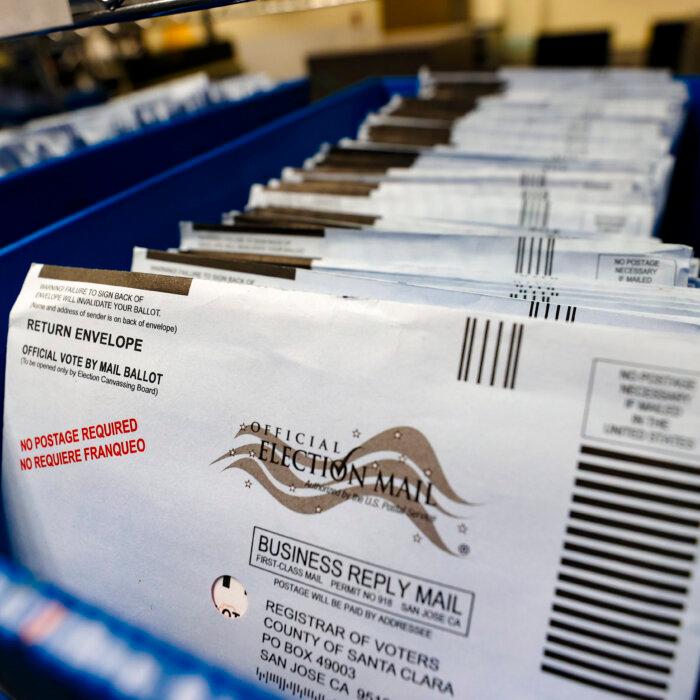
The August 2024 announcement stated that the removals included those who moved out of state, are deceased, or are noncitizens.
The state has also recently been engaged in mid-decade redistricting, which caused conflict between state lawmakers.
Abbott signed the “One Big Beautiful Map” into law on Aug. 29, which could flip as many as five U.S. House seats in favor of Republicans, after the Department of Justice suggested earlier this year that some of the state’s Democratic districts were unconstitutionally drawn and had to be revised.
This move was hotly contested by Democrats in the State House, who accused Republicans of gerrymandering. Many Democratic state lawmakers left the state in protest to prevent, at least for a while, the approval of the map.
Rep. Lloyd Doggett (D-Texas) retired after the redistricting kerfuffle.
Of the more than a million voters who were removed last year, more than 6,500 were found to be non-citizens, and another 6,000 were voters found to have felony convictions. In Texas, those convicted of felonies lose their right to vote while incarcerated, on parole, or on probation.
At the time of the removal, the governor stated, “Illegal voting in Texas will never be tolerated. We will continue to actively safeguard Texans’ sacred right to vote while also aggressively protecting our elections from illegal voting.”
The governor also noted that the Secretary of State and county voter registrars have an “ongoing legal requirement” to review voter rolls and remove those ineligible to vote.
By far, the largest groups in the mass removal were deceased individuals, who made up more than 450,000 of the removed voters, and the more than 460,000 who were already on the Texas “suspended” voter list, due to an issue like an unverified address.
“Everyone’s right to vote is sacred and must be protected,” Nelson said in her press release. “The SAVE database has proven to be a critically important data set and one of many that we will continue to use in Texas to ensure that only qualified voters cast a ballot in our elections.”