A survey of U.S. industry leaders published on June 21 found America holds advantages in commercialization, funding, and talent in biomedical science, but China has surpassed the United States in the number of clinical drug trials.
The survey, released on Monday at the Biotechnology Innovation Organization (BIO) meeting in San Diego, polled 117 senior figures from industry and academia.
Respondents saw China ahead in clinical development and supply chains. The two countries were viewed as roughly equal in scientific discovery, while the United States was seen as stronger in scaling production, attracting capital, and bringing medicines to market.
“The U.S. is still leading, but confidence is eroding,” Seema Kumar, chief executive of healthcare innovation group Cure, said. Most respondents viewed China as “an existential threat.”
Kumar said the United States retained a key advantage because it remained the world’s largest healthcare market.
“Commercialization is America’s superpower,” she said. “The buyer is in the U.S.”
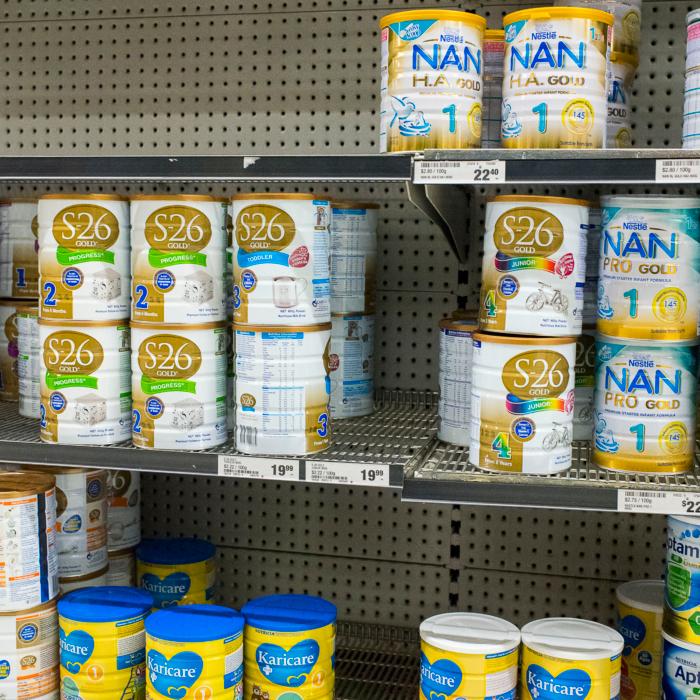

According to IQVIA data, the United States accounted for 53 percent of the global pharmaceutical market in 2025, up from 49 percent in 2021.
Drugmakers have increasingly turned to China for experimental medicines, drawn by lower developmental costs and faster trial processes that have helped attract international licensing deals.
A Georgetown University study published in March found the U.S. share of early-stage drug development programs fell from about 48 percent in 2015 to just over 37 percent in 2024. China’s share rose from 8 percent to more than 32 percent over the same period.
The survey found respondents were more concerned about cuts to U.S. research funding than competition from China. Kumar said continued investment in the National Institutes of Health and modern clinical infrastructure would be needed to maintain the country’s position.
The findings came on the same day the Department of Health and Human Services announced Operation TrialBlazer, an initiative aimed at speeding up clinical trials and strengthening U.S. competitiveness.
Concerns over China’s growing biotechnology sector have intensified in recent years. In 2023, the National Security Commission on Emerging Biotechnology issued interim findings warning that China was building an integrated biotech ecosystem.
A follow-up report in December 2025 said Beijing had developed capabilities that could challenge U.S. leadership unless Washington accelerated investment and reforms.
The issue has become a recurring theme at recent BIO meetings, where industry executives and policymakers have focused on supply chains, research funding, and the ability to turn scientific discoveries into commercial products.
Congress has also taken steps to reduce dependence on some overseas biotechnology suppliers. The BIOSECURE Act, signed into law by President Donald Trump last year, restricts federal dealings involving certain biotechnology companies viewed as national security risks.
Despite growing competition, the survey suggested respondents still viewed the United States as the leading biotechnology power, though many believed that advantage could narrow within the next decade.