Supreme Court justices on June 29 declined to hear an appeal of a ruling that upheld New York state’s not allowing religious exemptions for its mandate that healthcare workers take COVID-19 vaccines.
Six of nine justices declined to consider the case. They did not say why.
At least four justices must agree to review an appeal for it to move forward.
Justice Neil Gorsuch, joined by Justices Clarence Thomas and Samuel Alito, said the court should have reviewed the case.
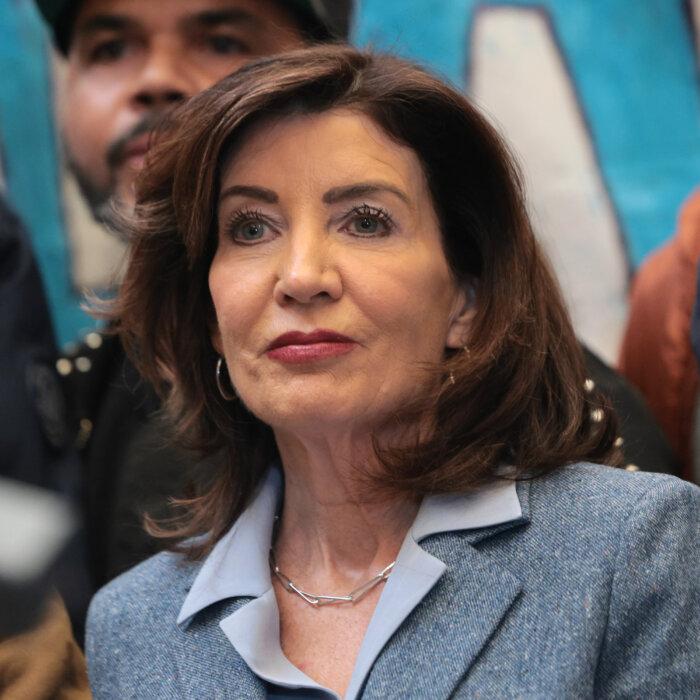
New York state’s COVID-19 vaccine mandate for healthcare workers originally included exemptions on medical or religious grounds. But when New York Gov. Kathy Hochul became governor, she rescinded religious exemptions, leading to the termination of a number of workers, some of whom lodged a lawsuit against the state and their former employers.
A federal judge ruled against the plaintiffs. The U.S. Court of Appeals for the Second Circuit then concluded that even though the plaintiffs may have plausibly alleged violations of employee rights under the Civil Rights Act, it needed to uphold the lower court decision because granting religious exemptions “would have required the Private Defendants to violate the state regulation” and, in turn, would have subjected the employers to financial penalties or suspensions of their operating licenses.
Under Title VII of the Civil Rights Act, employers do not need to offer reasonable accommodation for an employee’s religious views if doing so would cause the employers to face “an undue hardship,” and such a hardship was faced because of the potential violation of state law and the repercussions that would follow, the appeals court stated.
Gorsuch said he has doubts about the appeals court posture, which applies even if the law in question is unconstitutional.
“It seems to me that state law cannot control whether an employer faces an ‘undue hardship’ for purposes of federal antidiscrimination laws, just like it cannot conclusively resolve what constitutes a ’reasonable accommodation‘ or which criteria are ’necessary' for admission to a public accommodation,” he wrote.
“To hold otherwise would appear to leave States free to strip individuals of the protections guaranteed by so many federal civil rights statutes ... all by the simple expedient of proscribing accommodations those statutes promise. Rather than federal civil rights laws standing supreme over contrary state law, they would more nearly bow before it.”
Lawyers for defendants did not respond to a request for comment by the time of publication.
“This is a simple case that the court should take up because it presents a recurring and ongoing issue where state law, even unconstitutional as this one is, can be used to trump federal law,” Mat Staver, founder and chairman of Liberty Counsel, who has been representing the plaintiffs, told The Epoch Times.
“It’s a tragedy that the court didn’t take this case to remedy this unconstitutional law and a terrible decision by the court of appeals.”