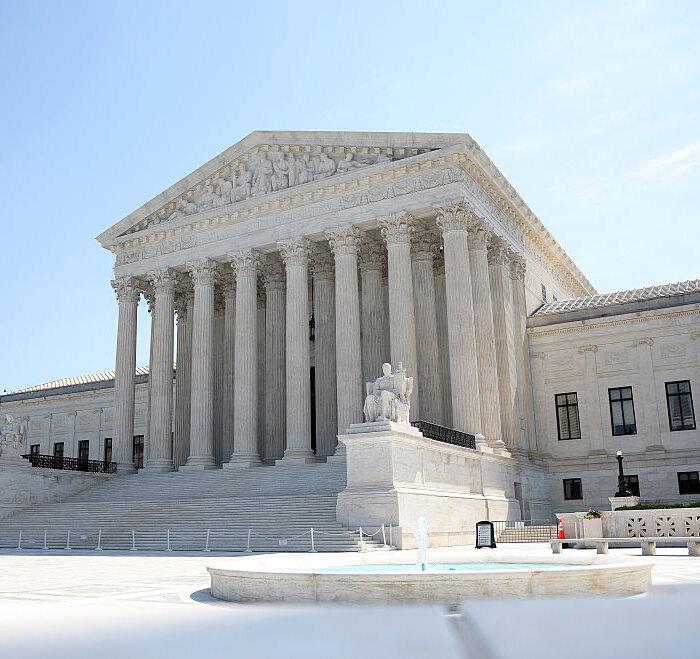
The U.S. Supreme Court agreed on June 30 to hear the case of an Orthodox Jew in Ohio who alleged that city officials prohibited him from hosting a prayer gathering at his home without a special permit.
Daniel Grand filed the lawsuit against the city of University Heights, Ohio, after city officials issued him a cease-and-desist letter when he invited a dozen of friends to his home for a prayer gathering in January 2021.
According to the lawsuit, city officials told Grand that he needed to obtain a special use permit, which the city requires for houses of worship in residential districts, before he could host the prayer gathering.
To comply with the requirement, Grand canceled his prayer gathering and applied for the permit. But he later withdrew his application after learning that obtaining the permit would require him to convert his home into a house of worship, which means he could no longer live there. Some neighbors also opposed Grand’s permit application.
Grand alleged that, after he withdrew his application, city officials targeted him by having police patrol his house and city prosecutors investigate him for alleged “housing code violations.” He said the city withheld his certificate of occupancy and tax abatements, while sanitation workers regularly failed to collect his trash.
City officials also allegedly asked his neighbors to monitor his home and report any activities consistent with those of a house of assembly, according to the lawsuit.
In a brief filed in May, Grand’s lawyers argued that the city’s actions were unconstitutional and amounted to discrimination based on religion.
“If Grand’s next-door neighbor invited nine friends over for a weekly poker night or a Tupperware party, the City would not require a special permit to operate a ‘casino’ or ‘storefront.’ The City targets only Grand’s religious practice,” his lawyers said.
A federal district court had previously dismissed the lawsuit, ruling that it could not proceed until Grand completed the permitting process. The ruling was also upheld by an appellate court.
The Supreme Court’s recent approval to hear the case allows it to move forward.
John Bursch, senior counsel at the Alliance Defending Freedom, which represents Grand in the lawsuit, welcomed the Supreme Court’s decision to take up the case.
“Every American has the right to host a prayer gathering in his home, and he certainly doesn’t need a city permit to do so. When government officials forbid that, courts must hold those individuals accountable, immediately,” Bursch said in a statement on June 30.
The Epoch Times reached out to the city of University Heights for comment but did not receive a response by publication time.