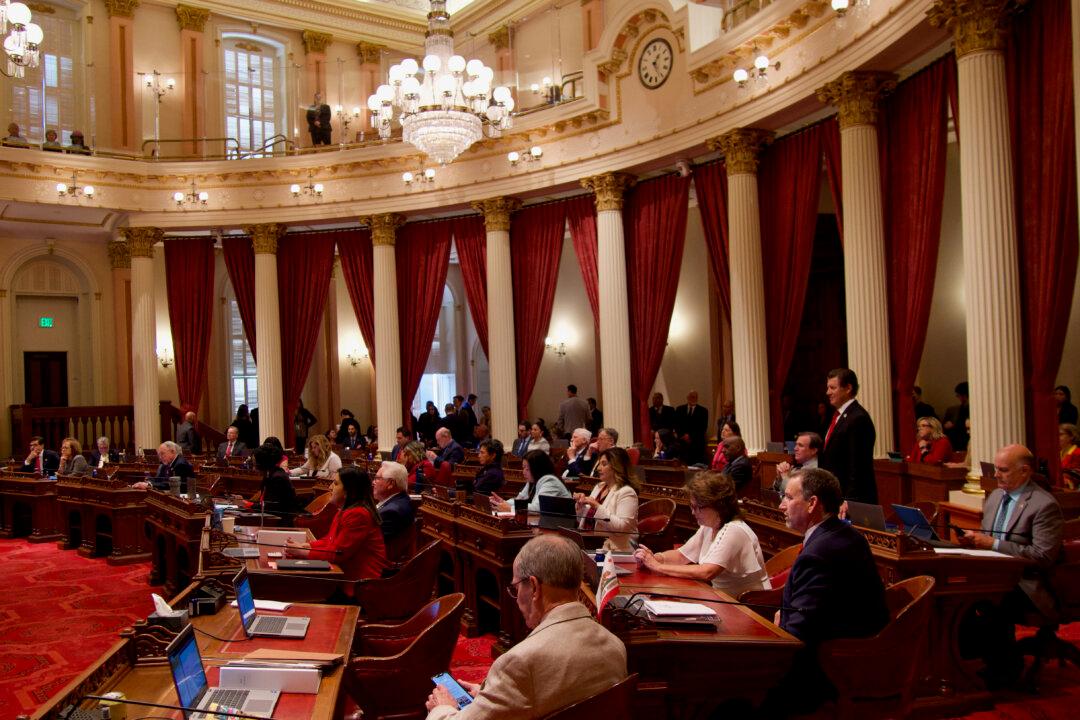
California is likely to face persistent future budget deficits, according to the state’s Legislative Analyst’s Office (LAO), which flagged concerns to state leaders in recent reports.
The independent government agency recommended that the state Legislature at least adopt the governor’s proposed solutions in addressing long-term structural deficits.
The LAO said that using independent analysis models, it reached conclusions similar to those of the California Department of Finance: Both projected the state’s operating deficits to range from $10 billion to $20 billion over this fiscal year and the next two.
With a budget of more than $300 billion, a shortfall of $10 billion to $20 billion is considered a moderate deficit, Ann Hollingshead, principal fiscal and policy analyst for the LAO, told The Epoch Times.
The concern, she said, is more on “the fact that they’ve been persistent” than “the size of the deficit.”
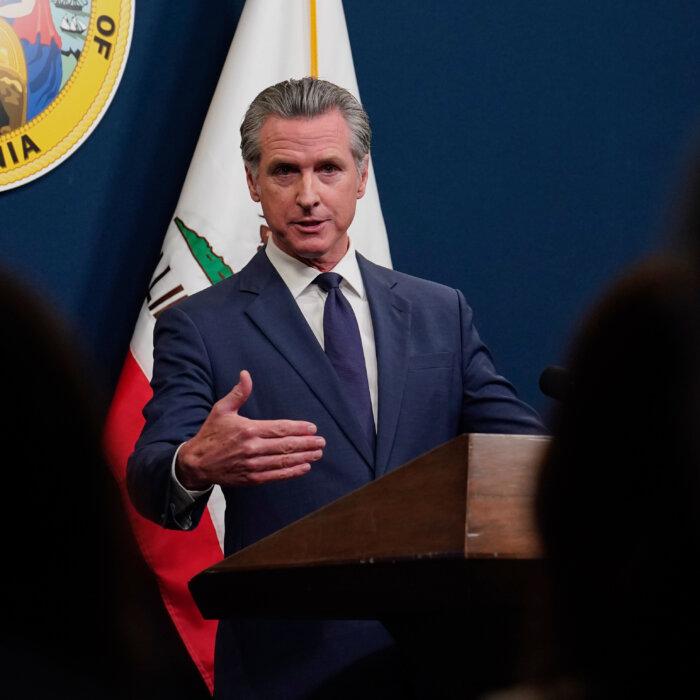
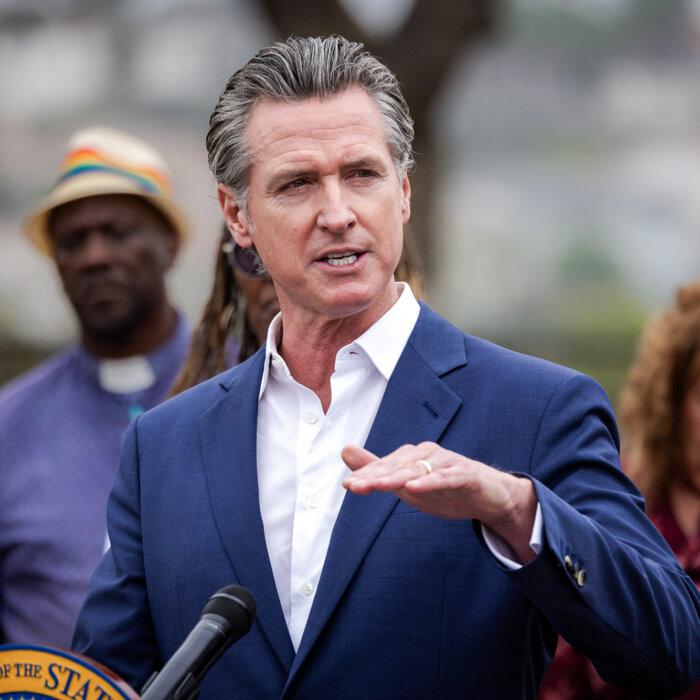
“We’ve seen budget problems kind of consistently in our forecasts over the last few years, so that is something that we’re flagging for the Legislature,” she said. “We would call attention to the persistence of the budget problems.”
Hollingshead said a structural deficit is not a one-time issue but an ongoing and “persistent gap” between spending and revenue, “such that the budget problem is expected to recur year after year unless the state takes more different actions to bring the budget back into alignment.”
“The state’s persistent imbalance and the added downside risks—particularly from potential federal actions—suggest a need for a more proactive approach. As such, we view the governor’s focus on reducing multiyear spending as a reasonable and appropriate step,” LAO’s May 17 report stated. “We recommend the Legislature adopt a similar level of ongoing budget solutions in its final budget package.”
In the revised $322 billion budget, Newsom proposed ongoing cuts to Medi-Cal and some other programs through future years such that, by 2027–2028, an $11 billion cut from Medi-Cal would constitute two-thirds of the $16.3 billion reduction in total, according to the LAO.
Another major effort to reduce outlays is a shift of nearly $2 billion of California Department of Forestry and Fire Protection costs from the General Fund to the Greenhouse Gas Reduction Fund, according to the LAO.
The LAO outlook report indicated that Medi-Cal constitutes the second biggest budget item, just after schools and community colleges, which the budget leaves largely uncut.
Hollingshead said that different programs in the state budget have different degrees of flexibility in making reductions.
For example, she said, spending on schools and community colleges is governed by the rules of Proposition 98, which was passed by voters. The Legislature accordingly has a lot less flexibility to make ongoing reductions to schools and community colleges to address the budget problem, whereas with other programs, for example universities, there is a lot more flexibility.
“The state is going to need to address that budget deficit through various actions,” Hollingshead said. “Some of those actions may have more or less consequences on California taxpayers and on California residents, depending on how the Legislature makes those decisions.”
LAO said in its report that future budget problems are likely to become more difficult to solve.
“Shortfalls will become increasingly difficult to solve over time because, naturally, policymakers intuitively would first use the least disruptive solutions,” Hollingshead said. “What’s going to happen is that the state is going to run out of some of these less difficult choices, then need to turn to some of the more difficult choices down the line.”
The LAO also suggested that the Legislature “could choose to lessen spending reductions by raising revenues,” but would have to weigh many questions, such as: “How will taxpayers respond to additional costs created by the state and how consequential are those responses?” and “Should additional resources be redistributed from those with more to those with less?”