WASHINGTON—Virginia will hold an election on Nov. 4 to choose its 75th governor. The incumbent, Glenn Youngkin, is ineligible for reelection. It is one of two open-seat gubernatorial elections this year, the other being in New Jersey.
Virginia’s election has always been unique, as it occurs one year after the quadrennial U.S. presidential election. The incumbent president’s popularity always affects his party’s reputation, which makes it a factor in the gubernatorial race. Moreover, because of Virginia’s proximity to Washington, D.C., and heavy population of federal workers, contractors, and military personnel, the state of national politics has an outsized effect on Virginia voters. Thus, the race is often a way to gauge voters’ satisfaction with the presidential administration.
This year, for the first time, two women are the major party nominees, meaning the winner will become the first female governor of Virginia. Four years ago, Youngkin as a political novice won the race against former Gov. Terry McAuliffe (D-Va.) based on promises about education policy and dissatisfaction with President Joe Biden. This year, similar issues are atop voters’ minds and candidates’ arguments to win.
Winsome Earle-Sears
Earle-Sears (R), 61, is the 42nd lieutenant governor of Virginia, elected in 2021 alongside Youngkin, and is the Republican nominee. She is the first woman to have occupied that post. If elected, she would make history as the first black woman elected to serve as the governor of any U.S. state.Earle-Sears was born in Jamaica and immigrated to the United States in 1970 at age 6. She was raised in The Bronx borough of New York City, and after school, enlisted in the U.S. Marine Corps, where she served as an electrician from 1983 to 1986. Later, she moved to Virginia and attended several of its universities.
Her political career began in 2001, when in an upset she was elected to the Virginia House of Delegates against a 20-year incumbent, representing the 90th District that covers Norfolk and Virginia Beach. At the time, she became the first naturalized U.S. citizen member in the history of the body, which had existed since 1776 when Virginia declared independence during the American Revolution.
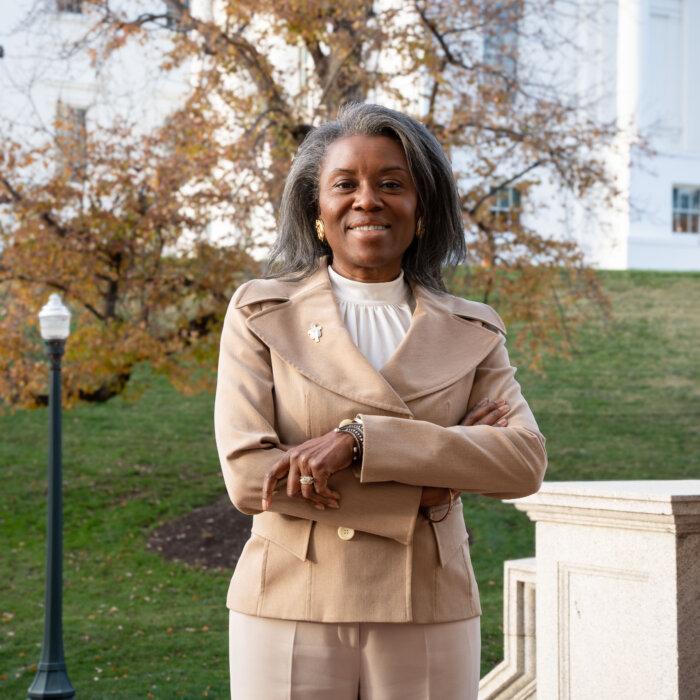
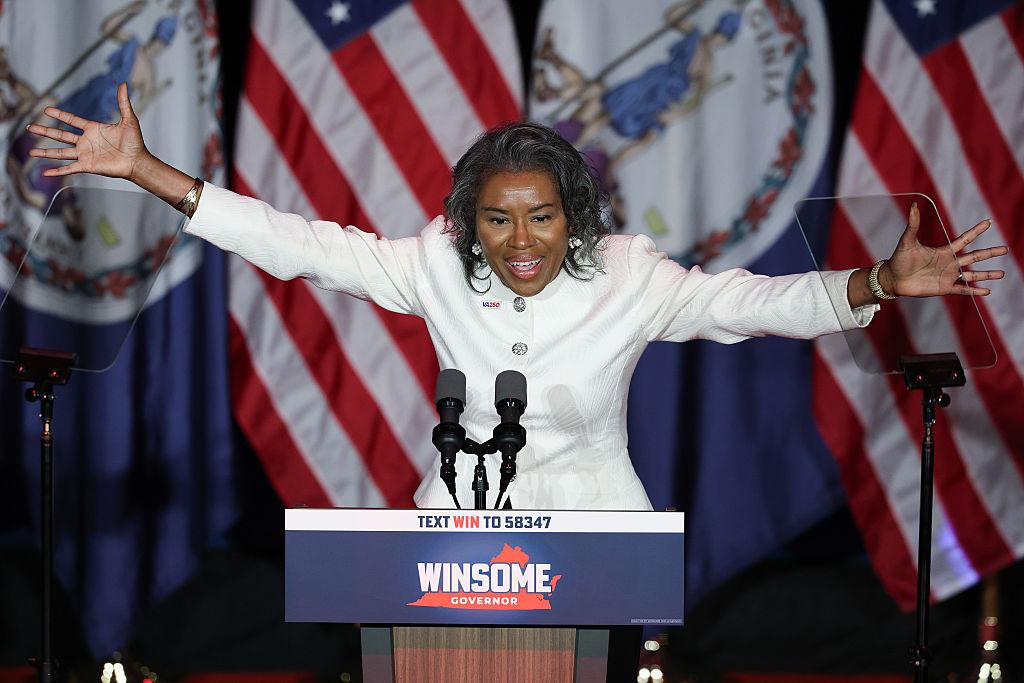
She served only one term, however, and ran for the U.S. House of Representatives from Virginia’s Third District in 2004 but lost. Earle-Sears’s next election came in 2021, when she was elected alongside Youngkin and state Attorney General Jason Miyares (R), during a year when Republicans made a clean sweep of Virginia’s top three statewide offices.
Earle-Sears won the Republican nomination unopposed after two opponents failed to garner enough signatures from voters to mount campaigns against her. She is running on the Youngkin administration’s record, as well as promises to cut the cost of living, end the state’s “car tax,” and defend the state’s “right-to-work” law that prevents unionization.
“[I] helped Governor Youngkin lower taxes and improve education,” said Earle-Sears in her principal campaign advertisement video.
Abigail Spanberger
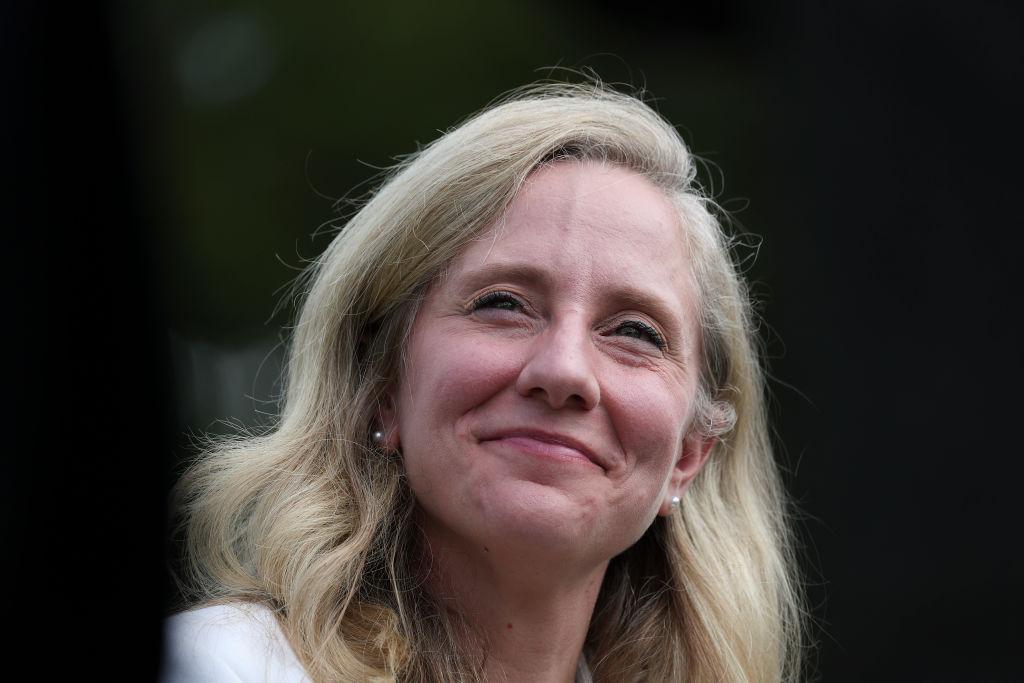
Spanberger, 45, served in the U.S. House of Representatives from 2019 to 2025, representing Virginia’s Seventh District, which covers exurban areas southeast of Washington, D.C. During the 2018 congressional election, when Democrats won a large majority in the House of Representatives, she unseated then-Rep. Dave Brat (R-Va.), who became famous for unseating House Majority Leader Eric Cantor (R) in 2014.After graduating from the University of Virginia, Spanberger was a federal law enforcement officer for the U.S. Postal Inspection Service, with the rank of postal inspector. Later, she joined the CIA as an “operations officer” from 2006 to 2014. Spanberger announced her candidacy for the Seventh District in 2017 and won the primary contest for the 2018 election with 73 percent of the vote.
Spanberger began her campaign for governor in 2023, which cleared the Democratic field of likely challengers. Rather than remain in Congress by running in 2024, Spanberger announced that she would retire, focusing full-time on the gubernatorial race. She was nominated without opposition in the Democratic Party’s primary contest.