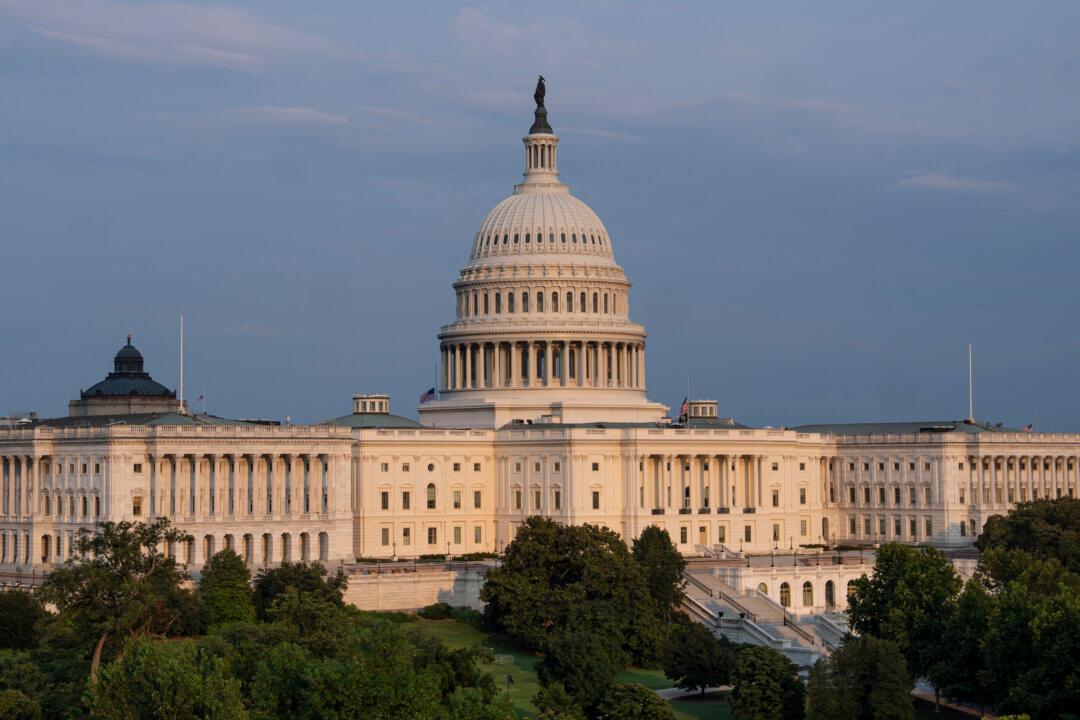
No vote was taken on the Protect College Sports Act during the Senate’s all-night session that ended Saturday.
The bill will now have to wait until the Senate returns from its August recess on Sept. 14.
“College sports is something that needs to be fixed,“ Senate Majority Leader John Thune (R-S.D.) said on Aug. 8. “They have a good solution. We got it teed up for next month.”
The Protect College Sports Act would prohibit colleges, athletic conferences, and organizations such as the National Collegiate Athletic Association (NCAA) from generally preventing athletes from entering into name, image, and likeness agreements. Athletes would be required to report name, image, and likeness compensation exceeding $600 to their schools.
Sports agents representing college athletes would have to register with a state. The bill would also limit the fees agents could collect from endorsement contracts to 5 percent.
Athletes would be allowed to transfer to another school once without losing athletic eligibility. The legislation would also prevent football personnel from leaving one school during a season to become the head football coach at another institution during that same season.

The bill would make permanent the limit on how much revenue schools can share directly with athletes established by the court-approved settlement in the House v. NCAA litigation. That limit would be adjusted annually for inflation. Schools, conferences, and affiliated organizations would be prohibited from using other compensation arrangements to circumvent the limit.
The legislation would also provide a limited antitrust exemption allowing schools and conferences, under certain conditions, to jointly sell college sports television rights.
University of Tennessee Chancellor Donde Plowman, chair of the presidents and chancellors of the Southeastern Conference, issue a statement in support of the Protect College Sports Act on July 20.
Plowman said the current lack of clear national standards and consistent rules was “unsustainable.”
“We applaud how the language we have seen so far addresses important issues including transfer rules and eligibility,” Plowman said in a statement. “That means student-athletes would not be able to transfer every year, putting their educations and team dynamics at risk - or toggle back and forth between professional teams and university teams with no intention of getting a degree.”
The Congressional Black Caucus released a statement Aug. 6 opposing the bill and Congress for considering it.
“[Congress] is assigning authority to various entities across this growing industry and establishing rules that will shape earning opportunities, representation, and long-term economic mobility for generations of Black athletes,” the statement said.
“Those issues cannot be separated. Black athletes have transformed college athletics into one of the most successful enterprises in America. Yet the people most affected by this legislation have not been meaningfully included in shaping it.”
Indiana Attorney General Todd Rokita and five other state attorneys general warned that the Protect College Sports Act could inadvertently override state laws that protect girl’s and women’s sports from including males.
They sent an Aug. 7 letter asking Congress to amend the bill to explicitly protect those laws from the legislation’s provisions preempting certain state regulations.
The concern is that the bill establishes federal rules governing college-athlete eligibility and also says certain state laws that conflict with those rules are preempted. The attorneys general fear a court could interpret that language broadly and conclude that state laws restricting women’s sports to females can be overridden by the new federal law.