The Senate Judiciary Committee on June 5 started the confirmation process for President Donald Trump’s judicial nominees, after confirming more than 200 of Trump’s nominees during his first term.
Senators questioned five nominees, beginning with Whitney Hermandorfer, a former clerk to U.S. Supreme Court Justices Brett Kavanaugh, Samuel Alito, and Amy Coney Barrett, during a hearing in Washington.
Republican senators said Hermandorfer, 37, is well-qualified to serve on the U.S. Court of Appeals for the Sixth Circuit. Sen. Chuck Grassley (R-Iowa) said in his opening remarks that she is “uniquely impressive,” in part because of her stints as a clerk for the justices.
Democrats, on the other hand, expressed doubt about the nominee’s qualifications.
“I am concerned about the striking brevity of your professional record. You graduated from law school just a decade ago, and you spent four years with impressive clerkships, but often nominees for a position such as the circuit have real experience in court,” Sen. Chris Coons (D-Del.) said.
Hermandorfer said that she has not been involved in bench trials, has never carried out a direct examination in court, and has not participated in depositions. She has presented arguments on four occasions to federal appellate courts, and has been involved in several cases that reached the U.S. Supreme Court. In total, she estimated that she has been counsel in 80 to 90 cases across state and federal courts.
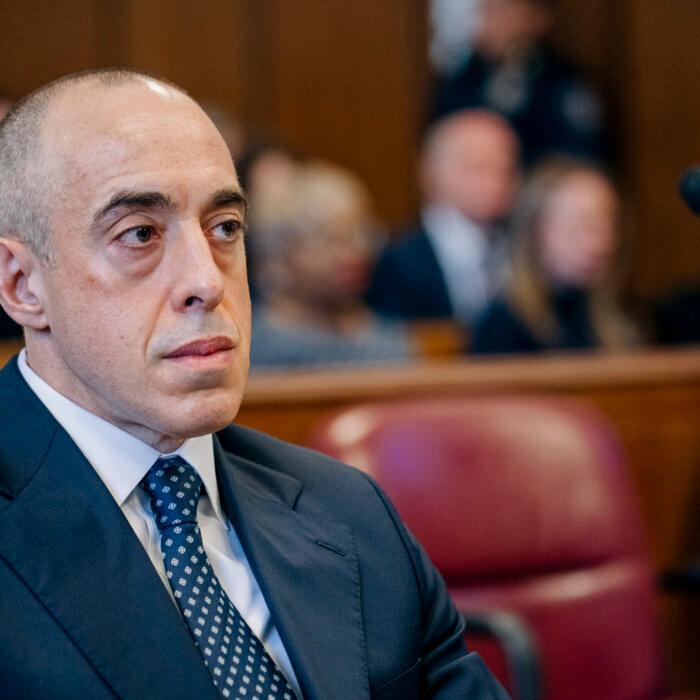
“The cases have come fast and furiously, and I’ve been privileged to handle a number of nationally significant matters on behalf of my home state of Tennessee, as well as many other states,” Hermandorfer said.
“That sounds like quite a bit of experience,” Sen. Josh Hawley (R-Mo.) said.
Hermandorfer has worked for the Tennessee Office of Attorney General since 2023.
The brief said that various sources indicate “conferring United States citizenship requires a more meaningful connection than mere presence by happenstance or illegality.”
“The brief did not take an ultimate position with regard to the merits of the executive order,” Hermandorfer told senators. “What it did was say the notion that this is an open and shut case is hard to square with the contemporaneous evidence and Executive Branch practice in the latter 1800s interpreting the meaning of the Citizenship Clause, and so I stand by completely those arguments and the historical sources that we advance to the court.”
President Donald Trump has announced 12 judicial nominations since taking office in January. There are 49 vacancies in the federal court system as of June 5.
The president makes judicial nominations, and the Senate decides whether to approve them. Senate Judiciary Committee hearings are the first formal step. The panel will later vote on each nomination. A simple majority advances a nomination to the full Senate. The upper chamber is currently controlled by Republicans, so the committee has 12 Republicans and 10 Democrats.
Later on Wednesday, the panel heard from four other Trump judicial nominees: Zachary Bluestone, who works for the U.S. Attorney’s Office for the Eastern District of Missouri; Joshua Divine and Maria Ann Lanahan, who work for the Missouri Office of Attorney General; and Cristian Stevens, a Missouri appeals court judge. All four have been nominated to be U.S. district judges in Missouri.