
The U.S. Senate, a day after passing a resolution to halt U.S. military action in the conflict with Iran, has voted not to pass a similar war powers measure.
The late-night June 24 vote was 47–50–1.
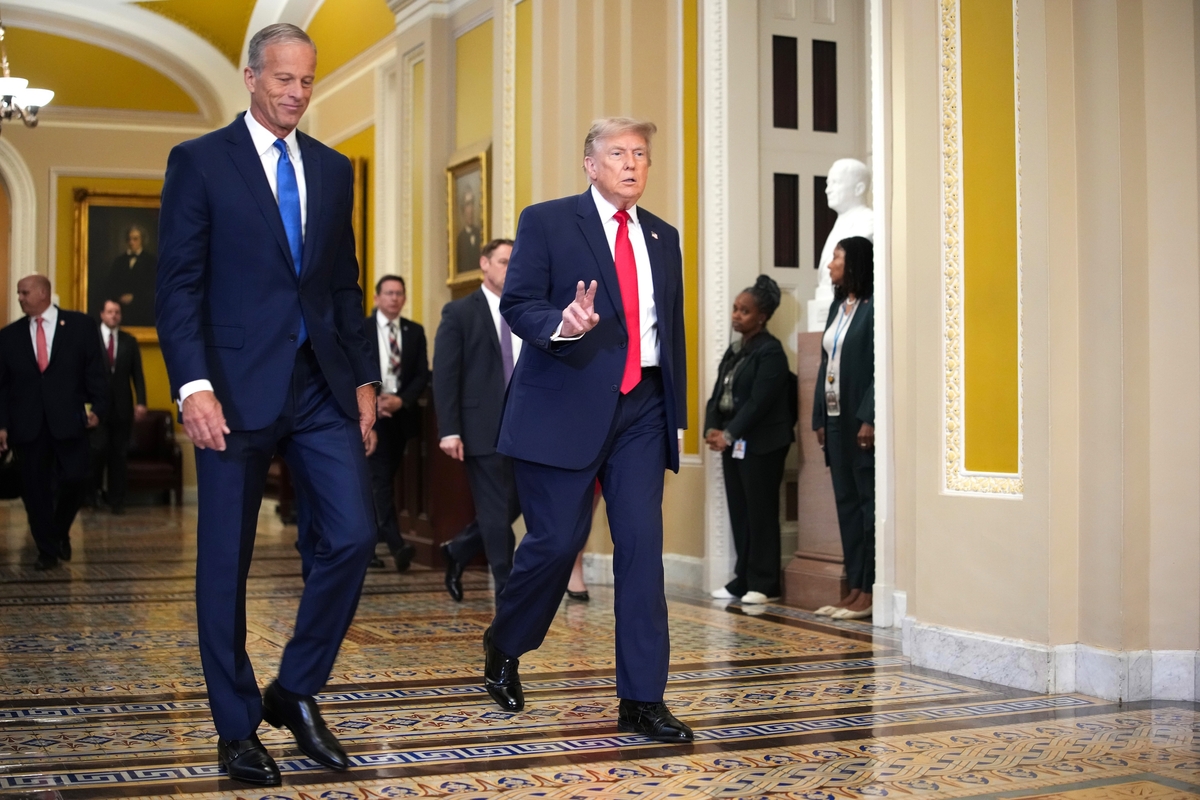
The swing in support of President Donald Trump came after Trump paid a visit to Congress earlier in the day to discuss White House policy with Senate Republicans and address concerns about the recent memorandum of understanding with Tehran.
Meanwhile, Sens. Mitch McConnell (R-Ky.) and Dave McCormick (R-Pa.) did not vote, while Sen. John Fetterman (D-Pa.) voted with Republicans.
McConnell is working from home this week after being admitted to hospital, and McCormick was attending a Mack Trucks event in Pennsylvania with Trump at the time of the vote.

Although the resolution was not legally enforceable—as concurrent resolutions do not go to the president for signing into statutory law—it symbolized a strong congressional statement of opposition to the Trump administration’s continued military operations aimed at preventing Iran from acquiring nuclear weapons.
Trump warned senators on June 24 that Congress had undermined his negotiating hand with Iran with the resolution.
In the following vote, Paul and Cassidy changed their positions, with Paul voting present and Cassidy voting against. Collins and Murkowski maintained their positions, voting again with Democrats. Fetterman again voted in support of the president.
Paul said on X: “Since hostilities seem to be over and the President asked me to give consideration to his negotiating position, I will do so. My vote of present is a way to give the President more space and leverage to negotiate a lasting peace.”
Cassidy said he had since received a “thorough briefing this afternoon on Iran” from Vice President JD Vance and special envoy Steve Witkoff.
Last week, he had expressed concerns that the memorandum with Tehran was not doing enough to curb Iran’s nuclear program while offering military and economic relief.
“Before the war, the strait was open, Iran was being crushed by sanctions, and 13 service members were still alive,” he said at the time. “Now, 13 Americans are dead, families have paid billions at the pump, sanctions will be lifted, and the bombing has stopped. This is the worst foreign policy blunder in decades.”
McConnell and Sen. Michael Bennet (D-Colo.), who is campaigning in the Democratic primary for Colorado governor, did not vote.
The failed war powers measure, which was a joint resolution requiring a president’s signature, was first introduced by Sen. Tim Kaine (D-Va.) on April 27 before it was released by the Senate Committee on Foreign Relations in May with Cassidy’s help, after his primary runoff loss to a Trump-endorsed challenger, to progress to the Senate floor for the June 24 vote.
The joint resolution, also aimed at directing the removal of the U.S. military from hostilities with Iran unless authorized by Congress, was similar to the first resolution in that it invoked congressional war powers under the Constitution and referenced the 1973 War Powers Resolution. But it differed in the legal mechanism cited and would have a stronger legal effect if it had a president’s support for enacting it into law.
The June 24 vote marks the 11th time the Senate has voted down a Democrat-led war powers resolution since the start of the year.
Trump thanked the Senate for its support after the vote against the joint resolution in a post on Truth Social.
He expressed thanks to Senate Majority Leader John Thune (R-S.D.), Sen. Lindsey Graham (R-S.C.), and Sen. Bernie Moreno (R-Ohio), noting, “This vote puts Iran on notice!”