WASHINGTON—Fourteen days after the federal government shut down when its funding lapsed, the Senate for the eighth time defeated a continuing resolution to temporarily extend current funding and end the shutdown.
Republican-sponsored H.R. 5371 failed 49–45 on the evening of Oct. 14. Virtually all Republicans and a small number of Democrats supported the measure.
Most Democrats have supported an alternative measure that would permanently extend enhanced subsidies under the Affordable Care Act, or Obamacare, and add to other areas of health care spending. The Committee for a Responsible Federal Budget has said the package would add $1.5 trillion in debt over the following 10 years.
In the days before the vote, there were few signs of negotiations or other developments that could lead to a breakthrough.
Later that day, Trump said the administration is targeting Democrat-backed programs for cost reduction.
“We are closing up Democrat programs that we think that we disagree with, and they’re never going to open again,” Trump said during a White House event.
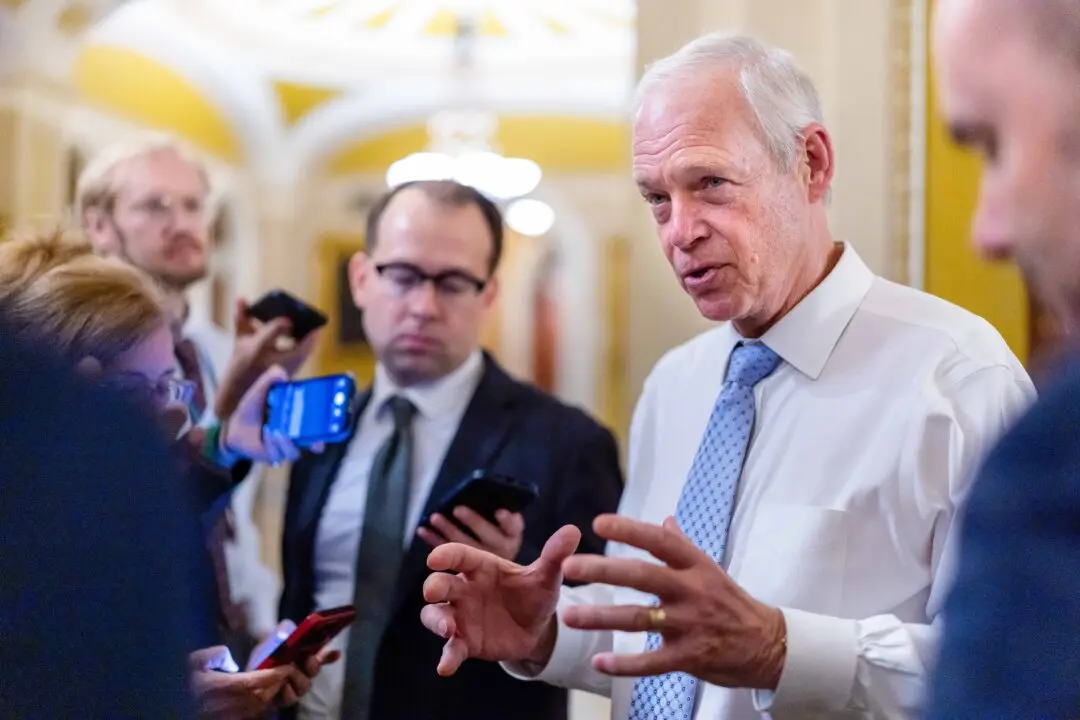
Ahead of the vote, comments by rank-and-file senators illustrated the impasse.
“The way out of the shutdown is for the Republicans to sit down and negotiate to protect healthcare,” Sen. Elizabeth Warren (D-Mass.) told reporters.
Moments later, Sen. Roger Marshall (R-Kans.) commented on extending the Affordable Care Act subsidies, a key demand by Democrats.
“I’m more than happy when the government gets opened, I'll sit down with the Democrats,” Marshall told The Epoch Times, adding, “I’m happy to work with them ... whatever it takes to fix it. But it is really, really, really broken.”
Sen. Richard Blumenthal (D-Conn.) told The Epoch Times, “Right now I have lower-than-ever reason for hope because Speaker Johnson said just yesterday that the health care tax credits are a boondoggle.”
Blumenthal said the speaker’s position likely reflected pressure from the White House.
During the vote, some senators appeared to confer with their counterparts on the Senate floor. Sen. Katie Britt (R-Ala.) was in conversation with Democratic Sens. Blumenthal, Chris Coons (Del.), and Amy Klobuchar (Minn.).
Separately, Sen. Jeanne Shaheen (D-N.H.) was in conversation with Republican Sens. Lisa Murkowski (Alaska), Susan Collins (Maine), and Ashley Moody (Florida).
Shortly after Shaheen left the circle, Sen. John Hoeven (R-N.D.) approached the group and was heard to say emphatically, “We’ve got to be making progress.”
Sen. Mike Rounds (R-S.D.) expressed hope that Democrats might soon be willing to negotiate.
“I think once Saturday comes around and they get that behind them, then there’s a possibility for some negotiation,” Rounds told reporters, likely referring to the planned No Kings protest event planned in the nation’s capital.
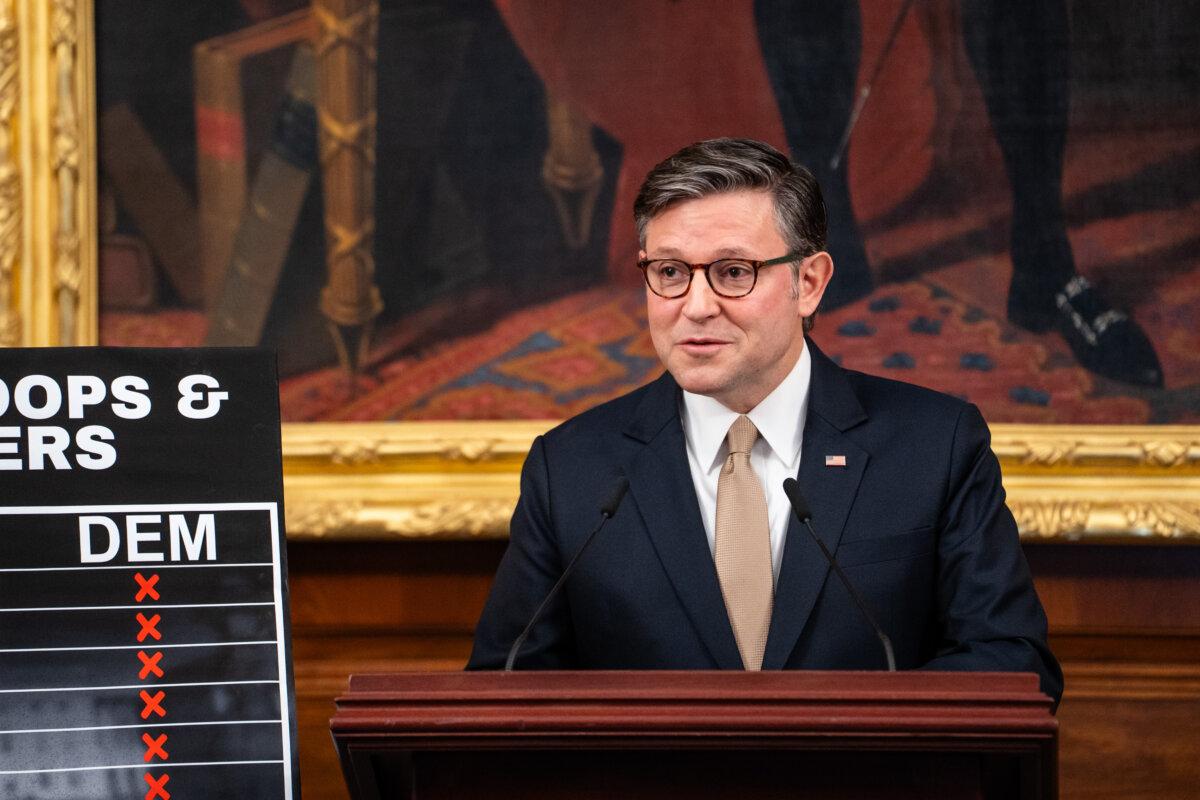
Johnson told reporters on Oct. 13 that the United States could be “barreling toward one of the longest shutdowns in American history unless Democrats drop their partisan demands.”
The longest shutdown to date took place during President Donald Trump’s first term and lasted 35 days.
Johnson has blamed House Minority Leader Chuck Schumer (D-N.Y.) for the shutdown, saying that Schumer is stuck in the past and beholden to the left wing of the Democratic Party.
“He needs to show a fight against President Trump so he can keep his left base happy through the next election cycle,” Johnson told reporters the morning of the vote.
“He’s been in Congress since 1980. He is the broken status quo.”
Democrats accused Trump of being the driving force behind the shutdown.
House Minority Leader Hakeem Jeffries (D-N.Y.) has alleged that the White House is preventing Johnson from negotiating.
He told Katy Tur that Republicans “have gone radio silent” since congressional leaders in both parties met with Trump at the White House on Sept. 29, just two days before federal funding lapsed on Oct. 1.

The 55 votes the bill has garnered are five shy of the 60 needed to overcome a filibuster in the upper chamber. Senate Majority Leader John Thune (R-S.D.) told The Epoch Times that he will not touch the filibuster in a bid to advance the measure.
The White House has sought to eliminate one potential pressure point in talks over the impasse—namely, military pay due to troops on Oct. 15.