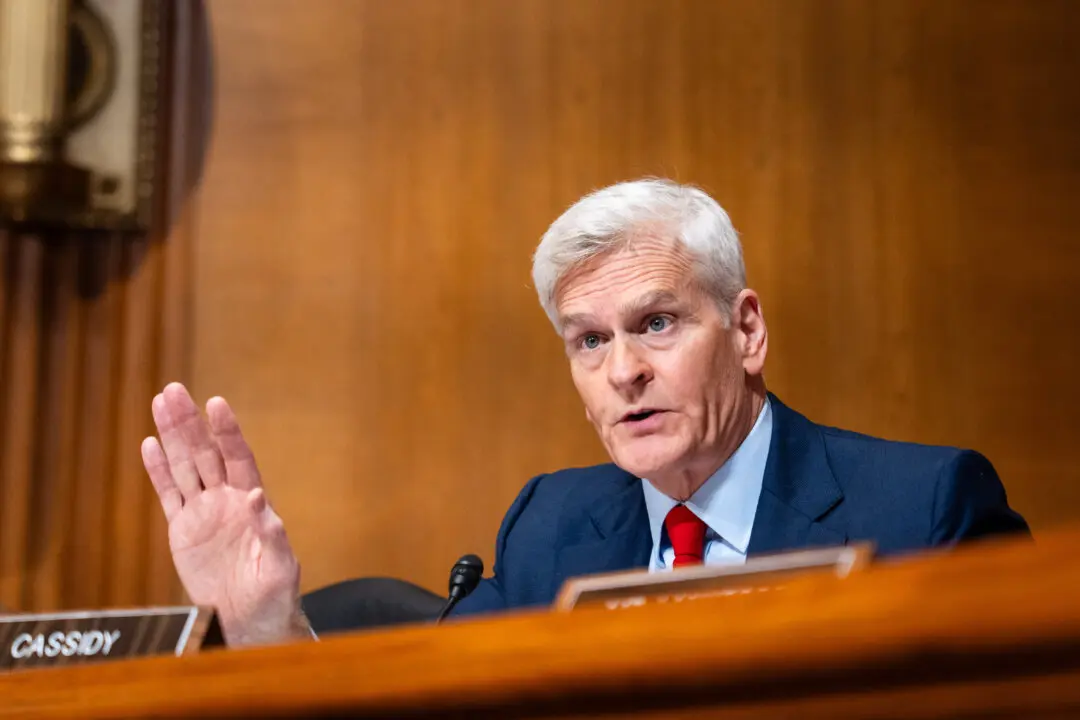
Senate Parliamentarian Elizabeth MacDonough ruled that certain provisions related to the energy sector in the One Big Beautiful Bill Act were out of order, as the GOP looks to implement President Donald Trump’s legislative agenda.
These rulings were made under the “Byrd Rule,” named for the late Sen. Robert Byrd (D-W.Va.). It requires reconciliation bills to be related to the federal budget, revenue, and the national debt.
Reconciliation measures can pass with a simple majority in the Senate. Otherwise, bills require 60 votes to advance to voting on passage. Republicans have 53 seats in the Senate, and no Democrats are expected to support the One Big Beautiful Bill Act.
A provision that automatically certifies offshore oil and gas projects as compliant with the National Environmental Policy Act and therefore skips the environmental review process was deemed as not germane to the Byrd Rule.
Others deemed out of order would have facilitated the sale of public land, annual geothermal leasing sales, and how to calculate such sales.
Another portion stripped out of the bill would have required the interior secretary to allow the construction of a controversial mining thoroughfare, Ambler Road, in Alaska.
Additionally, a provision that would have removed the interior secretary’s discretion to lower fees for solar and wind projects on federal land was deemed noncompliant.
A section related to a fee surrounding natural gas and imports was also ruled not germane.
“Democrats will not stand idly by while Republicans attempt to circumvent the rules of reconciliation in order to sell off public lands to fund tax breaks for billionaires. We will make sure the Byrd Rule is followed and review any changes Republicans attempt to make to the bill.”
Previously, MacDonough had ruled numerous other provisions of the bill as not being compliant with the Byrd Rule.
These include allowing states to conduct immigration enforcement, reducing the pay of federal civil service employees if they don’t agree to be employed “at-will,” cutting the pay of the Federal Reserve staff, effectively defunding the Consumer Financial Protection Bureau, and requiring Congress to approve regulations if their cost is above $100 million.