Senate Again Rejects Funding Bills as Shutdown Enters Second Week

It is the sixth vote that has failed in the Senate to restore government funding.
Senate Again Rejects Funding Bills as Shutdown Enters Second Week
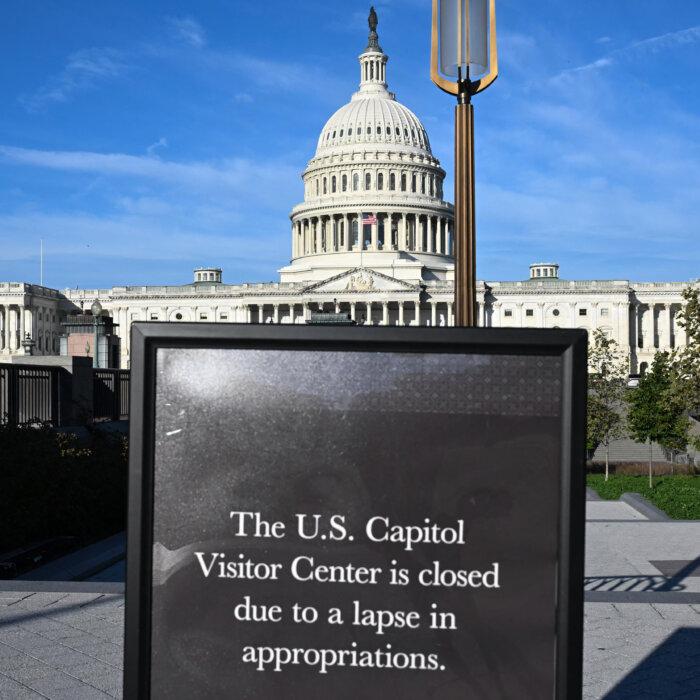
The U.S. Capitol during the eight day of the government shutdown, Oct. 8, 2025. Madalina Kilroy/The Epoch Times
|Updated:
0:00

The Senate on Oct. 8 again failed to advance bills that would restore funding to the government and end the shutdown that has been in effect since Oct. 1.

The Senate rejected a House-passed bill to fund the government through Nov. 21 in a 54–45 vote.

Like in previous votes, Sens. John Fetterman (D-Pa.), Catherine Cortez Masto (D-Nev.), and Angus King (I-Maine), who caucuses with the Democrats, joined Republicans to vote for the bill. Sen Rand Paul (R-Ky.) was the lone Republican to vote against it. Sen. Ted Cruz (R-Texas) didn’t vote.

Democrats have said they will oppose the GOP funding bill unless demands concerning health care are met.

A competing bill from Democrats to fund the government also failed in the Senate in a 47–52 vote.

This is the sixth time that both bills have been defeated in the upper chamber.
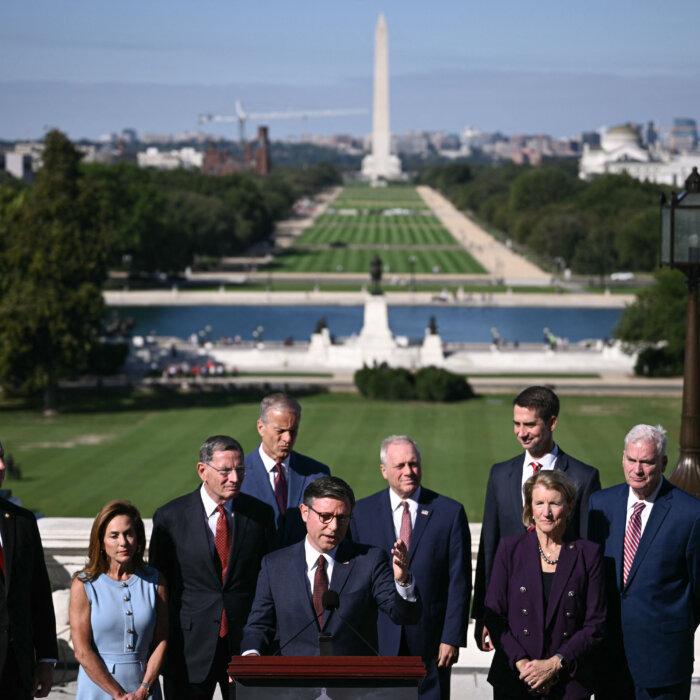
No signs have emerged of a deal to end the standoff.

“It’s costing our economy about $15 billion a week to continue to have the government shut down,” Senate Majority Leader John Thune (R-S.D.) said on Oct. 7. “This week, paychecks start being affected for federal workers, and that is going to have real consequences for them and their families.”
A White House official told The Epoch Times on Oct. 7 that when funding is eventually restored, the government may not give federal workers back pay for time spent working during the shutdown. The idea has generated alarm from Democrats and workers unions, who cite a 2019 law that ostensibly requires back pay.

House Speaker Mike Johnson (R-La.) said on Oct. 8 that furloughed workers should be paid back pay when the shutdown ends.

“I think it is statutory law that federal workers be paid,” he said.

Republicans have so far refused to grant Democrats any of their demands, which include restoring some cuts to Medicaid due to reforms enacted in the One Big Beautiful Bill Act passed over the summer. They have also demanded an extension to Affordable Care Act subsidies that are due to expire at the end of the year.

President Donald Trump on Oct. 6 signaled openness to negotiating with Democrats on the subsidies.

Senate Democrats say that Republicans are being intransigent for refusing to accept any of their demands.

“Senate Republicans do not have the votes to pass their bill. They need to come to the table and negotiate now to reopen the government and bring down healthcare costs,” Senate Minority Leader Chuck Schumer wrote in an Oct. 7 post on X.

While the Senate continues to debate the bill, the House of Representatives has not been in session, with leaders of both parties blaming each other for the impasse. Some backbench members have bucked their own parties to demand some compromise on either side.

“This government shutdown is the result of hardball politics driven by the demands far-left groups are making for Democratic Party leaders to put on a show of their opposition to President Trump,” Rep. Jared Golden (D-Maine) wrote in a social media post. “Normal policy disagreements are no reason to subject our constituents to the continued harm of this shutdown.”
Rep. Marjorie Taylor Greene (R-Ga.) said in an Oct. 7 post on X that the Republican-controlled Senate “used the nuclear option ... to override the 60-vote rule in order to confirm over 100 Trump nominees, yet continues to claim Democrats are causing the shutdown.”

The lawmaker was referring to the Senate’s recent rule changes, which can occur by a simple majority.

“Republicans in the Senate can also use the nuclear option to reopen the government and override the Democrats just like they literally did today to confirm Trump nominees,” she said.

Google LogoMark Us Preferred on Google
Arjun Singh
Arjun Singh
Author
Arjun Singh was a reporter for The Epoch Times. He covered national politics, legal controversies, immigration, the U.S. Congress, and the Supreme Court of the United States.
twitter