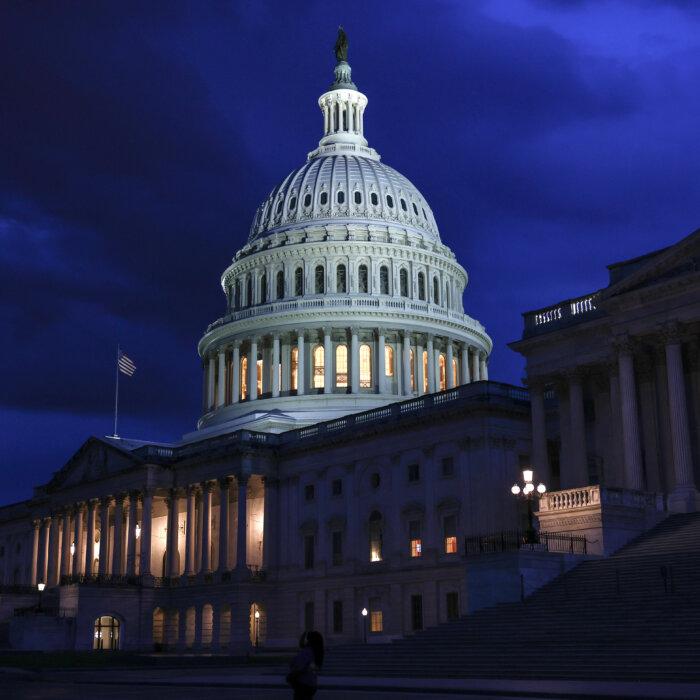
The Senate advanced the latest version of the “One Big Beautiful Bill Act” in a procedural vote on June 28, clearing the way for floor debate on the substance of the sweeping megabill and moving Republicans one step closer to delivering on key parts of President Donald Trump’s second-term agenda.
The bill advanced in a vote of 51 to 49, with enough Republican holdouts joining party leaders to avoid the need for Vice President JD Vance’s tie-breaking vote and to push the measure forward despite lingering concerns about some of its provisions.
Collins said she was supporting the motion to proceed out of respect for Senate Majority Leader John Thune (R-S.D.), who has pressed for the bill’s swift consideration, but warned that she still has substantial reservations and intends to introduce several amendments in an effort to reshape the legislation.
Hawley, who had previously objected to proposed Medicaid cuts, told reporters on June 28 that he would back not only the motion to proceed, but also final passage of the bill. He credited his decision to new language in the updated bill that delays implementation of changes to the federal cap on Medicaid provider taxes—a provision he said would ultimately bring more federal funding to Missouri’s Medicaid program over the next four years.
The provider tax, or provider assessment, is a fee states charge hospitals to help fund Medicaid. While the House bill kept the federal cap at 6 percent of providers’ revenue, the Senate version would lower it to 3.5 percent—but the reduction would be phased in gradually. Hawley and several other Republicans warned that cutting the cap too quickly could strain hospitals and reduce Medicaid coverage, and said the Senate’s delay of those changes was key to winning his support.
The controversial language, championed by Sen. Mike Lee (R-Utah), would require the Interior Department to designate between 0.25 percent and 0.5 percent of Bureau of Land Management lands for sale, focusing on parcels near developed areas suitable for housing. Protected lands such as national monuments and wilderness areas would be excluded, and sales would be limited to areas within five miles of towns with at least 1,000 residents. Although narrower than earlier proposals rejected by the parliamentarian, the provision remains contentious, drawing warnings from conservation groups and lawmakers such as Sheehy, who said it could set a dangerous precedent for privatizing public lands.
Trump, during an event at the White House on June 26, highlighted the tax cuts and immigration funding efforts included in the bill, describing it as “one of the most important pieces of legislation in the history of our country.”
“[The legislative package will] secure our borders, turbocharge our economy, and bring back the American dream,” the president said.
White House press secretary Karoline Leavitt said earlier that day that Trump expects the bill to reach his desk by July 4, and Thune has set the same deadline for the Senate to pass it.
What Is in the Bill?
The “One Big Beautiful Bill Act,” revised by Senate Republicans on June 27 and spanning nearly a thousand pages, is designed to cement Trump’s second-term tax and spending goals.One of its major provisions raises the cap on state and local tax deductions from $10,000 to $40,000 through 2029, before reverting to the lower limit, although the higher cap phases out for individuals earning more than $500,000.
It also fulfills Trump’s campaign pledge to end taxes on tips, excluding up to $25,000 in tip income for individuals earning less than $150,000, with the benefit reduced for higher earners.
The bill proposes significant changes to clean energy policy, terminating tax credits for electric vehicles after September 2025 and accelerating the end of clean energy incentives under the Inflation Reduction Act, including credits for wind, solar, and hydrogen production.
The measure eliminates fines for automakers who fail to meet certain fuel economy standards for model years not yet subject to penalty notices and introduces a new tax exemption for interest paid on auto loans for U.S.-built vehicles—up to $10,000 annually, phasing out for those earning more than $100,000.
The Senate draft increases funding for rural hospitals to $25 billion between 2028 and 2032, and proposes a gradual reduction in the cap on Medicaid provider taxes from 6 percent to 3.5 percent over several years.
Further, the legislation eliminates the $200 tax stamp required for purchasing firearm silencers and short-barrel rifles, and it drops earlier proposals to force the Postal Service to remove electric vehicles and charging infrastructure from its fleet after those measures were ruled out of order under Senate reconciliation rules.