U.S. Senator Lindsey Graham (R-S.C.) on Nov. 20 denied unanimous consent to pass legislation that would repeal a controversial provision of the government funding law enacted on Nov. 12, which allows U.S. senators to potentially collect millions of dollars in taxpayer-funded legal damages.
The provision was inserted into the act without prior knowledge of the House of Representatives, which universally condemned the measure.
The act passed because of the urgent need to restore government funding.
When presented to the Senate, Sen. Martin Heinrich (D-N.M.) rose on Nov. 20 to move that the bill be passed by unanimous consent—a common practice where opponents are notified in advance and are present to object, making the outcome foregone before the attempt is made.


To this, Graham objected and defended the provision, stating that it was necessary to avoid alleged abuses by the executive branch of its surveillance authorities.
“What did I do to allow the government to seize my personal phone and seize my official phone, when I was Senate Judiciary Chairman?
“Jack Smith [issued] a subpoena for the phone records of a branch of government, the Senate, that had to decide whether to certify the [2020] election,” said Graham on the Senate floor in remarks preceding his objection.
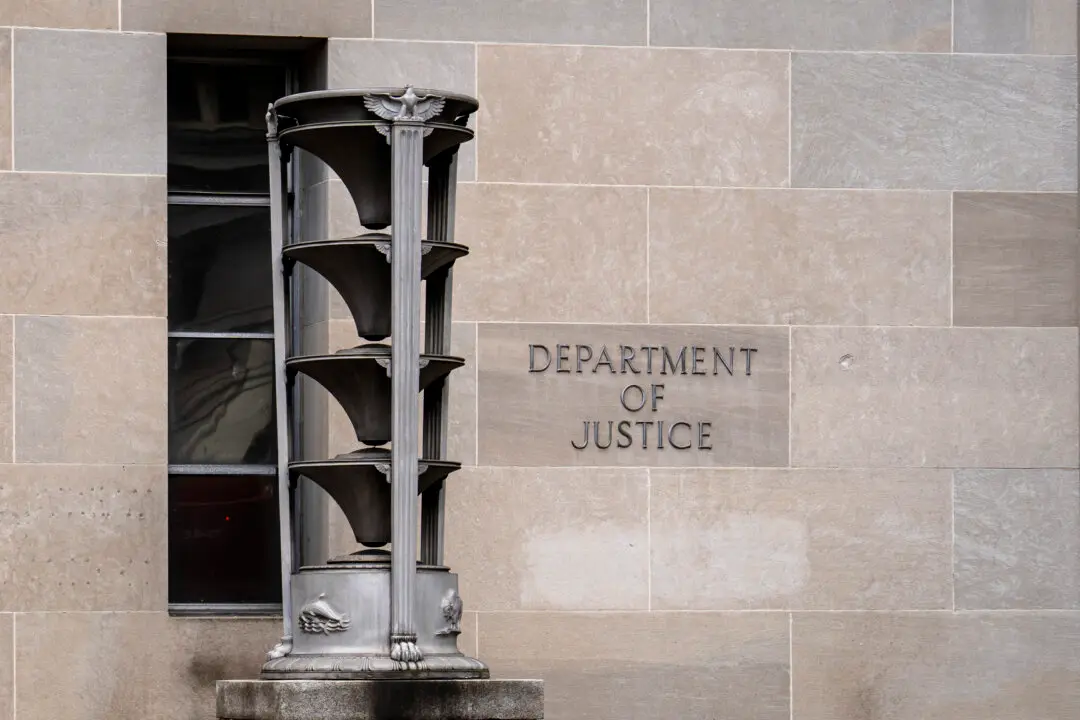
He was referring to the now-concluded criminal investigation by the U.S. Department of Justice into President Donald Trump’s efforts to overturn the results of the 2020 presidential election.
Senate Republicans allege that such subpoenas were unlawfully issued.
“We’re not going to let the Democratic Party decide my fate. We’re going to let a judge decide my fate, but I have to get it in court and prove my case,” Graham added.
“All of us who were wronged need to have a remedy.”
Graham has said that he intends to sue the United States for “tens of millions” of dollars as a result of the provision.
Heinrich responded sharply to Graham’s remarks.
“We should work with our colleagues in the House to address the underlying issue of protecting members without the outrageous damage provisions that were retroactively put into this statute,” remarked Heinrich after Graham had finished speaking.
“[The] terrible wrong that occurred last week is simply outrageous,” said Sen. Gary Peters (D-Mich.) in remarks on the floor after Heinrich.
The leadership of both parties’ caucuses in the House has been adamant to repeal the provision.
No equivalent provision for damages exists for members of the House of Representatives.
The bill can still be passed by the Senate on a roll call vote, though it will need the support of 60 senators to advance to final passage.