The Democratic National Committee raised $8.6 million in June and has collected more than $50 million so far this year, marking its strongest grassroots fundraising performance for the month of June in any off-year cycle, the party said Monday.
Although the RNC reported a larger total fundraising haul for June, federal filings show the DNC slightly outpaced the RNC in individual contributions, reporting $7.8 million from individuals compared to the RNC’s $7.6 million. The DNC’s overall June total—$8.6 million—included additional revenue from interest and other offsets. The RNC’s larger overall total was driven in part by transfers from affiliated committees and interest income.
The filings, submitted July 20, offer a snapshot of the two national parties’ finances as the 2026 midterm election cycle takes shape. While the DNC emphasized growth in small-dollar contributions and volunteer recruitment, the RNC has maintained a larger overall fundraising total and significantly higher cash reserves.
The DNC credited much of its progress to its “Organizing Summer” campaign, saying more than 30,000 people have signed up as volunteers this year—spanning all 50 states and every congressional district.
In a press release, the party said Chair Ken Martin has raised more in his opening months than any new DNC chair in history and pointed to 138 town halls held across the country, as well as 34 key elections in 2025 in which Democrats have won or “overperformed.”

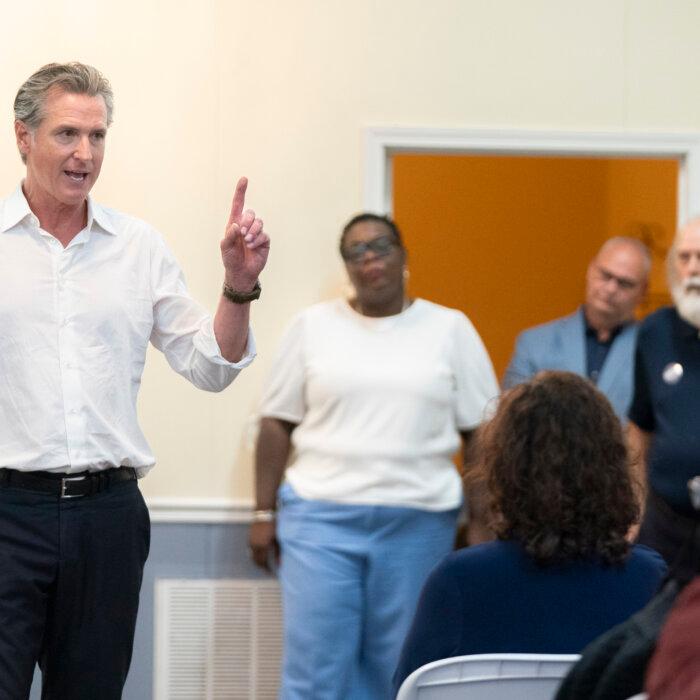
“Around the country, people are energized, ready to fight back, and empowering Democrats to win elections,” Martin said. “The DNC is breaking grassroots fundraising records, bringing on more volunteers than ever, and raising record-setting funds to beat Republicans.”
So far in 2025, the RNC has reported $96.4 million in total receipts and $53.7 million in disbursements. The DNC has reported $69.2 million in receipts and $76.1 million in disbursements.
The RNC did not respond to additional questions from The Epoch Times about its strategy or spending.
The filings come as both parties prepare for a high-stakes 2026 cycle and a slate of competitive elections later this year.
In Virginia, voters will decide who will replace outgoing Gov. Glenn Youngkin in one of the most closely watched gubernatorial contests of the year. Democrats have coalesced behind former U.S. Rep. Abigail Spanberger, while Republicans are backing Lt. Gov. Winsome Earle-Sears.
In New Jersey, Democratic Rep. Mikie Sherrill and former GOP gubernatorial nominee Jack Ciattarelli are competing for an open governor’s seat.
Special congressional elections throughout 2025 could also offer early signs of voter enthusiasm and messaging traction, though the districts are not traditionally competitive. Two have already occurred: in Florida’s 1st and 6th Districts. Three more are scheduled, due to the deaths of sitting Democratic members—Virginia’s 11th District, Arizona’s 7th District, and Texas’s 18th District. The fourth, Tennessee’s 7th District, was triggered by the resignation of Republican Rep. Mark Green and will be held later this year.
Meanwhile, in New York City, a three-way mayoral general election is shaping up between Democratic nominee Zohran Mamdani, former governor of New York Andrew Cuomo, who is running as an independent after losing to Mamdani in the primary, and incumbent Eric Adams, who became an independent candidate after opting out of the Democratic primary. The race is expected to test the limits of progressive messaging, party loyalty, and strategic coalition-building in one of the country’s most visible local elections.
These contests—alongside ongoing national fundraising trends—will offer both parties a chance to demonstrate whether their spending, organizing, and messaging strategies are resonating ahead of the 2026 midterms.