WASHINGTON—President Donald Trump has slashed border crossings and started an aggressive campaign to deport illegal immigrants. Now his administration faces the thorny task of addressing legal immigration—including the H-1B visa for skilled workers.
As U.S. companies struggle to find certain specialized talents locally amid the nationwide push to reindustrialize triggered by the president’s tariffs, Trump and the GOP must manage a complex balancing act on H-1B visas.
In recent weeks, he has also defended the program, arguing that H-1B workers can teach American workers skills for the high-paying jobs he hopes to return to the United States.
Republicans in Congress are also at odds on the best way forward. Some are advancing measures to remake or even eliminate H-1Bs, while others have defended the visa.
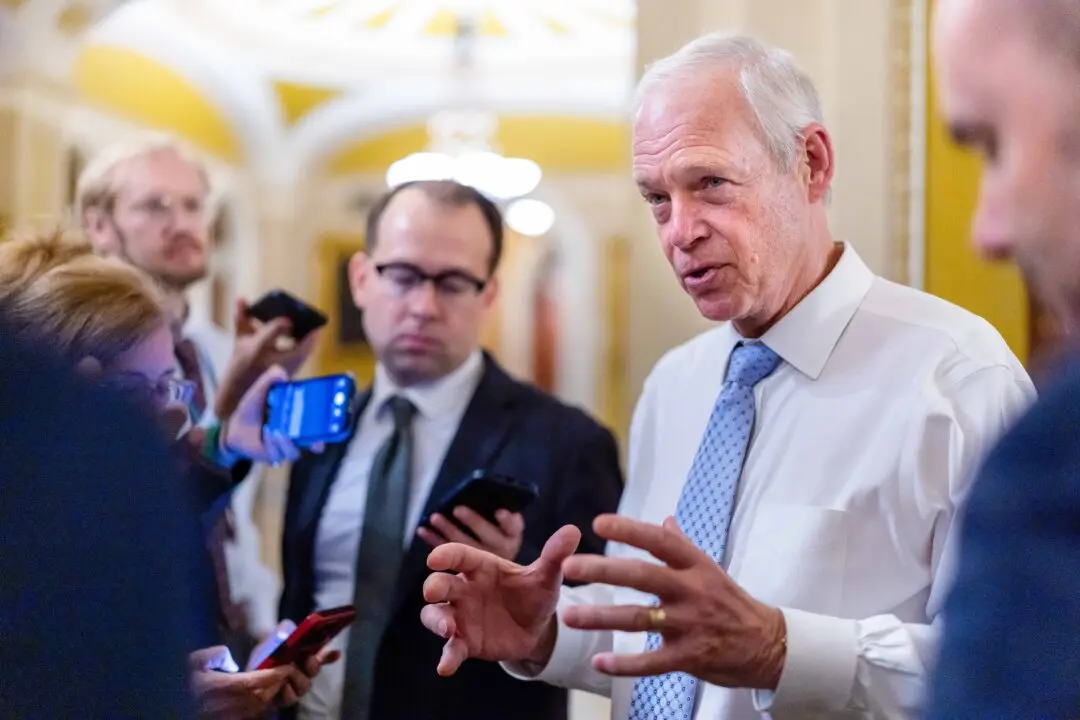
“Do we need some modifications to it? Maybe—but we’re not going to do away with the program,” Rep. Andy Harris (R-Md.), chairman of the conservative House Freedom Caucus, told The Epoch Times.
As Republicans confront voter discontent over the H-1B visa and face internal divisions over how to address it, some analysts and politicians believe Democrats could stand to gain from the issue.
“H-1B is one area where the Democrats can outflank some of the Republicans on the right,” Mark Krikorian, executive director of the Center for Immigration Studies, which seeks to curb immigration into the United States, told The Epoch Times.
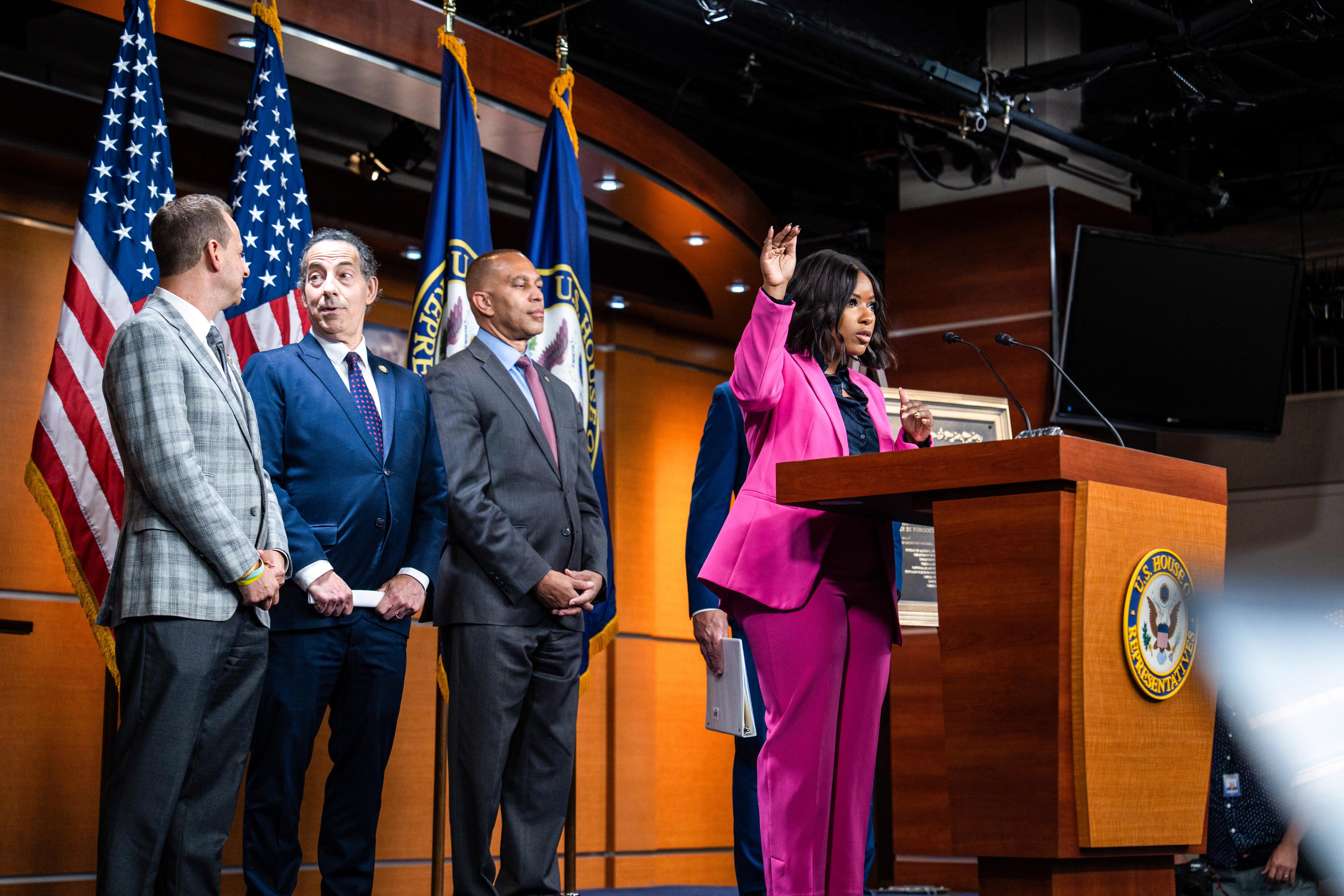
Rep. Jasmine Crockett (D-Texas), who just announced a Senate run, told The Epoch Times that the H-1B debate is “an internal fight that MAGA is having.”
Crockett defended the H-1B program as “smart immigration policy,” and predicted that the division could demoralize GOP voters ahead of the midterms.
But some Democrats and left-of-center voices have gone beyond casting the dispute as Republican infighting.
Also in January, Sanders offered an amendment to the Laken Riley Act that would have doubled the $1,500 H-1B fee at the time and prevented companies from hiring H-1B workers to replace laid-off Americans.
CNN anchor Abby Phillip raised concerns about the H-1B issue in a recent exchange with Canadian businessman Kevin O’Leary, who defended the program.
“It needs some degree of reform,” Phillip told the “Shark Tank” host. “There are real concerns that people have about companies that abuse the system.”
Christina Pushaw, a communications specialist for Florida Gov. Ron DeSantis, suggested that Phillip’s comments reflect a broader pattern—one that could spell trouble for the GOP.
The Tech Visa
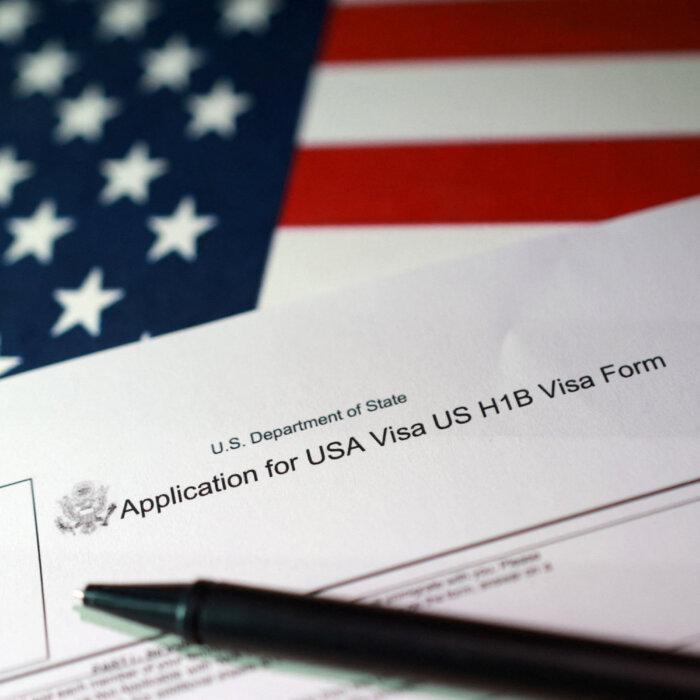
Created through the Immigration Act of 1990, the H-1B program lets companies hire non-immigrant aliens on a temporary basis for specialized jobs. Those eligible typically have at least a bachelor’s degree.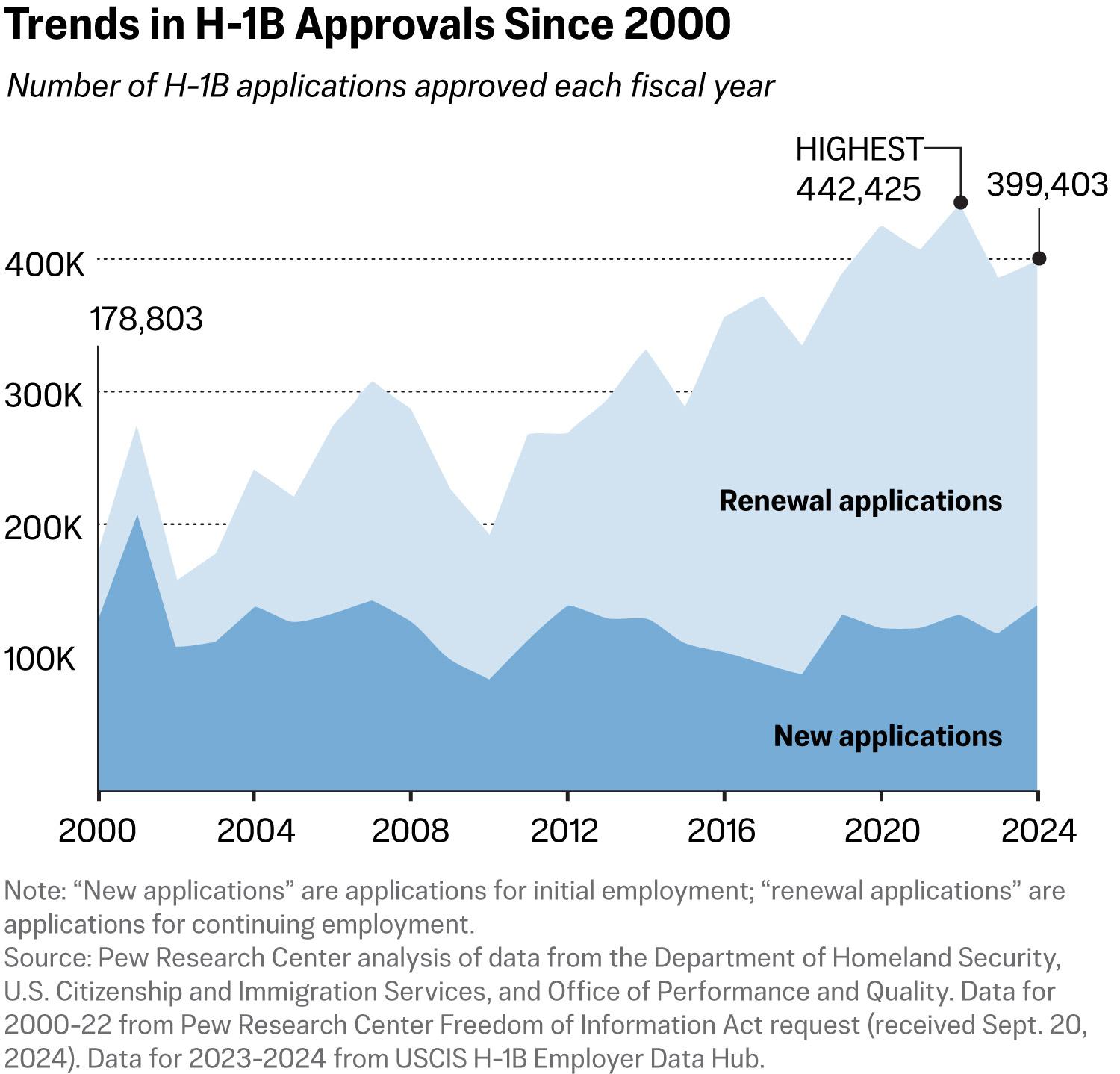
Although H-1Bs are limited to six years, the visa can be extended if the alien’s employer is seeking a green card for them. Many H-1B holders transition to permanent residency and, in some cases, become citizens, making them immigrants rather than temporary workers.
Congress initially set a cap of 65,000 H-1Bs per year. In 2000, Congress permanently eliminated the H-1B cap for nonprofit research institutions and universities. In 2004, lawmakers added another 20,000 slots for foreign workers with advanced degrees—at least a master’s—from U.S. institutions.
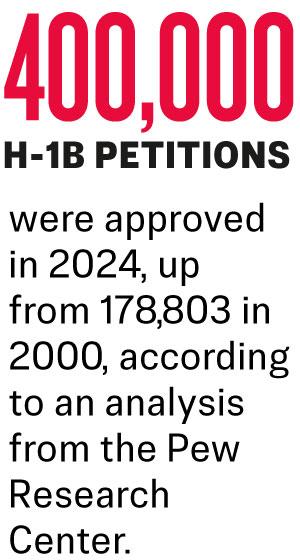
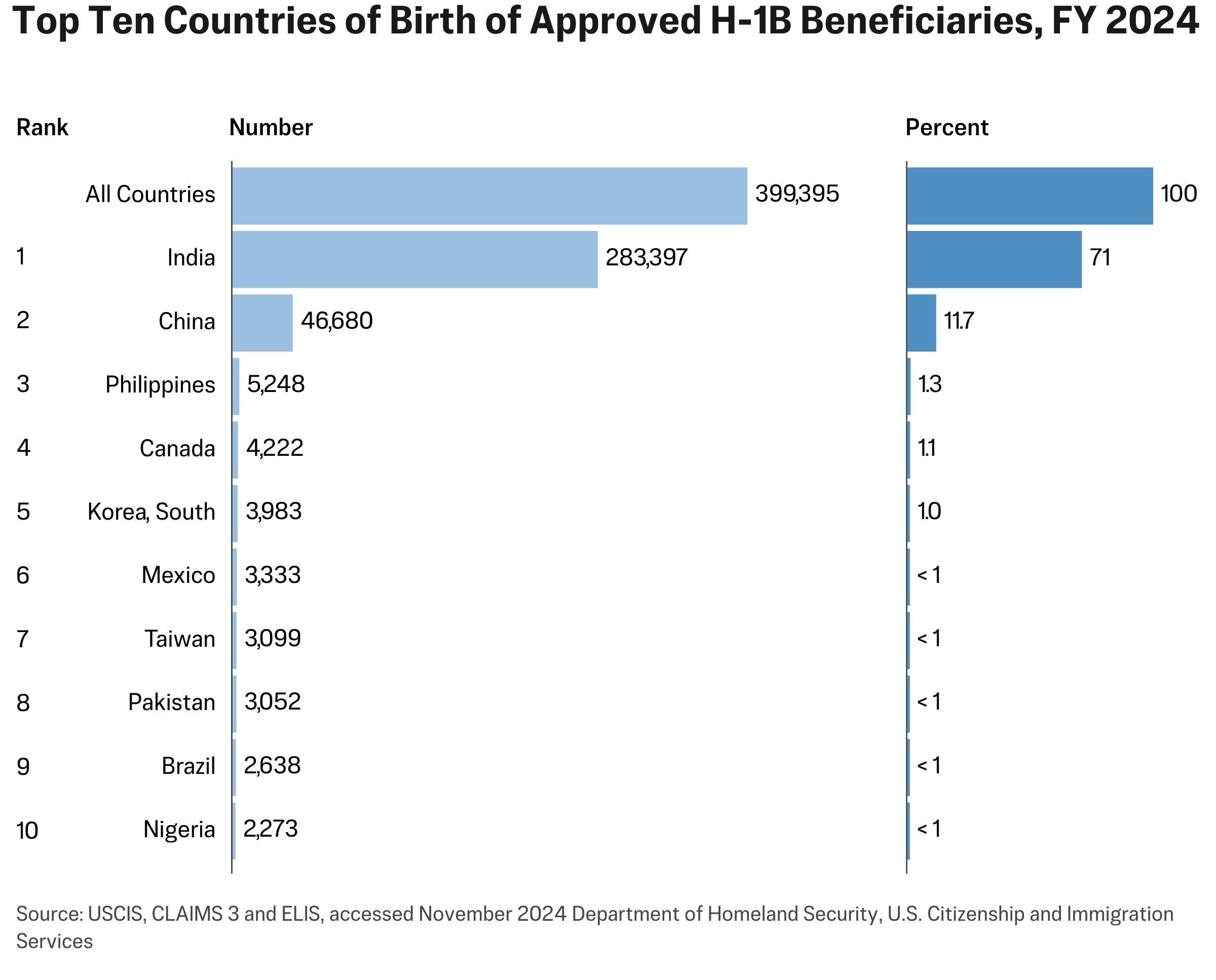
The number of approved H-1B petitions rose from 178,803 in 2000 to almost 400,000 in 2024, according to an analysis from the Pew Research Center.
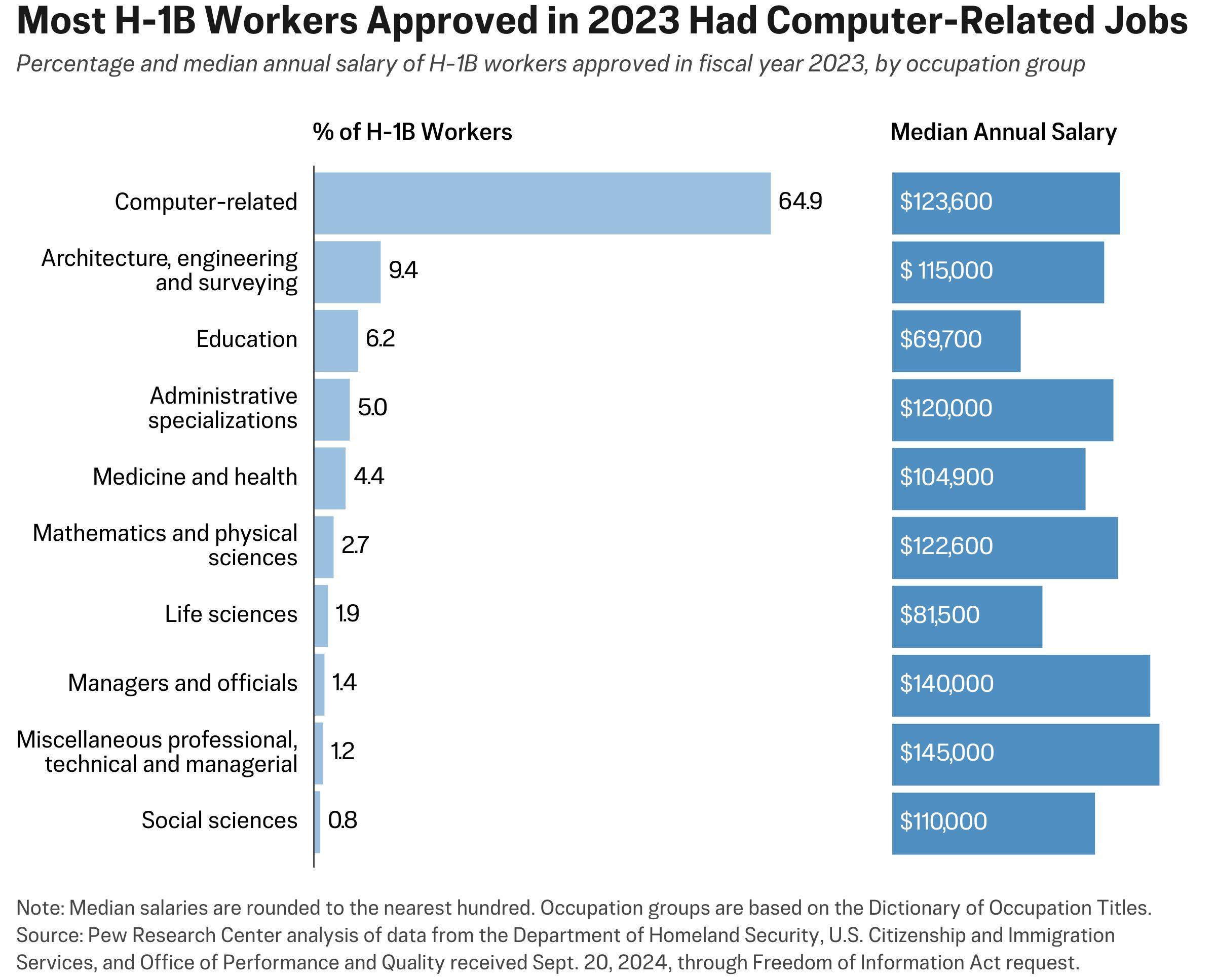
H-1B visa holders work in many fields, but they are heavily concentrated in the tech industry. Big Tech companies are among the largest H-1B petitioners.
H-1B Defenses Amid Tech Layoffs
The Trump administration’s H-1B proclamation, which also previewed rulemaking by the Departments of Labor and Homeland Security, was issued during a season of layoffs by American tech leaders—including top H-1B employers such as Amazon.The unemployment rates for all five categories sit above the 4.8 percent national average among recent college graduates.
The H-1B and American Talent
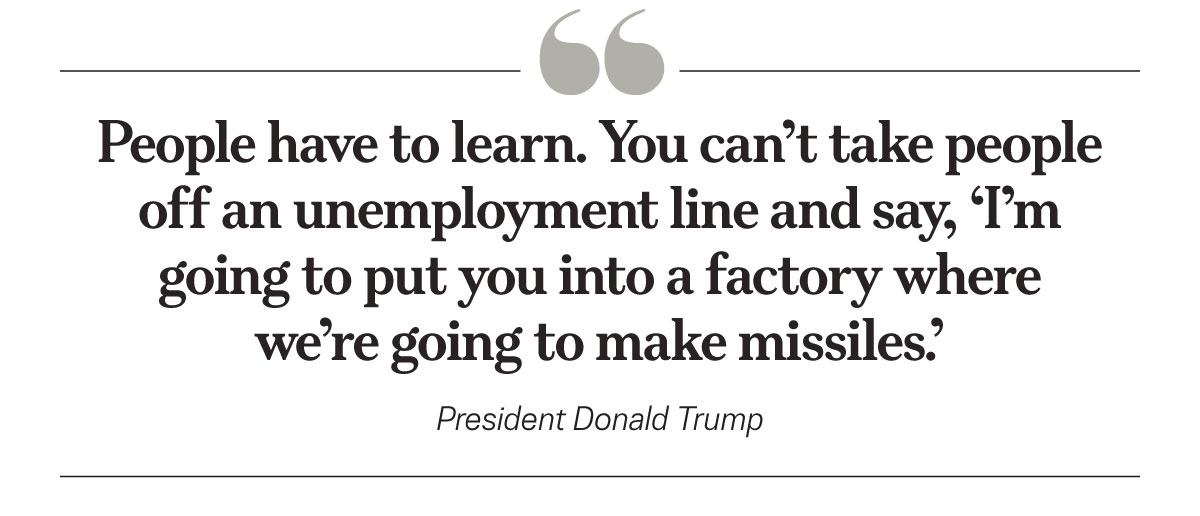
The president’s recent pro-H-1B comments have focused on what he sees as an urgent need for skilled labor.“You don’t have certain talents, and people have to learn. You can’t take people off an unemployment line and say, ‘I’m going to put you into a factory where we’re going to make missiles.’”
Later in the month, he said the temporary use of expert foreign labor would help American workers learn critical skills.
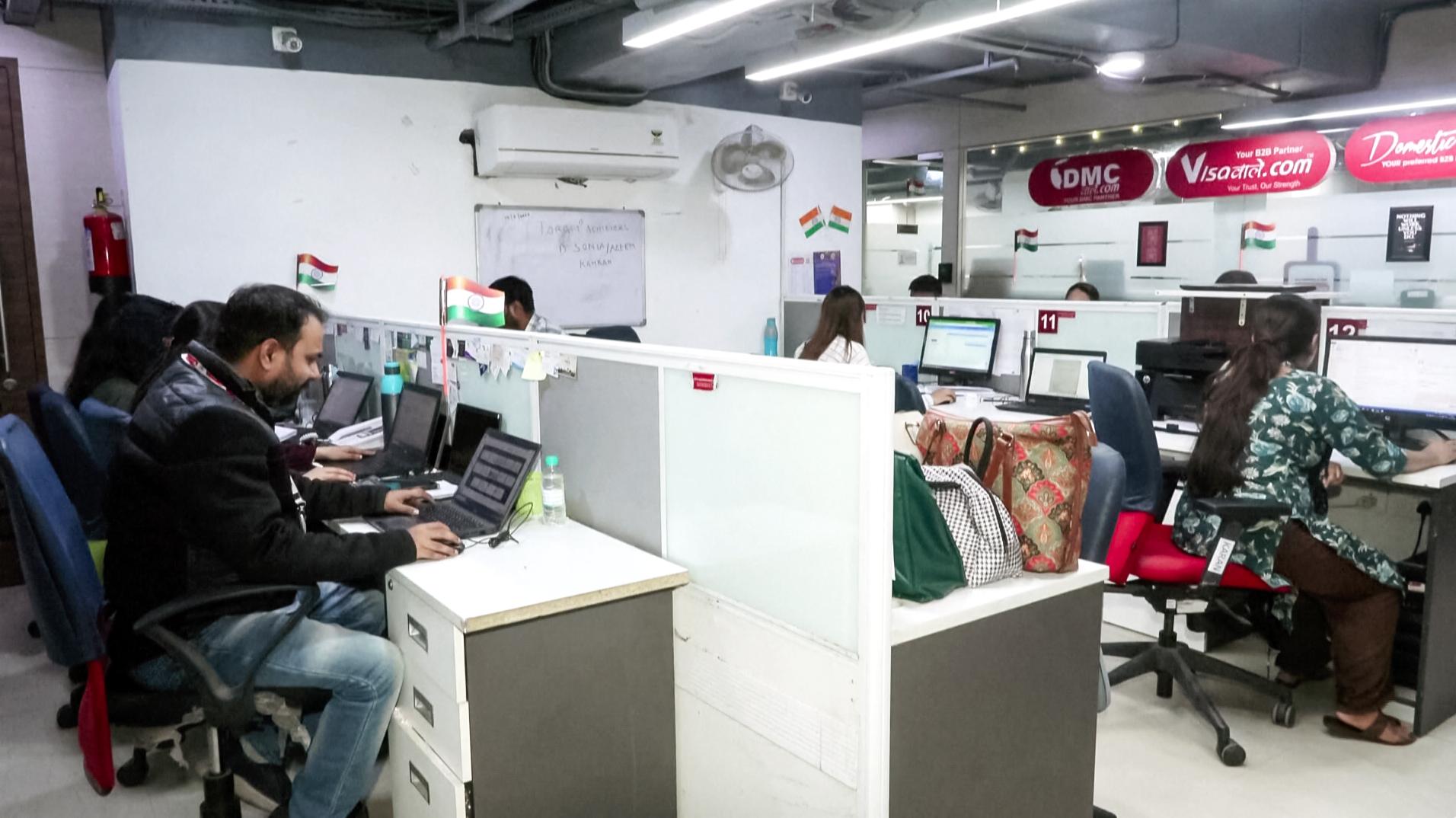
“Those people are going to teach our people how to make computer chips, and in a short period of time, our people are going to be doing great. And those people can go home,” Trump said during an appearance at the U.S.–Saudi Investment Forum.
Some MAGA backers have voiced their opposition to the president’s stance.
Trump appeared to acknowledge that his remarks would cost him some support.
“My poll numbers just went down, but with smart people, they’ve gone way up. They’ve gone way up,” he said at the investment forum.
Meanwhile, amid a tariff-driven push to bring jobs home, some industry leaders warn of a lack of skilled domestic labor.
“We are not investing in educating a next generation,” Farley said. “Those jobs are out there. Mechanics in a Ford dealership, as of this morning, we had 5,000 openings—a bay with a lift and tools, and no one working it.”
Those jobs have salaries of $120,000 a year, Farley said, but it takes five years to learn the necessary skills.
Afterward, the president defended the immigration operation while stressing the virtues of capitalizing on skilled foreign labor—as long as Americans ultimately benefit.

For all the attention on his recent remarks, Trump’s record also includes significant criticism of the H-1B and reliance on non-American workers.
Campaigning in 2016 on a pledge to “end forever the use of the H-1B as a cheap labor program” and hire American workers first, he drew attention to Disney employees who had been asked to train their foreign replacements.
During his first term, he condemned the Tennessee Valley Authority’s use of foreign labor, telling the federally owned corporation it must “[put] the interests of Americans first.”
Trump’s September H-1B proclamation reflected widespread worries about abuses of the program. Yet the substance that went with the announcement has drawn mixed reactions.
Some experts are unenthused about the new $100,000 fee, as it applies only to new filings and does not affect renewals or individuals adjusting their status from some other visa category.
“It’s a nothingburger,” Lynn said.
Krikorian predicted that “employers will get around it” using tourist visas and other maneuvers.
H-1Bs and Congress
Republicans have generally taken a tougher stance on immigration in the Trump era.Trump’s rise to power on promises of a border wall came soon after the bipartisan Gang of Eight—four Democratic and four Republican senators—failed in 2013 to advance legislation that would have given many illegal immigrants a path to citizenship.
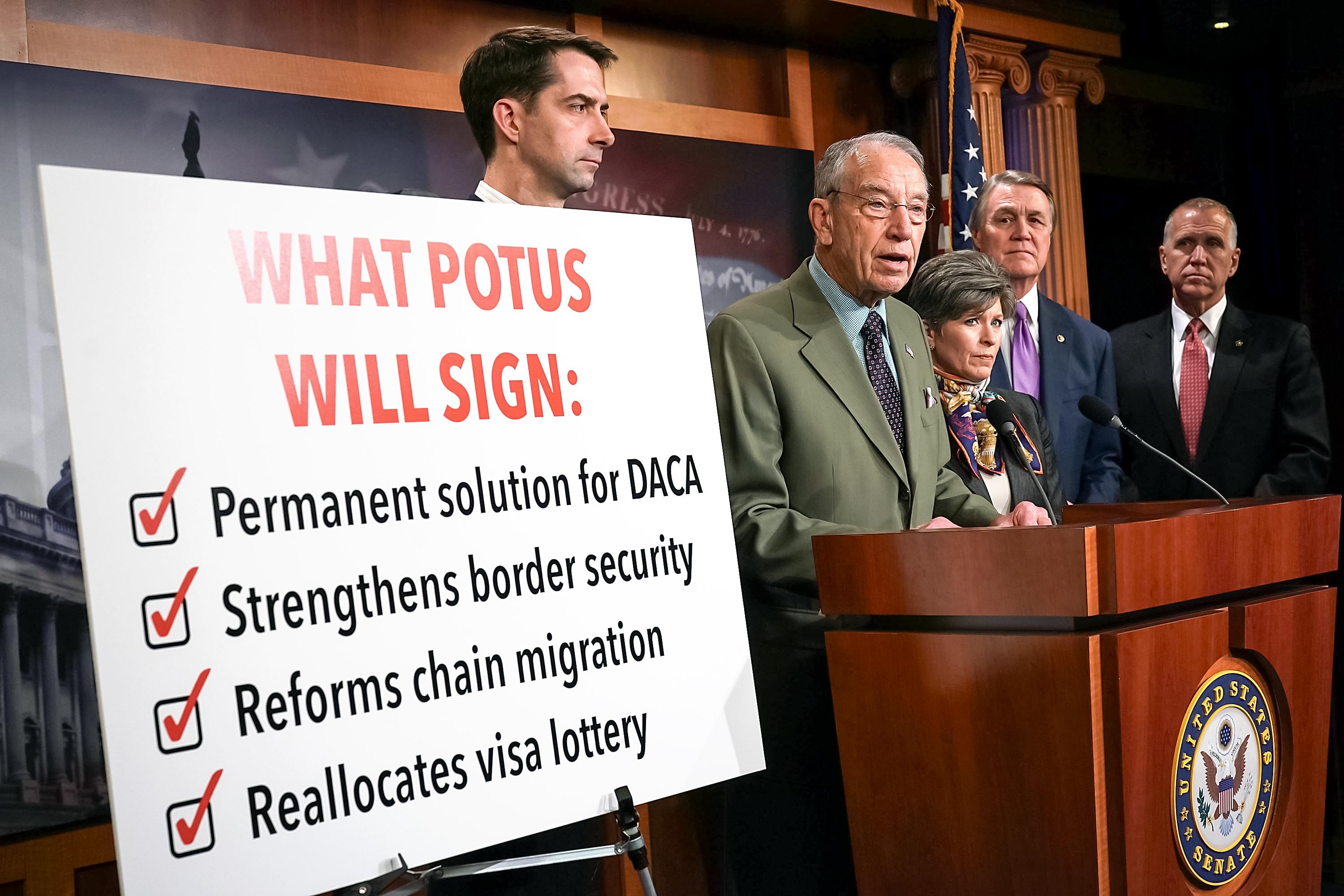
Democrats, meanwhile, have often staked out positions more favorable to immigration.
In 2015, Sanders, who caucuses with Democrats, decried open borders as “a Koch Brothers proposal”—a reference to the wealthy libertarian donors who have tended to push for more immigration. By the time he ran for president in 2020, the democratic socialist had pivoted to more pro-immigration rhetoric.
Sanders has since shifted back, at least to a degree. In addition to criticizing the H-1B in January, in October, he praised Trump’s approach to border security.
“Trump did a better job. I don’t like Trump, but we should have a secure border, and it ain’t that hard to do. Biden didn’t do it; those before him did not do it.”
Lynn said Democrats “need someone, one of the power centers in the Democratic Party, to give them permission” to shift on immigration and foreign labor.
“That’s coming,” he predicted, adding that “a trail is being hewn.”
In November, Lynn said, 31 activists with U.S. Tech Workers met with 29 Democrats and 31 Republicans on Capitol Hill. He said members of both parties were generally receptive to the delegation.
For the most part, though, Republicans are taking the lead on the visa.
Sen. Josh Hawley (R-Mo.) told The Epoch Times that the president’s new $100,000 fee is “generally a good idea” and called for a broader reassessment of U.S. visa policies.
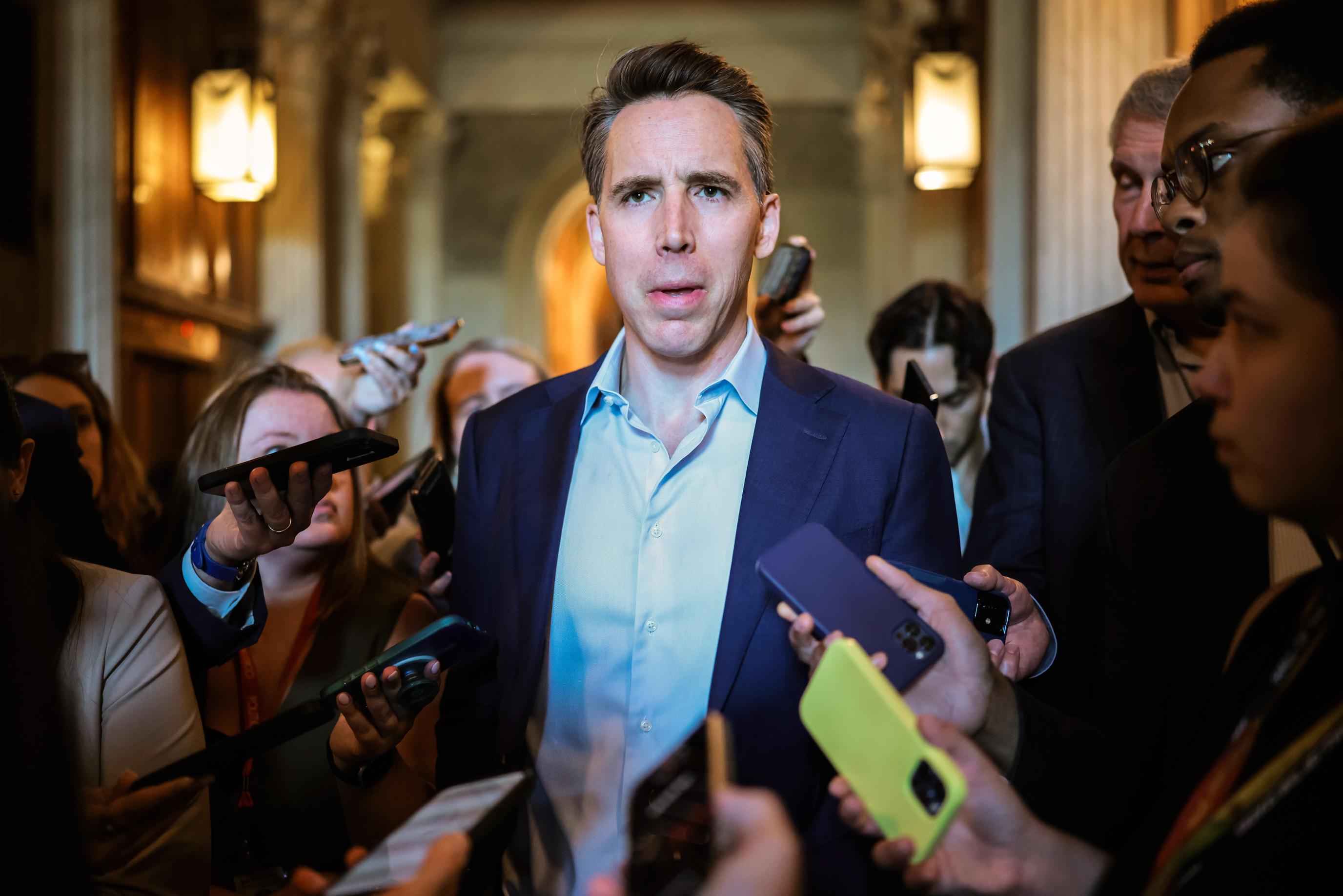
Not all Republicans are as hawkish as Hawley on immigration and foreign labor.
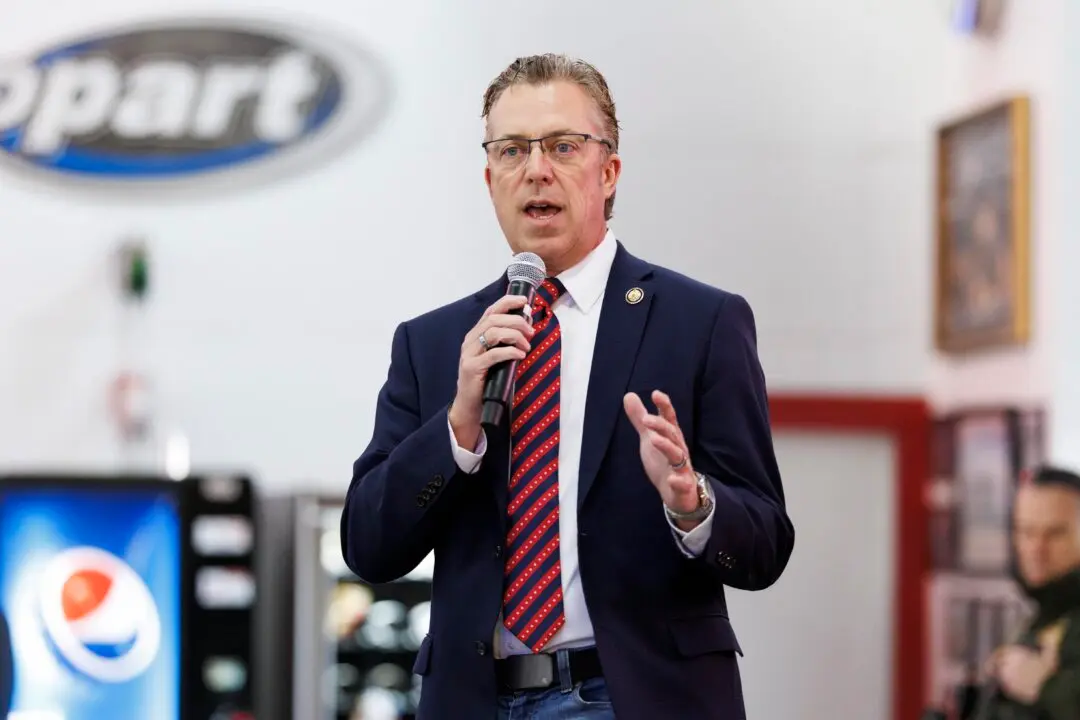
Rep. Mike Lawler (R-N.Y.) told The Epoch Times he opposes the $100,000 fee, saying many hospitals and businesses in his district rely on H-1Bs.
He did not want to speak in detail about prospective changes to the H-1B.
“From my vantage point, you have to reform the entire system, not piecemeal,” Lawler said.
Rep. Erin Houchin (R-Ind.) told The Epoch Times she does not support an end to the H-1B visa.
“I think it’s something that certainly needs to be reformed,” she said, adding that the lottery system could be changed.
“I’m not sure that eliminating it is going to be the right strategy for our economic stability when we’re still trying to get people back to work through COVID and with our new work requirements for welfare.”