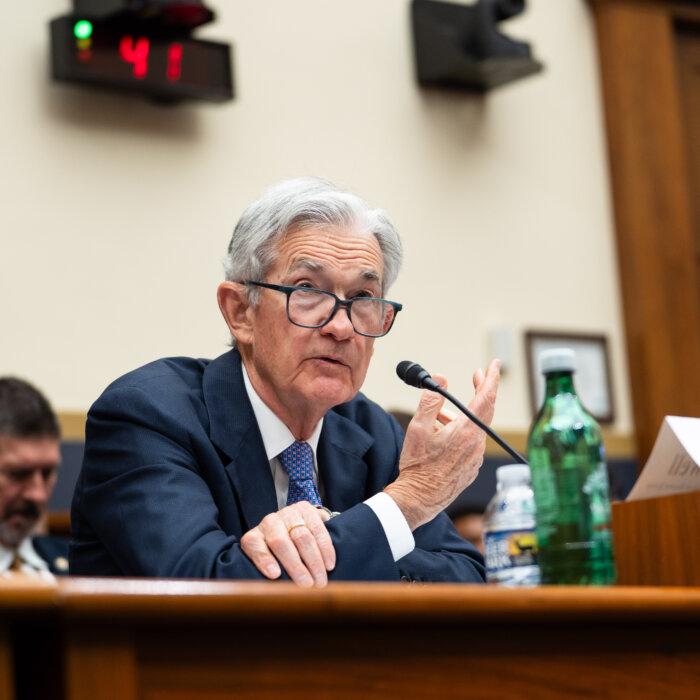
Appearing before the Senate Banking Committee on June 25 for a second day of his semi-annual monetary policy report to Congress, Federal Reserve Chair Jerome Powell faced criticism from GOP lawmakers over the central bank’s failure to lower interest rates.
Repeating his position from the House Financial Services Committee hearing the day before, Powell told committee members that President Donald Trump’s sweeping global tariffs will likely raise inflation in the coming months.
The debate centers on whether these tariffs will lead to persistent long-term inflation pressures or one-time adjustments, Powell said.
“There will be some inflation from tariffs coming,” the Fed chief said. “Not yet, but over the course of the coming months.”
Since the president unveiled the contours of his comprehensive tariff agenda in April, scores of inflation reports suggest that price pressures have yet to materialize.
However, Powell believes that somebody in the supply chain will eventually pay the higher levies and that “some of that is going to fall on the consumer.”
“We’re just kind of waiting to see more data on that,” he said.
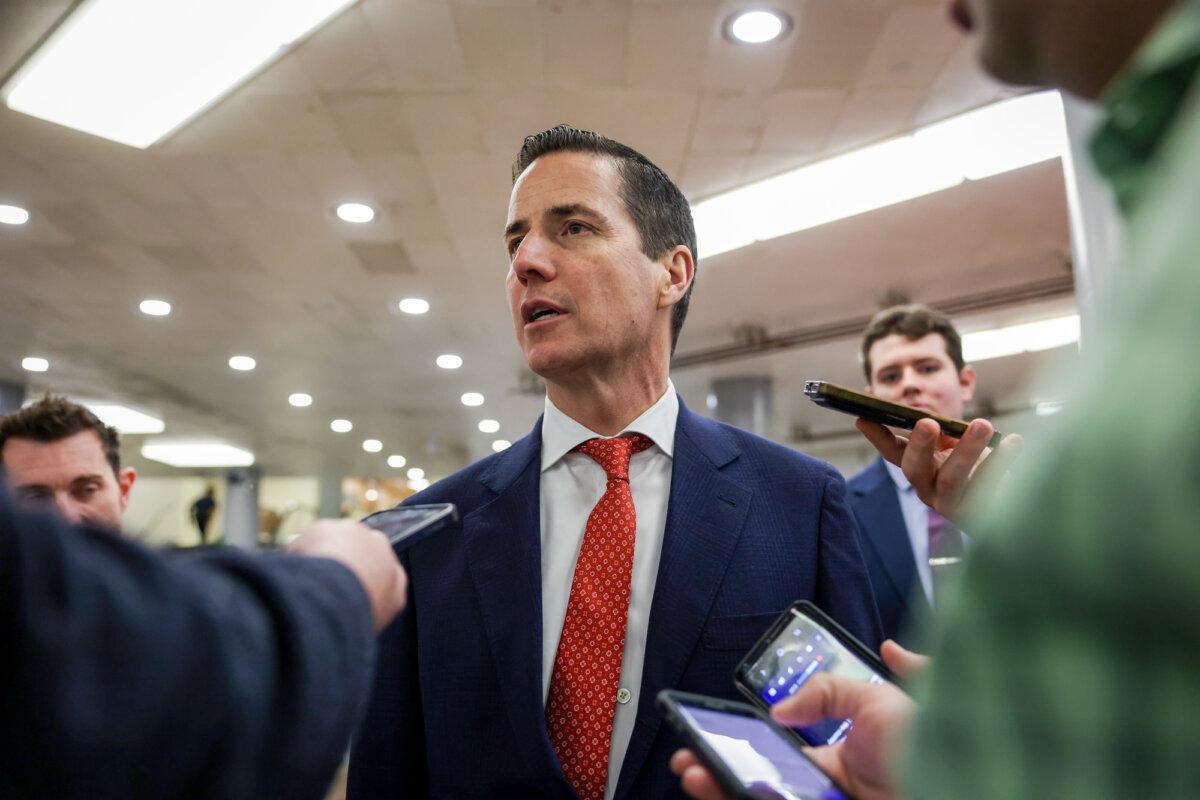
Echoing Trump’s grievances, Sen. Bernie Moreno (R-Ohio) suggested that the Federal Reserve is costing the federal government $400 billion per year by not lowering interest rates.
“Nobody in this chamber has that kind of power to have a $400 billion impact on this economy, on our deficit,” Moreno said, accusing Powell of not acting because of bias.
“I just think that you should consider whether you’re really looking at this from a fiscal lens or a political lens because you just don’t like tariffs.”
Moreno also pointed to a chart suggesting that automobile prices, based on costs of passenger vehicle exports from Japan, are down this year.
“Inflation in America is down,” he stated.
The next major inflation report will be the Fed’s preferred inflation gauge, the personal consumption expenditures (PCE) price index, on June 27.
The consensus estimate indicates that the PCE index rose by 0.1 percent monthly in May.
Core PCE, which strips out the volatile energy and food categories, is also expected to increase by 0.1 percent.
Sen. Peter Ricketts (R-Neb.) told Powell that higher import duties could result in a one-time price hike that would not lead to sustained inflation pressures.
“If the tariff is only put in once and just maintains that flat rate there, then how could that be inflationary in the second year?” Ricketts said.
Powell noted that tariffs could be a one-time adjustment comparable to an oil shock, where prices come back down after traveling through the marketplace.
“It doesn’t raise inflation, just raises prices once,” he said.
A one-time price increase could be the base case, Powell noted, but it is a situation “you want to approach carefully.”
“As the people who are supposed to keep stable prices, we need to manage that risk. That’s all we’re doing,” he added.
He pointed out that his colleagues anticipate interest rates will decrease by the year’s end.
‘No Inflation’: Trump
Speaking to reporters at the NATO summit on June 25, Trump accused Powell of being a “very political guy.”The president said that he would be fine if Powell raised interest rates in a year, assuming inflation started climbing.
For now, according to Trump, there is “no inflation,” and lower rates could reduce the U.S. government’s borrowing costs.
“If there’s inflation in two years or three years or one year from now, you raise the rate, you take care of the inflation, among other things,” Trump said. “But he’s probably a very political guy. I guess I don’t know.”
Trump also revealed that he has “three or four people” in mind to succeed Powell when his term expires next year.
While he stopped short of listing names, betting website Polymarket suggests Federal Reserve Gov. Christopher Waller is the favorite.
Former Federal Reserve Gov. Kevin Warsh, National Economic Council Director Kevin Hassett, and economist Judy Shelton are other names floating in the betting markets.
Last week, Waller stated that he would support cutting interest rates “as early as July” because the president’s tariffs are not posing a threat to the U.S. economy.
“That would be my view, whether the committee would go along with it or not.”
Citing long and variable lags, if there are downside risks to the labor market, then monetary policymakers would need to act now rather than wait.
“Why do we want to wait until we actually see a crash before we start cutting rates?” Waller said.
The next two-day policy meeting will take place on July 29 and July 30.