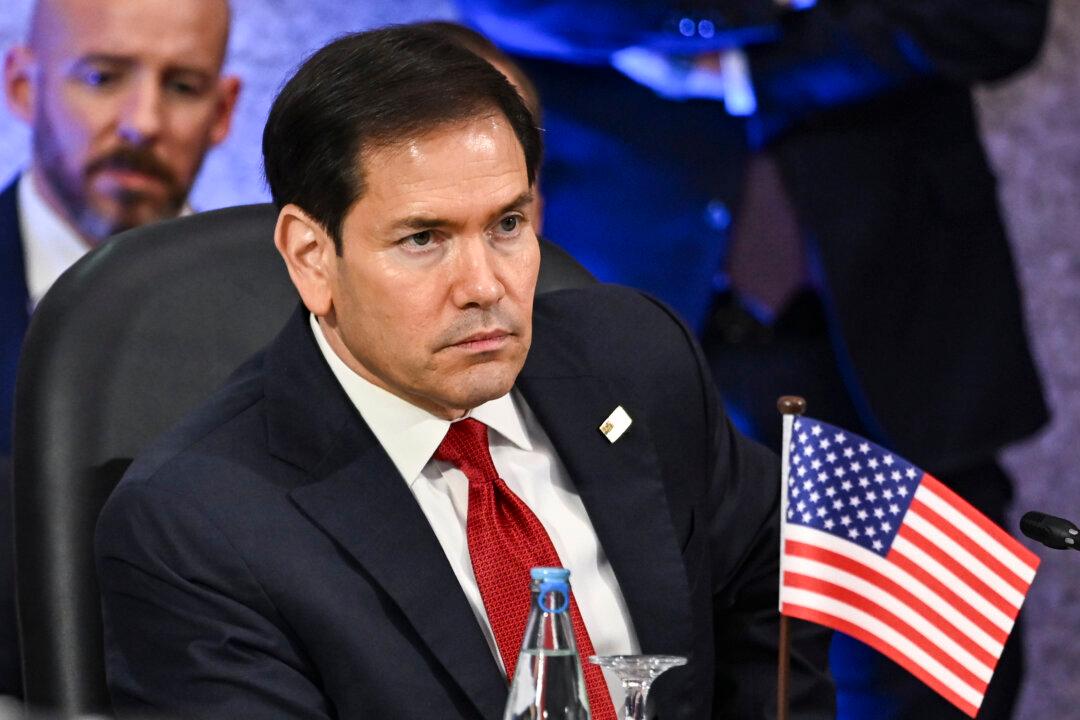
Gen. Dan “Razin” Caine, chairman of the Joint Chiefs of Staff, told senators on June 11 that he does not believe that Russian President Vladimir Putin would stop at Ukraine if he succeeded in conquering the country.
When Sen. Lindsey Graham (R-S.C.) asked whether he believed that Putin would halt his aggression at Ukraine’s borders, Caine said, “I don’t think he is.”
Hegseth, who was asked the same question, responded more cautiously: “Remains to be seen.”
Graham, a vocal critic of the Kremlin, dismissed Hegseth’s answer.
“It doesn’t remain to be seen,” he said. “[Putin] tells everybody around what he wants to do.”
Graham pointed to Russia’s stockpiling of weapons far beyond what is needed for the war in Ukraine.
Drawing a parallel to the lead-up to World War II, he said the West must take autocrats at their word. Hitler said he wanted to “kill all the Jews,” he said, arguing that Western leaders “miscalculated” and did not think that he was serious, missing an opportunity to act early and potentially head off the Holocaust.
“The danger of that is that like 50 million people get killed,” Graham said. “So let’s don’t [sic] do that now.”
The South Carolina Republican also warned that Iran’s threats to destroy Israel should be taken seriously. He pointed to Iran’s pursuit of nuclear weapons—something he said the United States must stop.
“Iran cannot have a nuclear weapon because they’ll use it,” Graham said. “They’re homicidal maniacs—religious Nazis.”
Turning to broader global threats, he described China as an “expansionist power” ready to take Taiwan unless deterred and warned that Russia would “dismember Ukraine and keep going” if the United States did not stop it.
At the June 11 hearing, he urged passage of the bill, saying it would help “grind Putin’s war machine to a halt” while sending a strong deterrent message to China and Iran.
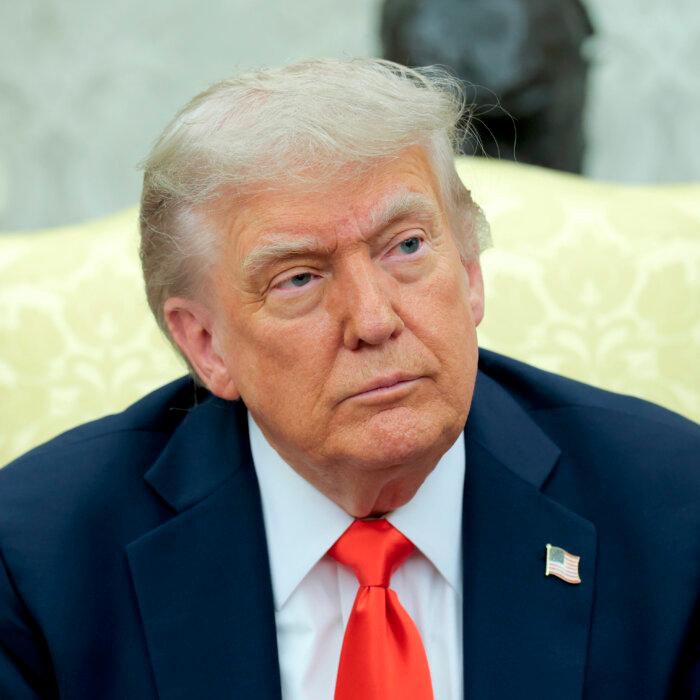
President Donald Trump, who has been trying to broker an end to the Russia–Ukraine war, has remained noncommittal on Graham’s sanctions bill, telling reporters at the end of May that he needs to review it.
Trump said he relayed the analogy to Putin when the two spoke on the phone.
“I said, ‘President, maybe you’re going to have to keep fighting and suffering a lot,’ because both sides are suffering before you pull them apart, before they’re able to be pulled apart,“ Trump said. ”You see [it] in hockey; you see it in sports. The referees let them go for a couple of seconds, let them go for a little while before you pull them apart.”
Ukrainian President Volodymyr Zelenskyy rejected Trump’s comparison.
The Kremlin has confirmed that discussions are underway to arrange a new round of talks between Russian and U.S. officials aimed at improving bilateral relations.
Russia’s ambassador to the United States, Alexander Darchiev, told state media that a meeting is expected “very soon,” following earlier rounds held in neutral countries. Kremlin spokesman Dmitry Peskov said preparations are ongoing but cautioned that numerous unresolved issues remain.
“Dialogue is continuing,” Peskov told reporters on June 11. “Everything is being carried out by diplomats within the framework of understanding reached between President Putin and President Trump. At the same time, there are a lot of sticking points.
“One can hardly hope for a fast resolution.”