Prosecutors on Aug. 18 urged a Utah judge to uphold all charges, including one carrying a potential death sentence, in the case against Charlie Kirk’s accused killer.
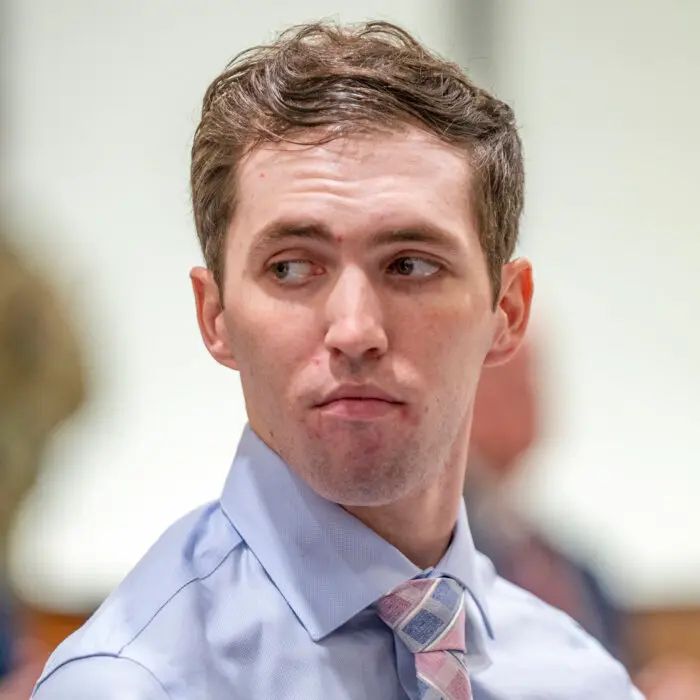
In their 19-page filing in Utah County’s Fourth District Court, prosecutors rebutted an Aug. 11 memo from lawyers representing the defendant, Tyler James Robinson, 23.
Robinson’s defense team had argued that evidence presented during a preliminary hearing last month failed to support the death penalty. They said that the evidence also did not establish “probable cause”—a reasonable belief that their client committed the alleged offenses. Under Utah law, that standard must be met for the case to proceed to trial.
Prosecutors counter-argued that defense lawyers ignored important facts damning to their client while misconstruing legal standards to favor him.
Further, prosecutors said evidence clearly shows that others besides Kirk were at great risk of being killed—an “aggravating” circumstance that supports a death-penalty-level charge, they argued.
A gunman, alleged to be Robinson, fatally shot Kirk in the neck on Sept. 10, 2025, as he spoke to a crowd of about 3,000 people in a courtyard at Utah Valley University in Orem, Utah. Some attendees were “in the line of fire,” while other people were near Kirk, putting them in the “zone of danger,” prosecutors said.
Those basic facts show that other people’s lives were imperiled, they argued.
Defense lawyers had said, “The State has failed to show that the actual conduct created a ‘high probability’ that someone other than Mr. Kirk would be killed.”
However, prosecutors pointed out that defense lawyers made no challenge to evidence showing that Robinson “was the person who crawled to the sniper’s perch ... fired the fatal shot ... hid the rifle in a wooded area, got rid of some of the clothing he was wearing, and told his roommate to delete their texts about the shooting.”
Robinson is accused of aggravated murder, a capital offense, in the highly publicized assassination case.
Kirk was a 31-year-old father of two who founded Turning Point USA, a conservative youth political movement that spread internationally.
Prosecutors allege that Robinson targeted Kirk because he opposed Kirk’s political and religious stances.
The defendant also faces six other charges: two counts of obstructing justice, two counts of witness tampering, and a count each of causing serious bodily harm by discharging a firearm and committing violence in the presence of a child.
The next step in the case is set for Sept. 1, when the lawyers will make oral arguments to Judge Tony Graf Jr. in his courtroom in Provo, Utah.
Graf is tasked with deciding whether prosecutors provided sufficient evidence of probable cause.
In a July 28 court filing, prosecutors told the judge that a four-day preliminary hearing earlier that month produced clear-cut evidence against Robinson.
“This is as likely as straight-forward a bindover decision as this Court will ever see,” they wrote, adding: “This isn’t a close case. The State presented more than enough evidence to support a probable cause finding on all seven charges.”
Prosecutors said that the defendant admitted to “several friends, including his roommate and romantic partner, that he assassinated Charlie Kirk.”
Robinson surrendered to police following those alleged admissions, and DNA evidence links him to gun parts and other items found near the shooting site, in addition to eyewitness testimony and surveillance, they pointed out.
It is unclear whether Graf will rule immediately after the Sept. 1 hearing. Attorneys representing Kirk’s widow, Erika Kirk, requested that Graf issue his decision no later than that date.
If Graf finds probable cause, he must “bind over” the case for trial; otherwise, the judge is required to dismiss the charges—although prosecutors could resubmit the case.
Felony criminal cases may bypass a preliminary hearing when prosecutors present evidence directly to a grand jury and secure an indictment.
However, Robinson was charged under a prosecutor’s “information.” That requires prosecutors to present evidence at a preliminary hearing and obtain a judge’s probable-cause ruling unless the defendant waives that right.