This copy is for your personal, non-commercial use only. Distribution and use of this material are governed by our Subscriber Agreement and by copyright law. For non-personal use or to order multiple copies, please contact The Epoch Times Reprints.
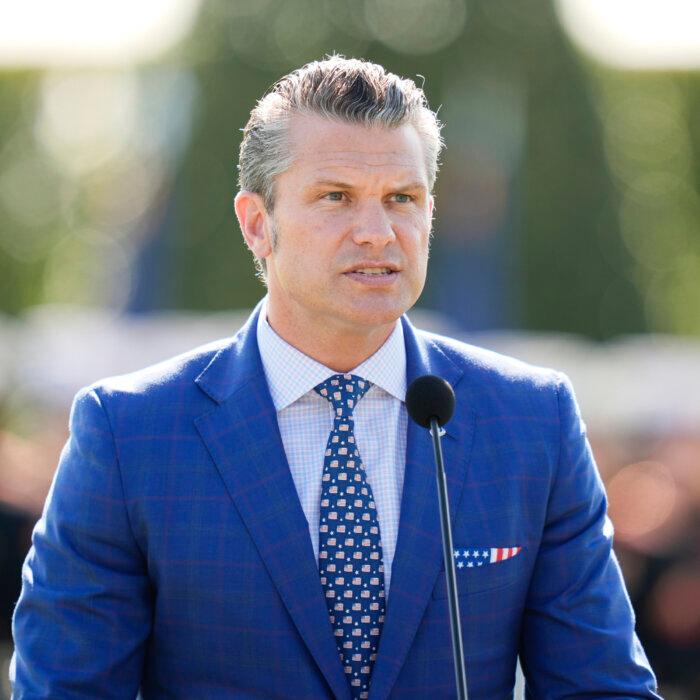
Secretary of War Pete Hegseth speaks to senior military leaders at Marine Corps Base Quantico in Quantico, Va., on Sept. 30, 2025. Andrew Harnik /Pool via Reuters
Secretary of War Pete Hegseth said on Oct. 10 that President Donald Trump has directed the creation of a new counter-narcotics joint task force in the Southern Command (SOUTHCOM) area of responsibility.
The SOUTHCOM oversees U.S. military operations in Central America, South America, and the Caribbean Sea. The joint command has more than 1,200 military and civilian personnel.
Hegseth said in a post on X that the new task force will be operating in SOUTHCOM’s area of responsibility “to crush the cartels, stop the poison, and keep America safe.”
“The message is clear: if you traffic drugs toward our shores, we will stop you cold,” the Pentagon chief said.
In a statement, SOUTHCOM announced that the new task force will be led by the II Marine Expeditionary Force—a combined arms force made up of ground, air, and logistics forces—to “synchronize and augment counter-narcotics efforts across the Western Hemisphere.”
The task force will help to identify narcotics trafficking patterns, bolster real-time intelligence sharing between the U.S. military and federal law enforcement, and enhance partner nations’ counter-narcotics capacity, the joint command stated.
“Transnational criminal organizations threaten the security, prosperity, and health of our hemisphere,” Adm. Alvin Holsey, commander of SOUTHCOM, said in the statement.
“By forming a [joint task force] around II [Marine Expeditionary Force] headquarters, we enhance our ability to detect, disrupt, and dismantle illicit trafficking networks faster and at greater depth—together with our U.S. and partner-nation counterparts.”
This comes as the United States is increasing operations to combat drug trafficking in the Caribbean Sea. Since September, the U.S. military has conducted four strikes against ships in the Caribbean Sea that U.S. officials said were carrying illegal drugs to the United States.
The most recent strike on Oct. 4 targeted a ship in international waters off the coast of Venezuela, which Hegseth said was linked to “designated terrorist organizations.” Four drug traffickers were killed in that strike, according to the war secretary.
The United States also deployed F-35 stealth fighters to a Puerto Rico airbase and warships to conduct operations in the Caribbean. Trump has said that the military buildup in the Caribbean was aimed at combating drug trafficking into the United States.
The president has accused Venezuelan leader Nicolás Maduro of involvement in drug trafficking, which Maduro and Venezuela’s ruling regime have rejected.
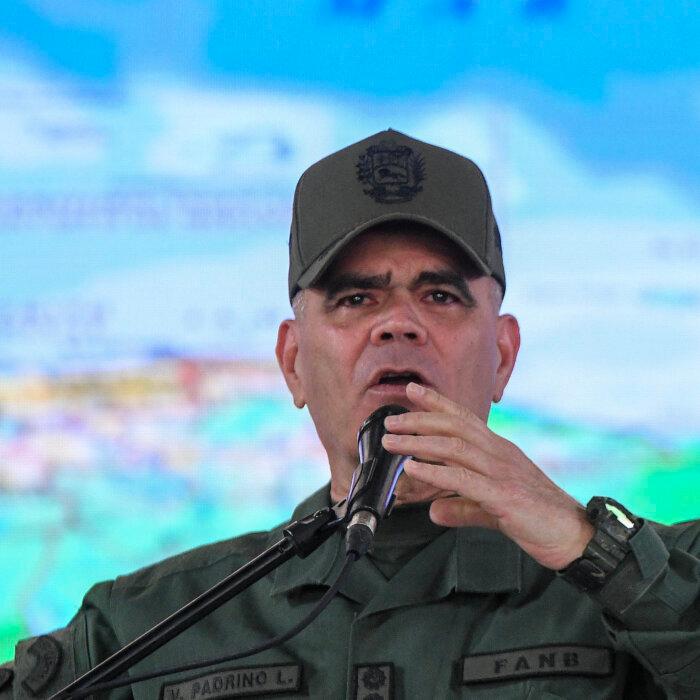
On Oct. 2, Venezuelan Defense Minister Vladimir Padrino López alleged that five U.S. fighter jets were detected near the country’s coastline, calling the presence of U.S. military aircraft provocative.
The Pentagon also detected two Venezuelan military aircraft near a U.S. Navy vessel in the Caribbean Sea on Sept. 4, and warned “the cartel running Venezuela” not to pursue any further attempts to obstruct U.S. counter-narco-terror operations in the region.