
The committee that advises the Centers for Disease Control and Prevention (CDC) may advise the agency to change the current recommendation that all infants receive a dose of the hepatitis B vaccine shortly after birth, according to a document released on Sept. 18.
Hepatitis B is a liver disease for which there is no cure, although drugs can help manage infections. Hepatitis B can spread in multiple ways, including from pregnant women to their babies.
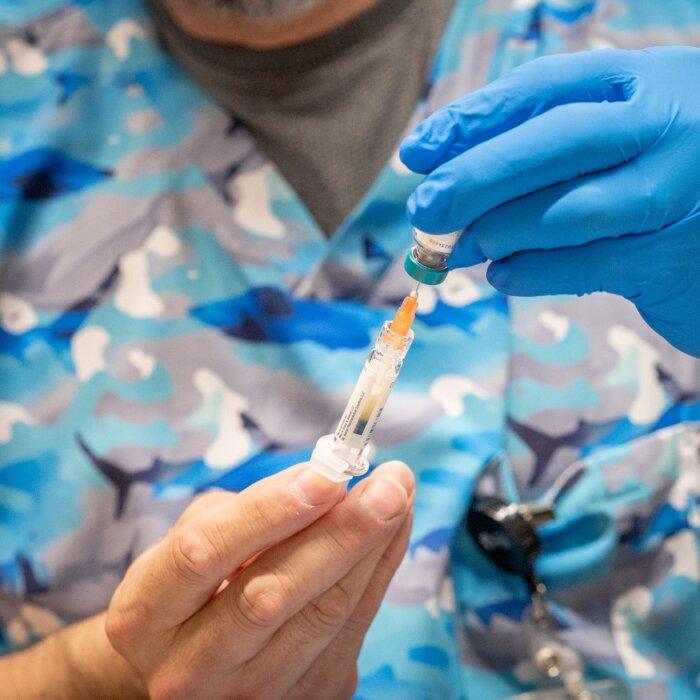
“I personally don’t believe that the evidence is solid to say the hep B shot needs to be given at birth,” Makary said in a recent interview on Fox News.
The doctors say that infants born to women who tested negative during pregnancy do not need the vaccine until later in childhood.
Other experts favor keeping the current schedule in place.
“In the old adage, ‘if it ain’t broke, don’t try to fix it,’” Dr. William Schaffner, a former ACIP member who has for decades been a liaison to the panel, told The Epoch Times in a recent interview. “What’s wrong with the current system? It’s working. It’s working brilliantly.”
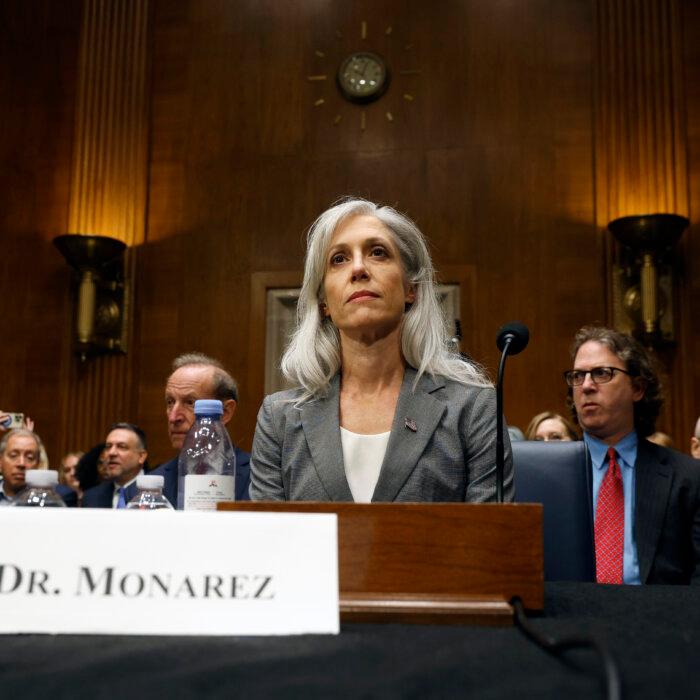
Susan Monarez, the CDC’s last permanent director, and Dr. Debra Houry, the CDC’s chief medical officer before she resigned following Monarez’s termination, said during an appearance on Capitol Hill on Wednesday that they had not seen data that supported changing the schedule.
“I would want them to keep it at birth,” Houry said. “I think there’s a lot of moms that don’t know they have hepatitis that can then transmit it to their baby. Even if a mom is hepatitis-B negative, we don’t know what the home situation is.”
“Any potential changes to the childhood vaccine schedule will be based on the latest available science and only after the ACIP recommends it and the Acting CDC Director reviews and approves those recommendations,” a spokesperson for the Department of Health and Human Services said.
ACIP is going to vote on whether all pregnant women should be tested for hepatitis B. They will then vote on whether to state that if a mother tests negative, the first dose is not administered until the child is at least 1 month old.
“Infants may receive a dose of hepatitis B vaccine before one month according to individual based decision-making,” which is known as shared clinical decision-making, according to the voting language.
Advisers will also vote on whether the schedule should be updated to state that the measles, mumps, rubella, and varicella (MMRV) vaccines are not recommended for children under the age of 4. The schedule, if the change is approved, would state that the population should receive the measles, mumps, and rubella (MMR) vaccine, and a varicella shot, separately. Advisers had expressed concern about the elevated risk of febrile seizures in younger children following MMRV vaccination.