More states could join the national scramble to redraw congressional maps now that Missouri Republicans have approved a plan targeting a seat that has long been held by Democrats.
That makes Missouri the third state to enter the fray of a growing national redistricting battle, which began after Texas took up President Donald Trump’s call for Republican states to change political boundaries.
With Missouri’s entry into the battle, other Republican states could follow suit.
Several Democrat-led states, meanwhile, have vowed to respond by redistricting their own maps. Others have expressed interest but may face substantial hurdles to following through on changes.
Missouri
On Sept. 12, Republicans in the Missouri Senate approved a redrawn congressional map to increase Republicans’ odds in a district that has been held by Democrats for 76 years.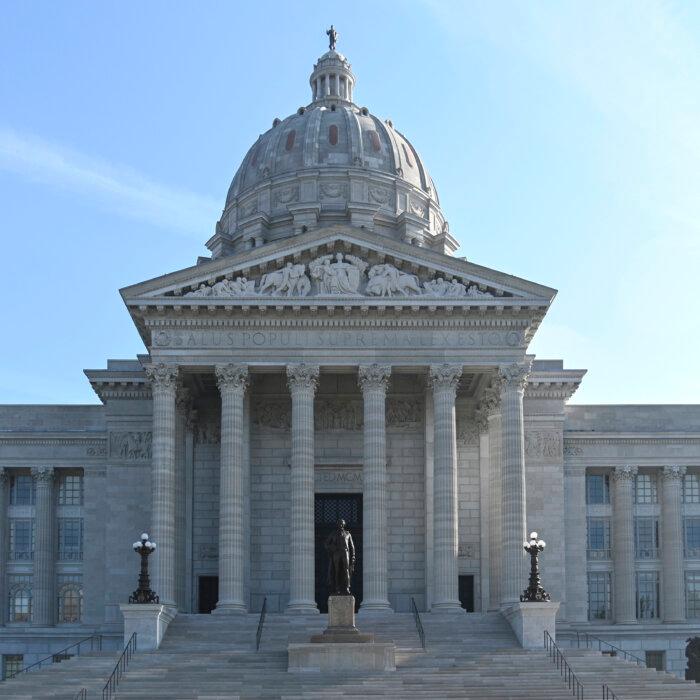
The Fifth Congressional District, encompassing Kansas City, Missouri, and the surrounding area, is held by Rep. Emanuel Cleaver (D-Mo.).
The redrawn district would stretch much deeper into the Republican central region of the state, making changes to nearby districts that will remain firmly in GOP hands.
Cleaver’s seat is one of only two held by Democrats in Missouri.
The other is based around St. Louis. That seat would remain under Democratic control with the redrawn maps.
Ohio
Ohio was already required by law to redraw its congressional map before the issue became a national controversy.The current maps, drawn in 2022, were passed without sufficient Democratic support, which is required under state law in the Buckeye State.
One-half of the Democrats in the state Legislature have to sign off on the plan.
The two parties have presented competing proposals: The Democrats’ plan would give their party about seven of the state’s 15 seats; Republicans’ plan would give Democrats five seats, about one-third of the state delegation.
Republicans are expected to at least seek to make it more difficult for Reps. Marcy Kaptur (D-Ohio) and Emilia Sykes (D-Ohio) to win reelection.
If the two parties cannot reach an agreement by Sept. 30, the issue will go to a bipartisan redistricting commission for adjudication.
Maryland
Maryland could also go after its state’s sole Republican: House Freedom Caucus Chairman Andy Harris (R-Md.).Maryland Gov. Wes Moore has given tentative backing to redistricting in the state.
Indiana
Indiana lawmakers are also considering following other Republican states’ lead.Lawmakers in the state were initially resistant, but have faced a persistent lobbying campaign to join in redistricting over recent weeks.
In early August, Vice President JD Vance visited the state to encourage redistricting.
Democrats currently hold two of the state’s nine seats. Some GOP lawmakers worry that making any drastic changes could weaken Republicans’ position in nearby districts.
Illinois
Another key Democratic state, Illinois, is also considering redistricting.The state currently has three Republican seats.
There are challenges to redrawing the map here. For one, critics allege that the state’s maps are already heavily gerrymandered, raising questions about whether Democrats could further increase their share of the U.S. House delegation from the state.
Florida
Republicans are also eyeing potential pickup opportunities in the Sunshine State. The former battleground has veered sharply toward Republicans in recent years, with Trump winning by double-digit margins in 2024.Florida Gov. Ron DeSantis has been open about his hopes that the Legislature will redraw Florida’s maps.
Currently, eight of Florida’s 28 congressional districts are held by Democrats.
Rep. Jared Moskowitz (D-Fla.) recently suggested in a podcast interview that if Republicans in the state were to move forward with redistricting, they could flip two or three Democratic seats.
This push could face hurdles.
A recent poll found that most voters, including a plurality of Republicans, oppose redistricting the state; only 14 percent of Florida independents expressed support for the idea. That could affect legislators’ willingness to take up the push.
New York
During the early days of the redistricting fight, some Democrats, including House Minority Leader Hakeem Jeffries (D-N.Y.), raised interest in redrawing the Empire State’s congressional maps.Hochul initially expressed openness.
“What I’m going to say is, all is fair in love and war,” Hochul told reporters on July 24. “[I am] going to see what our options are.”
Nebraska
Nebraska is dominated by Republicans, but the decision of Rep. Don Bacon (R-Neb.) to step down from his seat in the district that includes Omaha, Nebraska, has prompted new enthusiasm from Democrats about their prospects in the district.Bacon has repeatedly managed to fight off challengers in the state’s Second Congressional District, which has trended Democratic over recent years.
In 2024, Bacon defeated Tony Vargas in a rematch, with Bacon winning by a margin of 1.86 percent.
The Nebraska Examiner reported that at least four state lawmakers traveled to the White House earlier in September for a “state leadership conference.” Iowa lawmakers were also at the conference.
State lawmakers told the outlet that they were skeptical about the prospects for redistricting in the state, which would need the support of at least 25 state senators to overcome a filibuster.
Utah
Utah has also been ordered to redraw its maps by a state-level judge, who claims that the current maps violate anti-gerrymandering laws.Currently, Republicans hold all four of the state’s congressional districts.
All four of the districts converge in the Salt Lake City area. Salt Lake City, the largest metro in the state, also contains the highest concentration of Democratic voters. The current congressional maps have a mix of urban and rural voters in each district.
Gibson gave lawmakers until Sept. 25 to present new maps.
Democrats hope that the process may result in Salt Lake City voters being gathered into a single district, which could give the party a pickup opportunity.
Kansas
Republicans are also mulling mid-decade redistricting in Kansas, where Democrats hold one of the state’s four congressional seats.The district of Rep. Sharice Davids (D-Kan.) includes Johnson County, which encompasses large portions of Kansas City, Kansas.
The Third Congressional District has been held by Democrats since Davids won the seat in 2018.
Republicans dominate politics in the Sunflower State, and some have expressed interest in dividing Johnson County voters into nearby districts in order to decrease Davids’s reelection odds.
Kansas Gov. Laura Kelly, a Democrat, could veto any bill proposed by the Legislature that sought to harm Democrats’ prospects in the next election.
Such a move would need to be overridden by a majority of at least two-thirds of each chamber in the state Legislature to move forward, which Republicans would have the seats to do.