The compliance review report was sent to California High-Speed Rail Authority (CHSRA) CEO Ian Choudri along with a letter notifying him of the possible termination of unspent federal grants.
“These change orders have been a major factor in the project’s escalating costs, which have risen from an initial estimate of $33 billion to between $89 and $128 billion,” the report reads.
“Change order” is an industry term for an amendment to a construction contract. A change order usually increases the contract price, adjusts the amount of time the contractor has to complete the work, or both.
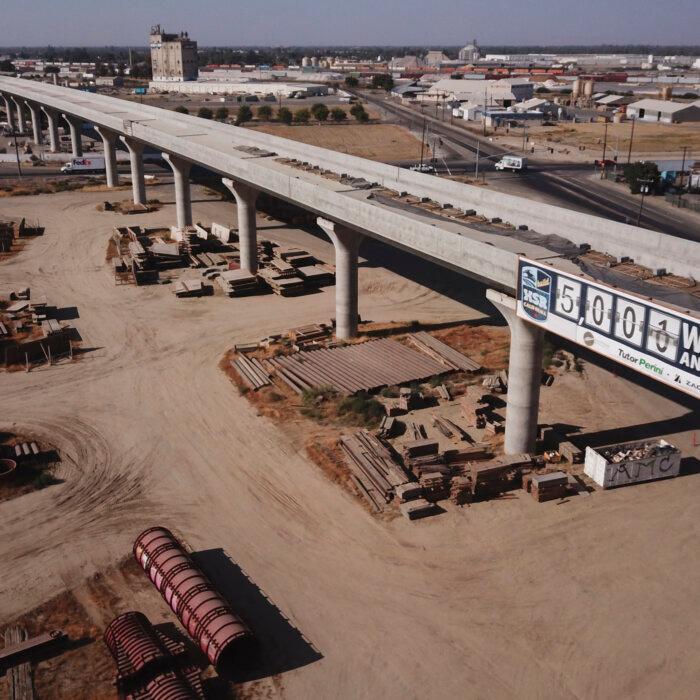
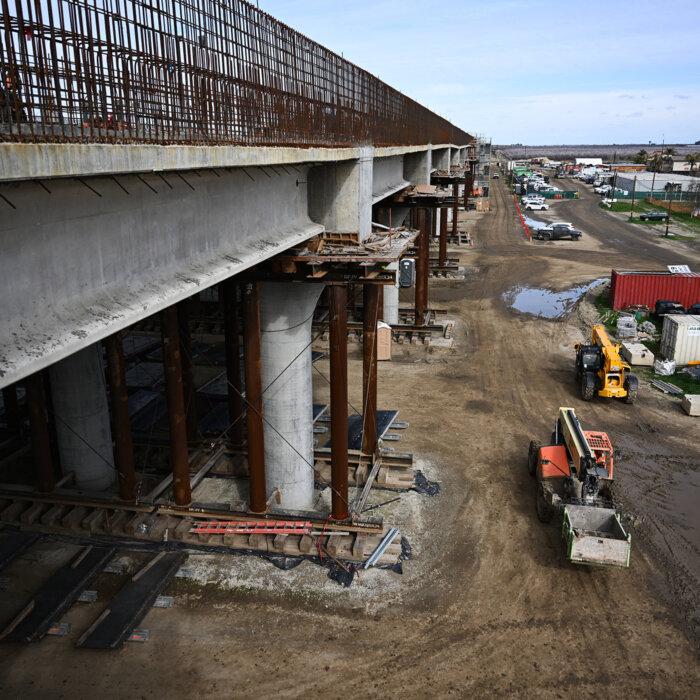
FRA staff found that there were “a substantial number of change orders” between June 2021 and April 2025 regarding construction in the Central Valley.
“We don’t like inflation of costs, we don’t like change orders on public projects, but it hasn’t been that way,” state Sen. Dave Cortese, a Democrat and chair of the California Senate Transportation Committee, told The Epoch Times in a previous interview.
“We’ll obviously try to hold costs down, but what we do know is there’s a lot of people working right now. That money doesn’t go out of the window.”
More than $1.84 billion has been paid to more than 900 small businesses involved in the project, including $859 million to 296 certified disadvantaged businesses and $323 million to 107 certified disabled veteran businesses, according to the statement.
The FRA also discussed the CHSRA’s lack of legal power.
“The limits on CHSRA’s legal authority, including the authorizing legislation for the CHSR System, have severely curtailed CHSRA’s ability to deliver the CHSR Project effectively and efficiently, and has resulted in substantial delay and cost overruns,” the report reads.
With that restriction in place, the CHSRA must negotiate an agreement with each affected landowner to resolve conflicts.
The CHSRA is “politically hamstrung” and has no leverage to get property owners, city governments, or utilities to reach an agreement, causing significant delays that often take several months to resolve and can involve paying attorney fees for the involved third parties, according to the report.
A 400-foot section of a 22.5-mile guideway cannot be finished at this time because of a dispute with the owner of an irrigation canal, the report states. The issue could have been resolved with a canal relocation in June 2023; however, the parties involved had agreed to address land rights issues first, which led to a negotiation that has lasted nearly two years with no end in sight.
The FRA concluded that there is “no viable path” to complete the segment from Merced to Bakersfield by 2033 or to complete the full high-speed rail system.
The CHSRA “strongly disagrees” with these conclusions, a spokesperson for the organization responded in a statement.
“The Authority will fully address and correct the record in our formal response to the FRA’s notice,” the statement reads.
The gap will increase if the FRA decides to terminate grants. The CHSRA has 30 days to dispute the FRA’s notice.
“[This is] providing the necessary resources to complete the project’s initial operating segment,” the CHSRA said in the statement.