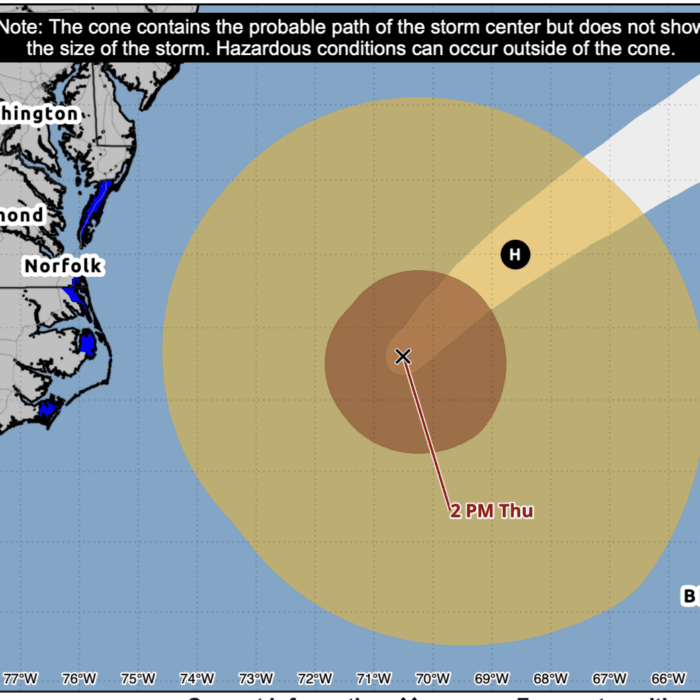
The National Hurricane Center (NHC) discontinued its tropical storm warnings for nearly all of the North Carolina coastline at 5 p.m. ET on Aug. 21 as Hurricane Erin moved further northeast.
Erin’s distance from the Outer Banks has increased nearly 100 miles in the last three hours, after being located 285 miles away from Cape Hatteras by the NHC’s 2 p.m. advisory update.
Tropical storm conditions are expected to reach Bermuda late on Aug. 21 through early Aug. 22, and gale-force winds are possible in portions of Nova Scotia on Aug. 22, as well as the Avalon Peninsula of Newfoundland on Aug. 23.
All tropical storm warnings south of Duck, North Carolina, were discontinued, but the warning from Duck north to Chincoteague, Virginia, remains active.
North Carolina was the only state that issued a state of emergency and a mandatory evacuation due to this hurricane, which has yet to make landfall.
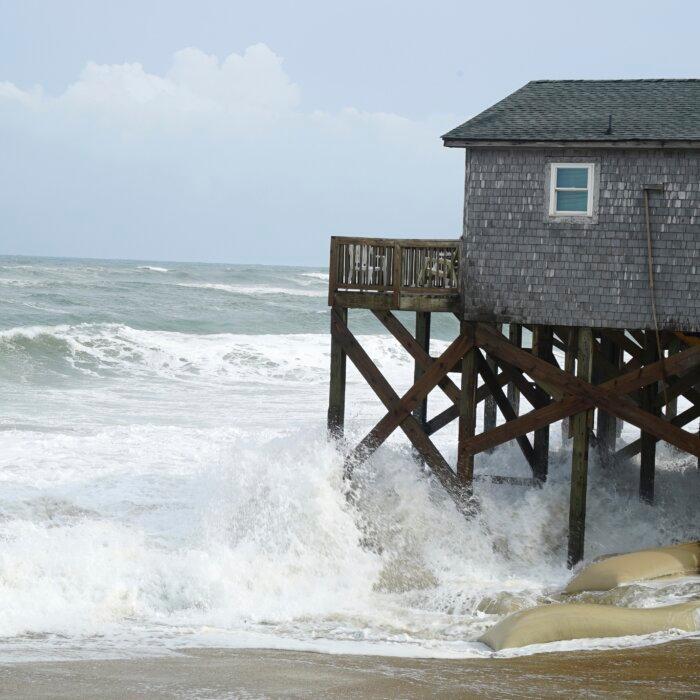
Wind and water have been battering the U.S. East Coast for several days due to Hurricane Erin’s counterclockwise convection. As much as three feet of storm surge continues to be expected along the coast as far north as Montauk Point on Long Island, New York.
According to the NHC, Hurricane Erin’s center was expected to move over the western Atlantic between the United States and Bermuda through the early morning of Aug. 22 and then pass just off the coast of Canada through Aug. 23. Eastern Canada is advised to consult local watches and warnings issued by Environment Canada.
Hurricane Erin is expected to further deteriorate, devolving into a post-tropical storm on Aug. 23.