California has become the first state to begin removing ultra-processed foods from school meals.
The new law means certain favorite junk foods—such as frozen pizza, potato chips, breakfast cereals, and sugary drinks—will not be served in California schools in the next few years.
Parts of the law will be phased in. By Dec. 31, 2027, foods sold to students must not contain certain food dyes, such as Blue 1, Blue 2, Green 3, Red 40, Yellow 5, and Yellow 6.
By June 1, 2028, the state Department of Public Health must adopt regulations defining “ultra-processed foods of concern” and “restricted school foods.” By July 1, 2029, schools will be required to phase out the restricted foods listed.


On July 1, 2032, vendors will be banned from offering “particularly harmful” ultra-processed foods or restricted foods to schools, and by July 1, 2035, schools will be prohibited from serving these foods in their meals.
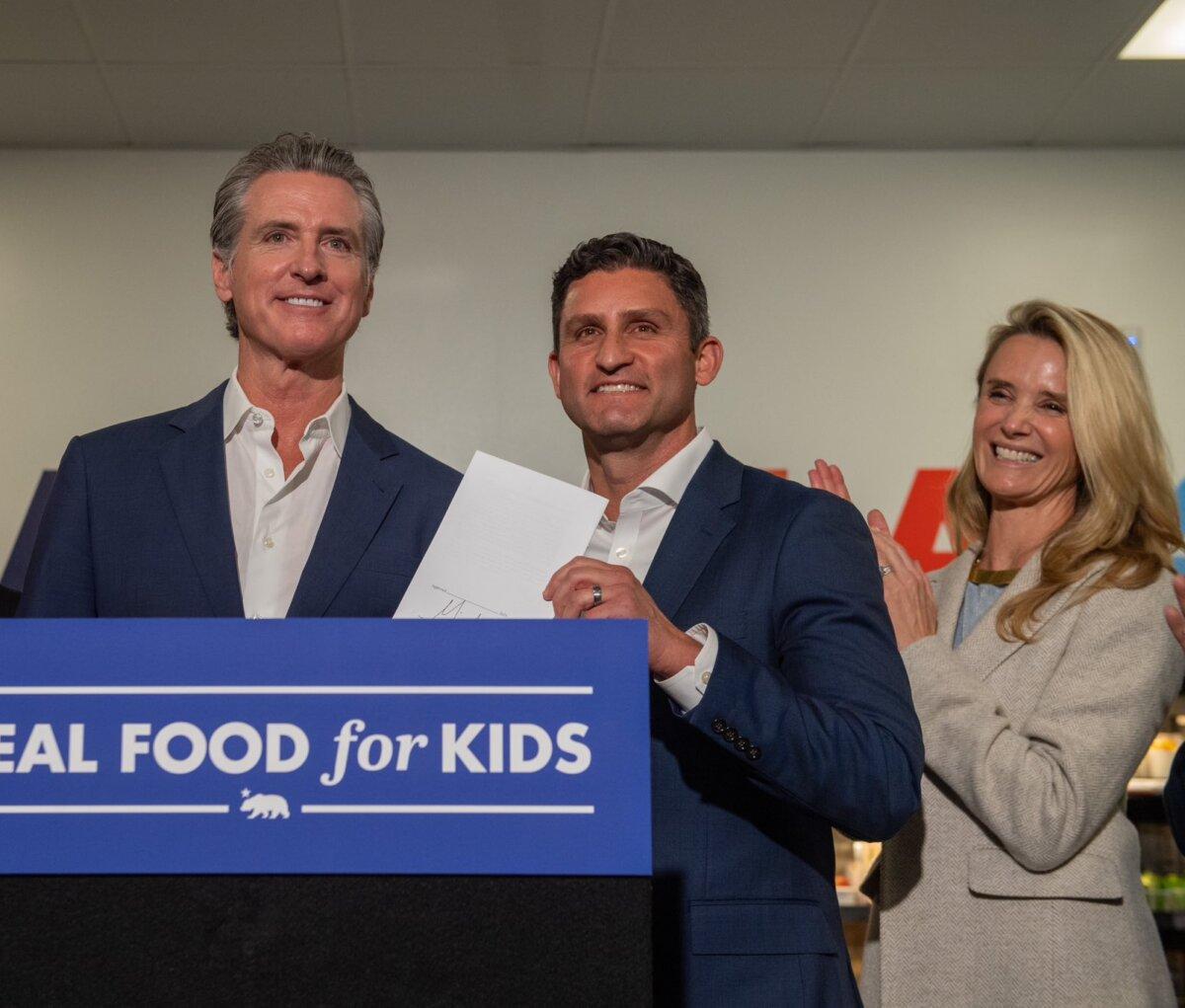
“With Gov. Newsom’s signature on AB 1264, California has taken a historic step toward protecting our children from harmful ultra-processed foods and chemical additives,” said state Assemblyman Jesse Gabriel (D-Encino), who wrote the bill. “Here in the Golden State, Democrats and Republicans are joining forces to ensure that students are receiving healthy, nutritious meals that are made from real foods, not harmful chemical additives.”
The legislation had bipartisan support, including Assembly Republican Leader James Gallagher (R-East Nicolaus) and Progressive Caucus Chair Alex Lee (D-San Jose). The bill passed the Senate with a vote of 40-0 and the Assembly by a vote of 79-1.
The new law creates a first-ever legal definition of ultra-processed foods in the United States, according to the group. Food will be considered ultra-processed if it is high in saturated fat, added sugar, or sodium, and contains a food additive, such as flavor, artificial color, emulsifier, or a thickening agent.
The law also required the state’s health department to work with University of California experts to research links between ultra-processed foods and disease.
Newsom said federal health findings about childhood prediabetes and healthy eating mattered in the state’s decision to pass the bill.