As Hurricane Erin continues to churn across the Atlantic Ocean, the National Hurricane Center (NHC) said on Monday that a tropical disturbance that appears to be following in the hurricane’s path has a chance of developing into a stronger storm within the next week.
“Environmental conditions appear conducive for gradual development of this system, and a tropical depression could form during the latter part of the week,” the agency said in a bulletin.
“This system should move westward to west-northwestward at about 20 mph across the central tropical Atlantic and approach the vicinity of the Leeward Islands toward the end of the week.”
The disturbance has a very low formation chance through the next two days, but has a 50 percent chance of formation through the next seven days, according to the NHC.

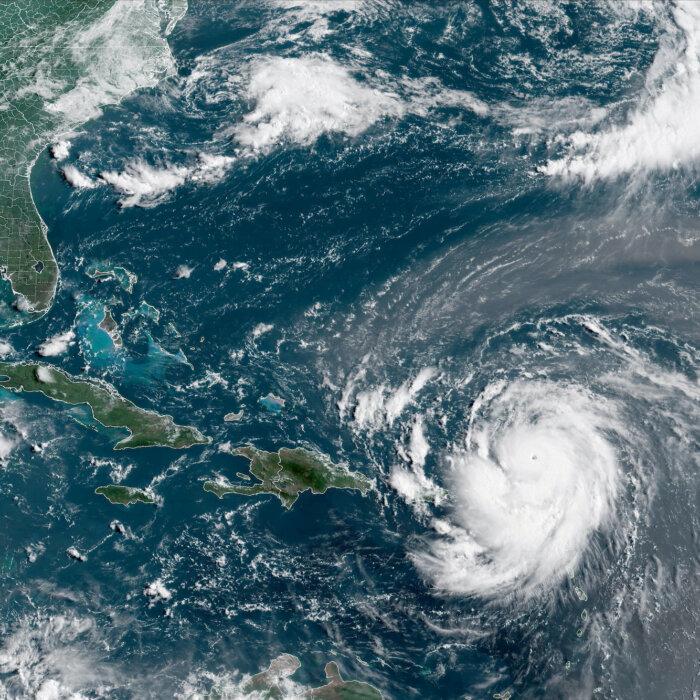
No hurricane warnings or watches have been issued anywhere, but tropical storm warnings were issued for the southeastern Bahamas as well as the Turks and Caicos Islands, according to the agency. Tropical storm watches have been issued for the central Bahamas.
Erin is also anticipated to increase in size, producing impacts along the East Coast. Tropical storm-force winds could hit the Outer Banks area in North Carolina as the size increases, it said.
Coastal flooding could occur around high tide starting Tuesday and could peak on Wednesday and Thursday, it said. Parts of the Outer Banks, the NHC added, could be inaccessible for several days due to the flooding, known as ocean overwash.
“Severe flooding will likely extend inland, where there is vulnerable or no protective dune structure, flooding homes and businesses, with some structural damage possible. Roads will likely be impassable under several feet of water, and vehicles will likely be submerged,” the county’s emergency management office said on Sunday evening.
Early Monday, Erin was located about 115 miles north-northeast of Grand Turk Island and about 890 miles south-southeast of Cape Hatteras, North Carolina. It was moving northwest at 13 mph, forecasters say.
Erin’s outer bands pelted parts of Puerto Rico and the Virgin Islands with heavy rain and tropical-storm winds on Sunday.
The Atlantic hurricane season started on June 1 and will end on about Nov. 30. Generally, the peak activity for hurricanes in the Atlantic is typically between mid-August and early October.