This copy is for your personal, non-commercial use only. Distribution and use of this material are governed by our Subscriber Agreement and by copyright law. For non-personal use or to order multiple copies, please contact The Epoch Times Reprints.

The Epoch Times
The Epoch Times
AD
The Epoch Times
US

Nessel Backs Change to Trump-era Immigration Policy

Google LogoMark Us Preferred on Google
Nessel Backs Change to Trump-era Immigration Policy
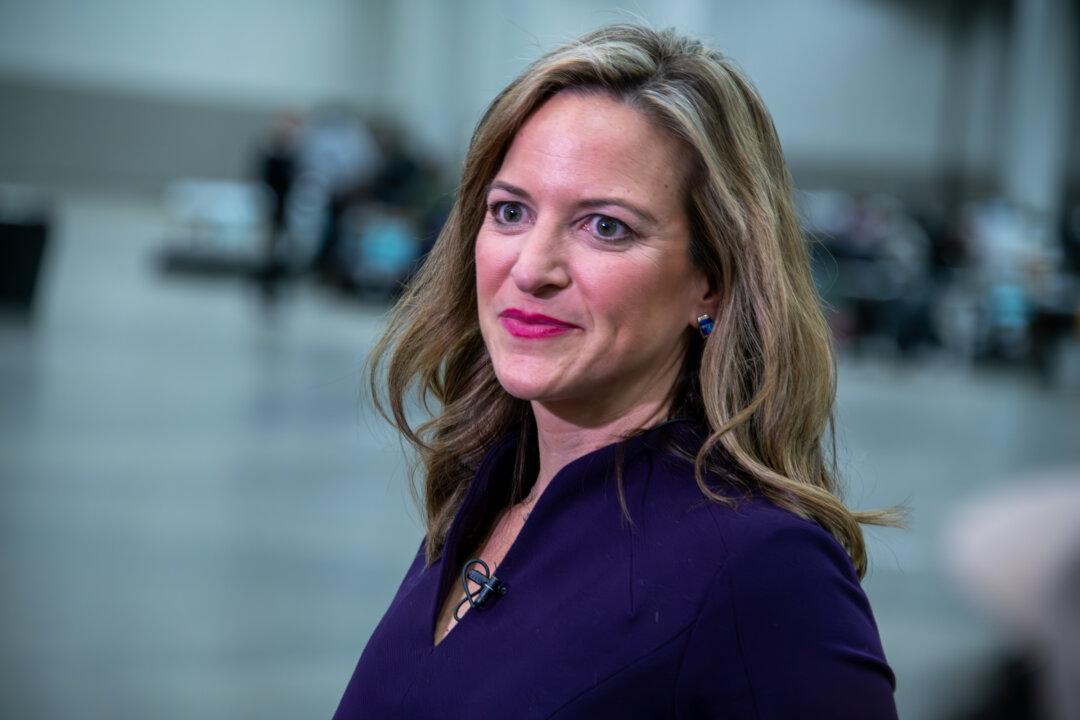
Michigan Attorney General Dana Nessel, then a private attorney, in Detroit on Oct. 16, 2013. Bill Pugliano/Getty Images
Steven Kovac
Steven Kovac
Reporter
5/10/2022|Updated: 5/11/2022

Michigan’s Attorney General Dana Nessel this week announced her support for a proposed change in a 2019 federal policy that made it harder for immigrants on welfare to obtain Legal Permanent Residency (LPR) in the United States.

On the threshold of what is expected to be a record-setting influx of migrants entering the country by crossing the southern border, Nessel and 20 state attorneys general signed a letter to Secretary of Homeland Security Alejandro Mayorkas urging that the Trump administration’s definition of a “public charge” be modified.
Democrat Nessel said in a May 10 press release that the federal government has historically interpreted a “public charge” to be a person who is primarily and permanently dependent on either public cash assistance or institutional long-term care at the government’s expense.

The Trump policy broadened the interpretation to include migrants collecting many types of state or federal welfare for any length of time and viewed it as evidence of public dependency that could adversely impact their immigration cases.

Nessel voiced her concern stating, “Under the US Immigration and Nationality Act, a noncitizen who is likely to become a public charge is generally inadmissible to the United States and ineligible to become a Lawful Permanent Resident.

A coyote people smuggler (R) guides an inflatable boat carrying migrants from Central America arriving illegally from Mexico to the United States to seek asylum, on the Rio Grande River at the border city of Roma, Texas, on March 29, 2021. (Ed Jones/AFP via Getty Images)
A coyote people smuggler (R) guides an inflatable boat carrying migrants from Central America arriving illegally from Mexico to the United States to seek asylum, on the Rio Grande River at the border city of Roma, Texas, on March 29, 2021. Ed Jones/AFP via Getty Images

“The previous administration sought to expand the definition of a public charge by declaring that the use of additional government programs constitutes grounds for such a determination.”

The letter to Mayorkas states in part, “When the 2019 rule came into effect in February 2020, increasing numbers of immigrants began to refrain from Medicaid coverage and other publicly-funded healthcare benefits based on concerns that such benefits will render them a ‘public charge’ and jeopardize their ability to obtain LPR status, and eventually, citizenship.”

According to the letter, as a result of the Trump policy immigrants increasingly began to decline the use of benefits resulting in a nationwide decrease of roughly 260,000 enrollees in child Medicaid and other reductions.

“These deterrent effects have not been limited to LPR applicants or to the rule’s enumerated public benefit programs.

“Instead, immigrants and their family members avoided state-funded health insurance programs, reduced use of medical services, and refrained from using other public benefits not covered by the rule,” the letter said.

The Department of Homeland Security had predicted that Trump’s expanded criteria for inadmissibility would “chill participation” in welfare programs causing a 2.5 percent reduction in Medicaid enrollment by individuals in households with a noncitizen.
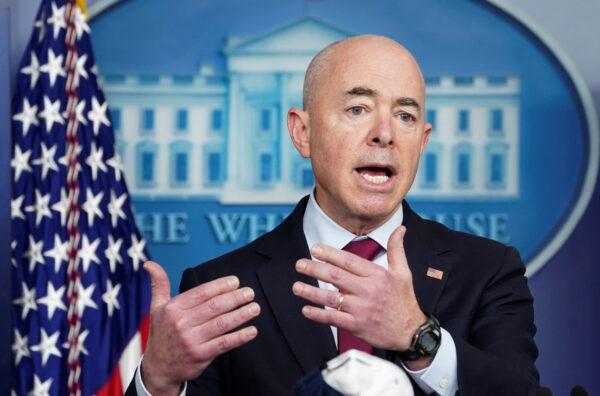
Homeland Security Secretary Alejandro Mayorkas speaks during a press briefing at the White House in Washington, D.C., on March 1, 2021. (Kevin Lamarque/Reuters)
Homeland Security Secretary Alejandro Mayorkas speaks during a press briefing at the White House in Washington, D.C., on March 1, 2021. Kevin Lamarque/Reuters

The reduction was expected to save the federal government over $4.3 billion, according to the letter.

The attorneys general contend in their letter that public health in the United States has suffered as a result of the 2019 rule and that any monetary savings have been more than offset by other costs.

They assert Trump’s policy disproportionately affected immigrant children and people of color.

Nessel said in her press release that she and her colleagues believe the proposed change to the 2019 rule “will ameliorate unwarranted chilling effects on public benefit use.”

She called for “swift action to undo the sweeping harms of the Trump-era regulations on states and their communities across the country.”


Google LogoMark Us Preferred on Google
Steven Kovac
Steven Kovac
Reporter
Steven Kovac is a former reporter for The Epoch Times in Michigan.
Author’s Selected Articles
Bill to Close Campaign Finance Law Loophole Is Introduced in Michigan
Jun 13, 2025
Bill to Close Campaign Finance Law Loophole Is Introduced in Michigan
Maine’s Supreme Court to Decide Case on Religious Liberty and Parental Rights
Jun 11, 2025
Maine’s Supreme Court to Decide Case on Religious Liberty and Parental Rights
Michigan House Sues Secretary of State Over Subpoenaed Election-Worker Training Materials
Jun 05, 2025
Michigan House Sues Secretary of State Over Subpoenaed Election-Worker Training Materials
Michigan House Holds Secretary of State Benson in Contempt for Defying Subpoena
May 25, 2025
Michigan House Holds Secretary of State Benson in Contempt for Defying Subpoena
Related Topics
immigration
welfare
Dana Nessel
Trump policy
AD
Add to My List
Save
The Epoch Times
Copyright © 2000 - 2026 The Epoch Times Association Inc. All Rights Reserved.