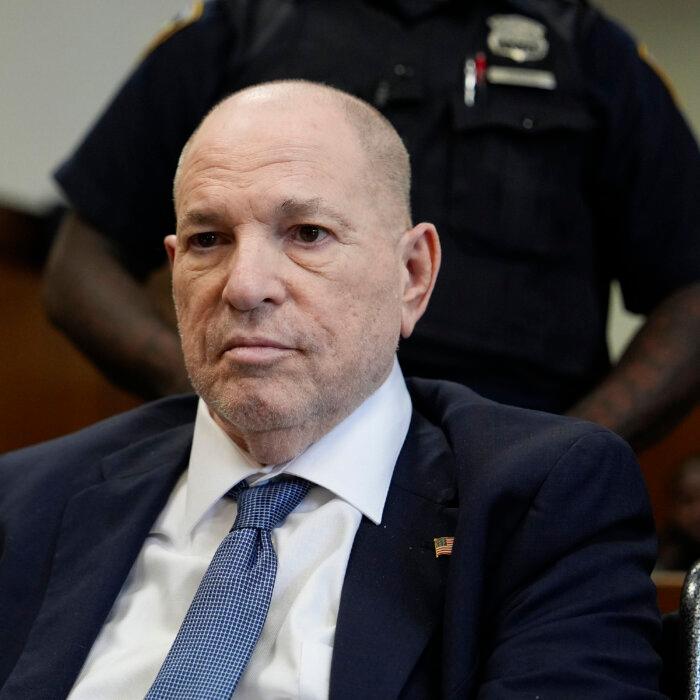
Disgraced Hollywood producer Harvey Weinstein’s sex crimes retrial in a Manhattan court ended abruptly on June 12 after the jury foreperson refused to continue deliberations, prompting the judge to declare a mistrial on the remaining rape charge.
“Deliberations became heated to such a degree I am obligated to declare a mistrial on the one count on which you didn’t reach a verdict,” Judge Curtis Farber told the jury on Thursday, per AFP, with the judge’s decision setting the stage for Weinstein to face a third rape trial.
Weinstein—who has denied all allegations—is scheduled to return to court on July 2, when the judge is expected to set dates for a possible retrial and sentencing for the Hollywood mogul’s existing convictions. His first-degree criminal sex act conviction carries a potential sentence of up to 25 years, while the unresolved third-degree rape charge is punishable by up to four years.
The jury, made up of seven women and five men, was unanimous on Wednesday’s decisions—one guilty verdict and one acquittal—but it deadlocked on the third rape charge involving Jessica Mann, who also said she had a consensual sexual relationship with Weinstein.
Already serving 16 years in prison for the rape of a European actress in a separate California case, Weinstein’s retrial in New York has been plagued by infighting among jurors.

The jury foreperson told the judge that he could no longer participate in deliberations after being threatened by a fellow juror.
“One other juror made comments to the effect ‘I’ll meet you outside one day,'” the judge said Wednesday, quoting the foreperson, adding that tempers had flared and jurors had been shouting at each other, per AFP.
Later, the judge said he had spoken to the other jurors, who expressed disappointment in the mistrial and surprise at the foreperson’s decision to bow out, believing they were involved in a normal discourse.
Weinstein’s accusers have alleged he used his Hollywood clout to lure them with promises of career advancement, isolate them, and then coerce them into unwanted sexual encounters.
His defense team has portrayed the women as willing participants—aspiring actresses and industry hopefuls who later recast consensual encounters as assault during the #MeToo era to gain payouts and public sympathy.