MONROE, Mich.—A billboard promoting a healthier diet displayed on the outskirts of Monroe County in Michigan reads, “Eat Food That Loves You Back.”
That has not been the case in Monroe County, Michigan, which borders Ohio and has been one of the counties harder hit by an outbreak of cyclosporiasis linked to contaminated lettuce.
As of July 20, there have been 4,173 cases of cyclosporiasis in the United States, spanning 41 states and resulting in 308 hospitalizations and no reported deaths, according to the U.S. Centers for Disease Control and Prevention. Michigan has accounted for as many as half the cases, according to the CDC data.
Lynn Sutfin, spokeswoman for the Michigan Department of Health and Human Services, told The Epoch Times that the high numbers of confirmed cases are likely due to multiple factors.
More Michigan residents are aware of the outbreak because of information that the state has disseminated, which has translated into more testing. The state may have received a larger shipment of contaminated produce than the other states, Sutfin said.
The state of Michigan is reporting 7,644 cases as of July 23. There’s a discrepancy because the CDC’s data are drawn only from lab-confirmed cases and national data have a reporting lag, while Michigan includes probable cases. The state of Michigan has not speculated on why it has been hit the hardest by what is being nicknamed the “lettuce diarrhea” outbreak.
Monroe County has been among the harder hit counties in Michigan, with 347 cases, according to state data. Wayne County, which includes Detroit, has had 1,036 cases.
Laura Kyles is an office manager at the Monroe Urgent Care in the city of Monroe. She said that when the epidemic first hit, there were as many as 30 people a day coming in with symptoms, and about 90 percent of the tests came back positive for cyclosporiasis.
She said the caseload has decreased to about 15 a day more recently. Health officials say it can take two to 14 days for symptoms to appear once exposed.
The victims report having severe diarrhea and severe cramps.
“Just feeling dead to the world, honestly,” Kyles said, describing how the patients felt.
Health officials have not linked individual illnesses to specific restaurant locations. Many restaurants received lettuce from the recalled distributor.
A manager of a Taco Bell store in the city of Monroe was upset that his fast food chain has been continually linked to the outbreak in media stories. He didn’t want his name published because he was not authorized to speak on the topic.
The manager said the outbreak was killing his business. He said work shifts that had up to eight people before the outbreak are now down to three because of lack of business.
“They are only pinning the blame on us [at Taco Bell],” he told The Epoch Times. “It will be a while before anyone trusts coming here.”
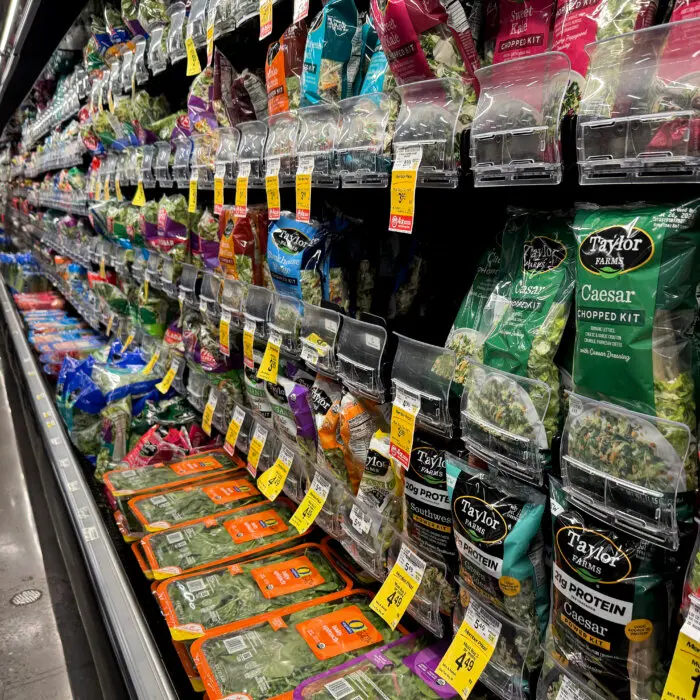
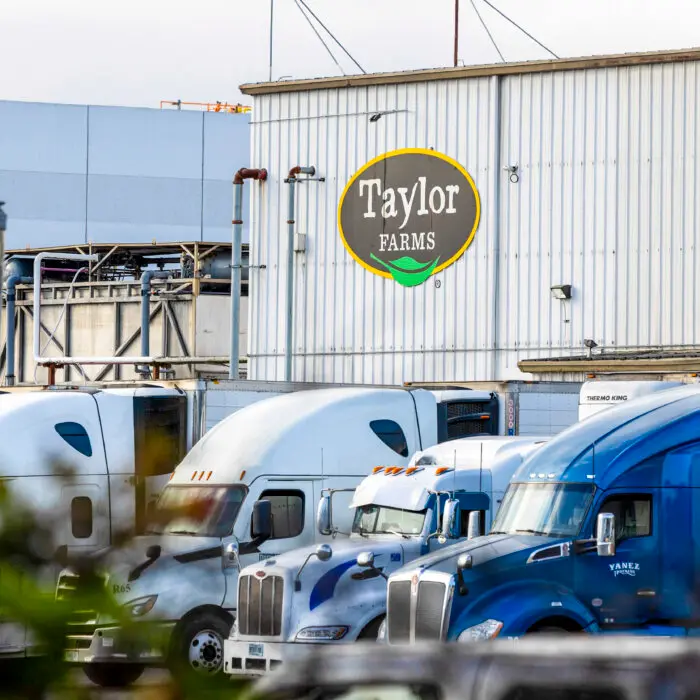
The U.S. Food and Drug Administration’s investigation into the outbreak points to shredded iceberg lettuce from Taylor Farms locations in central Mexico.
Taylor Farms recalled iceberg lettuce sourced from central Mexico on July 17. The recall included lettuce sold at retail stores and served in restaurants. The shredded iceberg lettuce was distributed June 29 through July 16 to 27 states, according to the U.S. Food and Drug Administration.
Taco Bell released a statement on July 17 regarding the cyclosporiasis outbreak.
“As of July 17, Taco Bell has completed removal of affected Taylor Farms lettuce from our restaurants,” it said in the statement. “Based on ongoing conversations with public health officials, and out of an abundance of caution, Taco Bell worked swiftly to voluntarily remove the product from restaurants and the affected ingredient has been removed from our supply chain nationwide. We took this action to ensure our guests can enjoy their Taco Bell favorites safely.”
The company added: “We believe public health is a shared responsibility among restaurants, their suppliers, and authorities, and we are proud to have consistently acted quickly and proactively to protect our guests. Taco Bell has taken precautionary action, and we encourage all relevant restaurants, retailers, and foodservice operators to do the same.”
Jason Adams, of Parma, Michigan, said that he contracted cyclosporiasis and that he believes that it may have been from eating at Taco Bell. He said his 16-year-old son, Gunner, also contracted the infection.
“We eat a lot of fast food; we were both at Taco Bell at different times,” Jason Adams said. “It was the only thing I had that had lettuce on it.”
He said he had the typical symptoms associated with cyclosporiasis—cramping, digestive problems, and fatigue.
The symptoms started on July 7, Jason Adams said.
“It hit me full force [two days later],” he said.
When he went to an urgent care center in Jackson County, he said it had so many cases that it had run out of stool sample kits to give to patients.
Jason said he had a pain in his sternum, he felt extremely cold, and for six days was “deathly ill.” He said he stayed in bed an entire day with extreme fatigue.
“It just seems like a really bad stomach bug,” he said.
Melanie Weidmayer of Manchester, Michigan, said she had just received her positive test result on July 23.
She said she first had signs that she had contracted cyclosporiasis on July 9 but had to wait 10 days for the results.
The first three days were the worst, Weidmayer said, noting that she still can’t eat food without an adverse reaction. She said she has lost 10 pounds in two weeks.
“If I eat, my stomach is a roller coaster,” she said. “I haven’t been able to eat anything. Then I get hungry and get a headache.”