U.S. import prices rose less than expected last month as inflationary pressures from the war in Iran continue to be less severe.
March import prices increased by 0.8 percent, from the downwardly revised 0.9 percent increase in February, according to new Bureau of Labor Statistics data released on April 15.
Economists had penciled in a reading of 2 percent.
Market watchers have been paying closer attention to trade prices over the past year to gauge the effects of President Donald Trump’s sweeping global tariffs and the Iranian conflict on goods entering the United States.
It is one of the leading pipeline inflation indicators, as higher costs for imported goods can flow through to producer prices and eventually to consumer costs.
Like the consumer price index and the producer price index, last month’s increase was entirely driven by higher energy costs.

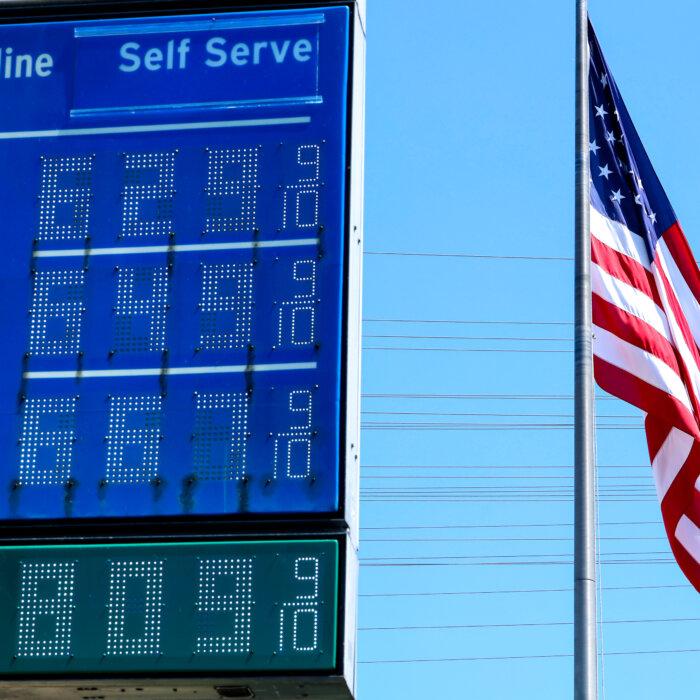
Import prices for fuels and lubricants rose by 2.9 percent following a 2.4 percent jump in February, representing the largest monthly boost since January 2025.
On a 12-month basis, import prices advanced by 2.1 percent, from 1.3 percent in the previous month, slightly above the market forecast.
Prices for U.S. exports rose at a higher-than-expected pace of 1.6 percent from the upwardly revised 1.9 percent in February.
This was driven by higher prices for nonagricultural industrial supplies and materials, offsetting lower costs for capital goods and consumer goods excluding automobiles.
All Energy
Recent data suggest that underlying inflation is not spiraling out of control, and the headline is being affected by external shocks, said Gina Bolvin, president of Bolvin Wealth Management Group.“Energy is driving the upside, and with geopolitical tension around key oil routes, those price moves can happen quickly and filter through the system,” Bolvin said in an emailed note to The Epoch Times.
“Underneath that, core inflation is relatively steady, which suggests the broader economy isn’t overheating. That split is what makes this moment tricky.”
Early forecasts for the April data suggest another increase.
The Federal Reserve Bank of Cleveland’s Nowcasting model estimates that the April annual consumer inflation rate will rise to 3.6 percent, while core inflation should hold steady at 2.6 percent.
Based on how global energy markets have reacted this week, there could be some relief.

The cost of a barrel of West Texas Intermediate—the U.S. benchmark for crude oil prices—has declined by about 10 percent since April 13 to about $91 on the New York Mercantile Exchange.
Watching the Fed
Futures markets and comments from Federal Reserve policymakers suggest the U.S. central bank will likely leave interest rates unchanged for the foreseeable future to monitor the situation.Investors expect the Fed to keep the benchmark federal funds rate in the current target range of 3.5 percent to 3.75 percent when officials convene their two-day meeting later this month.
Chicago Fed President Austan Goolsbee, speaking at the Semafor World Economy summit on April 14, hinted that the institution may have to wait until 2027 to restart its easing cycle.
“I thought there could be even multiple rate cuts in 2026; the longer this goes where we never got to see the decrease in inflation [and] if the inflation stays up, realistically, I think that starts pushing it out of ‘26,” Goolsbee told The Associated Press at the summit. “It’s our job to get inflation back to 2 percent.”
The White House has also stated that the Fed should hold off on any rate cuts to wait and see what happens with war-related inflation.
In an April 15 interview with CNBC, Treasury Secretary Scott Bessent reiterated that he understands if the Fed takes a wait-and-see approach before cutting interest rates.