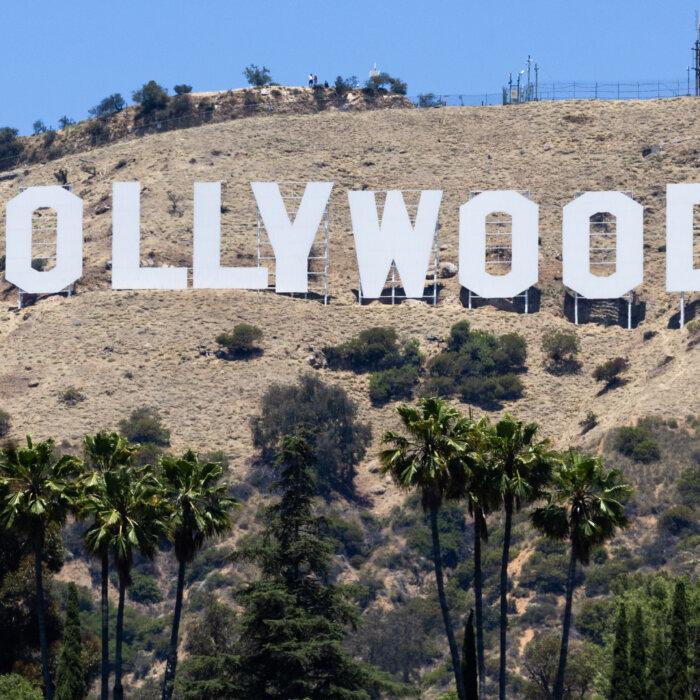
But just how much has Hollywood been making movies in other nations? Which countries might be affected? And in an increasingly globalized movie-making industry, what constitutes a U.S.-made movie these days?
Trump’s Tariff Announcement
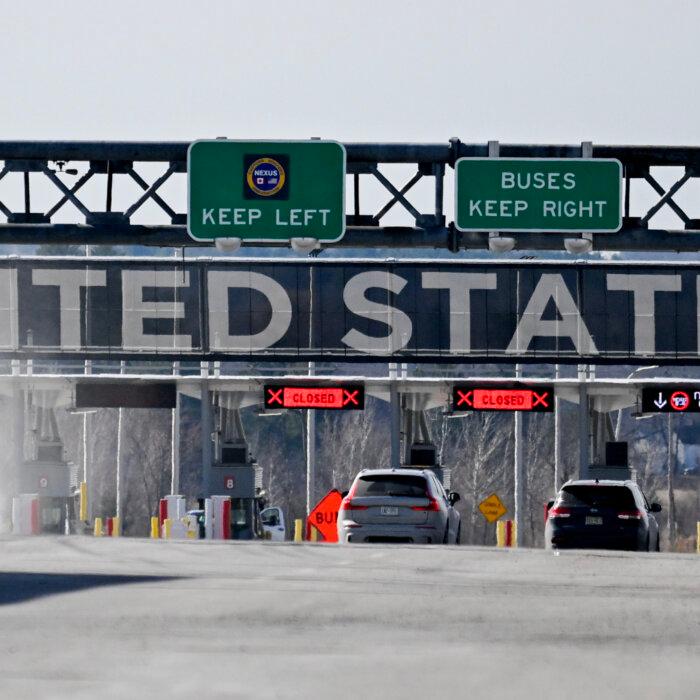
Trump said on Sept. 29 that he would be imposing 100 percent tariffs on movies made outside the United States.“California, with its weak and incompetent Governor, has been particularly hard hit!
“Therefore, in order to solve this long-time, never-ending problem, I will be imposing a 100 percent Tariff on any and all movies that are made outside of the United States.”
What is a US Movie?
There is currently no definitive answer to the question “What constitutes a U.S.-made movie?”Owing to the nature of filming, they may be shot in numerous countries or be produced by more than one studio from different nations. Both the on-screen and off-screen talent may come from any corner of the globe.
In addition, financing could come from almost anywhere.
The Academy of Motion Picture Arts and Sciences, which hosts the Oscars, itself has no definition, or specific award, for U.S. films.
To qualify, according to the academy, a film must be “produced outside the United States of America and its territories with a predominantly (more than 50 percent) non-English dialogue track.”
However, it is unlikely that this would be the categorization used by the Trump administration, as many producers from all over the world also produce films made either completely or predominantly in English.
The British Film and Television Awards has a category for Best British Film that requires a test on which a film must score more than 18 out of 35 to qualify.
Making More Movies Overseas?
It is true that Hollywood has increasingly relied on overseas production hubs such as Canada, the UK, Australia, and New Zealand to make films, where tax incentives have attracted big-budget shoots for films ranging from the biggest blockbusters to streaming dramas.According to ProdPro’s 2025 TV & Film Outlook Report, the United States was still top for production dollars in 2024, with $14.44 billion spent.
The report tracks scripted, live-action TV and feature film productions with estimated budgets of $1 million or more, produced globally and commissioned by major U.S.-based platforms such as Netflix, HBO, and Amazon.
The UK was second with $5.91 billion, Canada third with $5.41 billion, Australia and New Zealand fourth with $2.04 billion, and Germany, Hungary, and the Czech Republic combined in fifth place with $1 billion.
Despite the United States retaining the top spot, these figures do mark a 26 percent reduction in spending in the United States compared with 2022.
What Has Hollywood Said?
Currently, no major studios have responded to Trump’s announcement, but when the idea was first floated in May, Reuters reported that producers were uncertain how a movie tariff might be enforced and how some films would even get made.Producer Todd Garner said proposed tariffs could have the unintended consequence of stymieing creativity.
He cited director Steven Spielberg’s World War II epic “Saving Private Ryan,” which was famously filmed on the beaches of Normandy, France.
“How would you make ‘Saving Private Ryan’ in the United States—in [Shreveport, Louisiana]?” Garner said in May. “Or a globe-trotting ‘Mission: Impossible’?”
However, labor unions in the United States were more supportive of the move when it was first tabled.
Duncan Crabtree-Ireland, national executive director and chief negotiator at the Screen Actors Guild-American Federation of Television and Radio Artists, said the union supports efforts to increase domestic movie, television, and streaming production and add jobs for U.S. workers.
“We look forward to learning more about the specifics of the plan announced by the president and to advancing a dialogue to achieve our common goals,” Crabtree-Ireland said at the time.