The National Weather Service (NWS) on Wednesday forecast that a “major January winter storm” will impact a large section of the United States later this week, and warned that it will be followed by “extreme cold” temperatures.
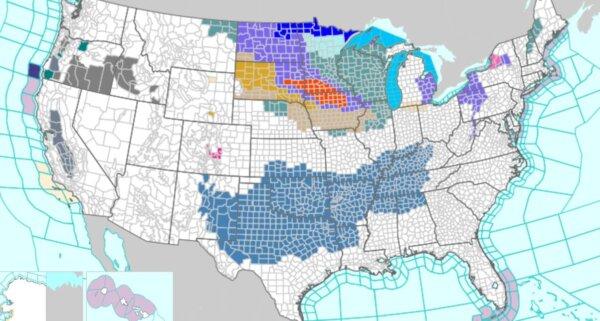
“Swaths of heavy snow, sleet, and freezing rain from the Southern Rockies and Plains into the Mid-South” will start Friday before it shifts across the East Coast, the agency said.
The storm may impact many of the nation’s major airports, including Dallas; Atlanta; Memphis, Tennessee; and Charlotte, North Carolina.
Heavy snow will be expected in the southern portion of the Rocky Mountains and in the south-central Plains regions. The storm will then move eastward across the Mid-Atlantic states, producing snow-covered roadways and low visibility that are likely to create travel chaos, the NWS said.

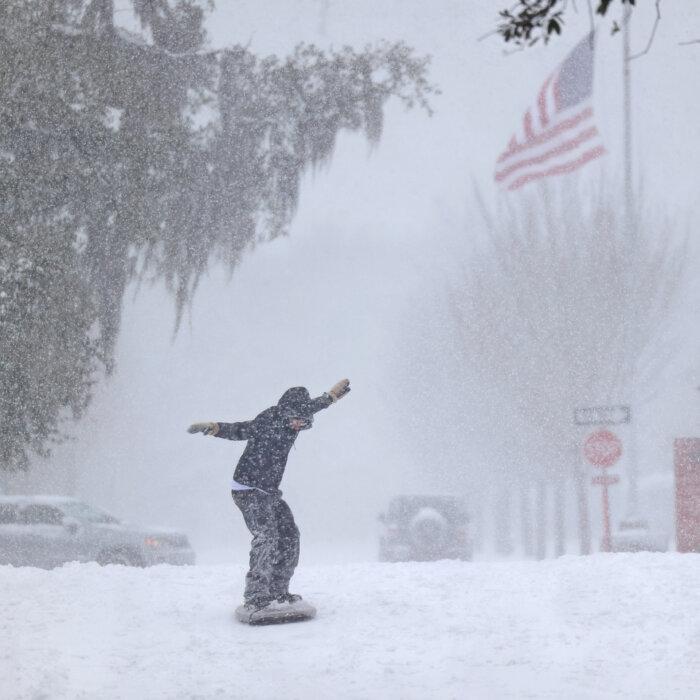
Meanwhile, freezing rain and sleet will fall to the south of the snowfall zones, namely much of the South and Carolinas, and likely cause power outages, tree damage, and “treacherous travel conditions,” the agency warned.
In Michigan, more than 100 vehicles crashed into each other or slid off an interstate southwest of Grand Rapids on Monday in a separate weather-related incident.
“Global models are painting a concerning picture of what this weekend could look like, with an increasingly strong signal for ice storm potential across North Georgia and portions of central Georgia,” the NWS’s Atlanta office said.
With wind chills factored in, the temperatures may fall to minus 50 degrees Fahrenheit across the northern Plains region, it said. The sub-zero temperatures will reach as far south as the Mid-Atlantic and southern Plains areas, according to the notice.
“These wind chills will pose life-threatening risk of hypothermia and frostbite to exposed skin,” the NWS said, adding that power outages caused by the storm may “prolong and compound this risk.” It also advised people to make sure that pets and animals are protected from the cold.
The exact timing of the approaching storm remained uncertain on Wednesday. Forecasters say it can be challenging to predict precisely which areas could see rain and which ones could see ice.