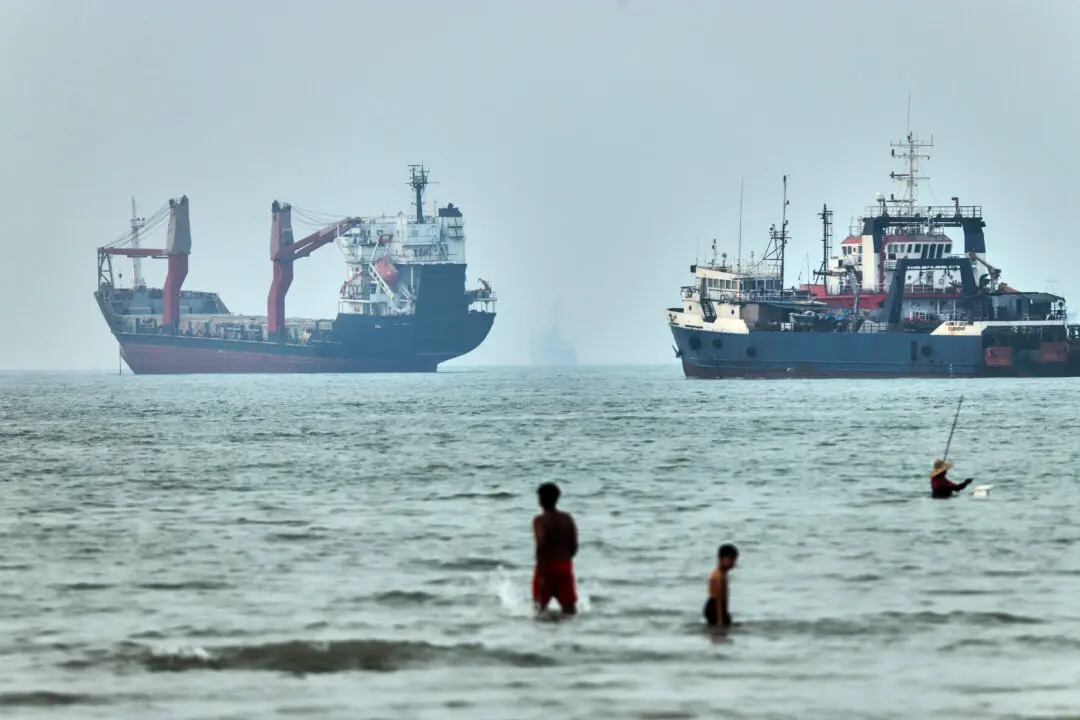
Federal officials on Tuesday said a loose wire led to a power failure on the cargo ship that crashed into Baltimore’s Francis Scott Key Bridge in March 2024, killing six people and destroying the bridge.
The National Transportation Safety Board (NTSB), which is holding a hearing on Tuesday in Washington on the probable cause of the incident, said they were recommending that operators complete periodic inspections of high voltage switchboards and proposing changes that would allow ships to more quickly recover from loss of power.
The NTSB has said previously that the ship, named the Dali, lost electrical power several times before it crashed into the Key Bridge, including experiencing a blackout during in-port maintenance and shortly before the crash.
A slide that was displayed during the NTSB meeting and officials said that there was a loose signal wire in the ship that led to the ship’s power failure before it crashed. One of the wires slipped out of its housing, resulting in a “precarious electrical connection,” an official said during the hearing, adding that it led to “a blackout on the Dali.”
The NTSB said last year that the Dali lost power about four minutes before the crash when electrical breakers unexpectedly tripped, causing a loss of power to all shipboard lighting and most equipment when it was around half a mile from the bridge. It also previously said that the ship lost electrical power several times before it crashed, including experiencing a blackout during in-port maintenance and shortly before the crash.
Findings released on Tuesday come a day after officials in Maryland said that the cost to rebuild the Key Bridge would increase. A replacement bridge was initially estimated to cost $1.7 billion to $1.9 billion and be completed by late 2028, they said.
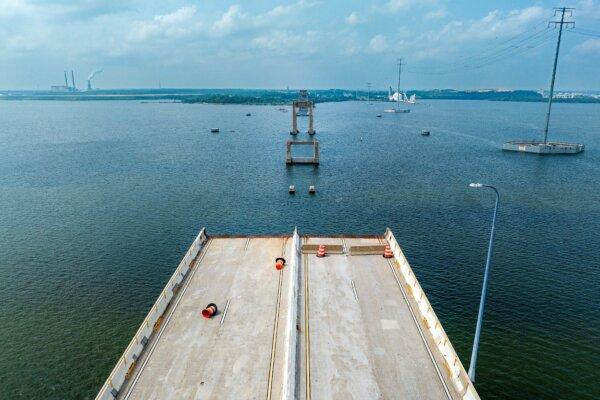
Transportation officials now expect the bridge will cost $4.3 billion to $5.2 billion and open to traffic only in late 2030. They cited a new pier protection system and a longer, higher design as reasons for the increased costs.
The FBI is conducting an ongoing criminal investigation into the bridge collapse.
The bridge, which had carried Interstate 695 and spanned the Patapsco River and Baltimore Harbor, connected the city of Dundalk, Maryland, and the Baltimore district of Hawkins Point.