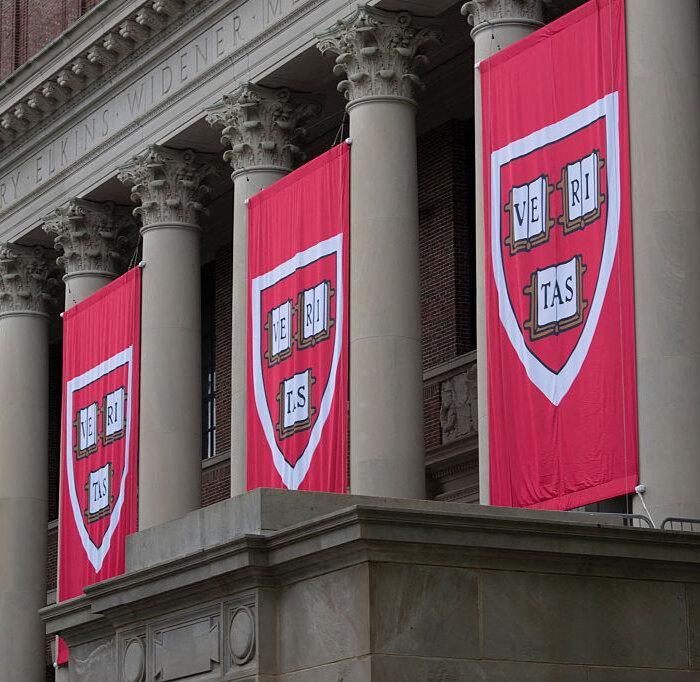
Two years after the U.S. Supreme Court decision prohibiting racial preference in higher education admissions, the nation’s oldest university is reporting a decline in undergraduate black student enrollment.
In 2023, the Supreme Court sided with plaintiffs, Students for Fair Admissions, which sued Harvard on the grounds that the university denied applicants of Asian descent because that group overrepresented the undergraduate student body, violating Civil Rights laws.
Asian students, meanwhile, make up 41 percent of Harvard’s undergraduate Class of 2029, up from 37 percent in last year’s freshman class and 29.8 percent in 2023.
“The class of 2029 was drawn from big cities and small towns, suburbs, and farms; and from nations around the world,” William Fitzsimmons, Harvard’s dean of admissions and financial aid, said in the Oct. 23 announcement on the university website. “No matter where they’re from and what their personal circumstance might be, they were admitted to Harvard because they share the extraordinary potential to change the world.”
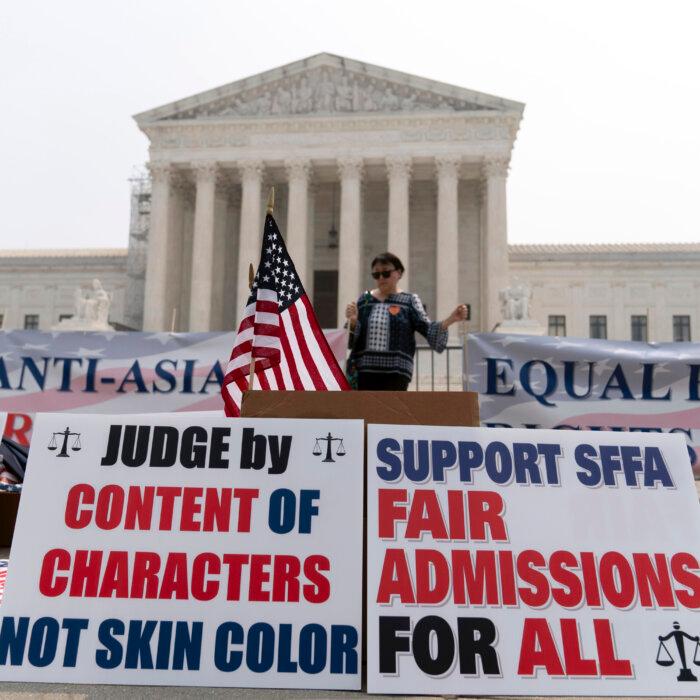
President Donald Trump issued executive orders affirming Civil Rights laws that prohibit racial preferences in university hiring and student admissions and, following investigations, sanctioned Harvard and several other elite institutions.
In August, he issued a directive requiring colleges and universities to publicize acceptance rates, enrollment figures, and average applicant grade point averages and SAT (Scholastic Aptitude Test) scores by race and gender.
In recent years, many competitive higher education institutions have eliminated SAT requirements and instead mandated personal statements or essays from student applicants, raising concerns that they are being used to ideologically screen applicants for entry.
“The left believes standardized testing promotes racial inequality,” he previously told The Epoch Times. “They pushed [for substituting tests with personal essays] very hard.”
Harvard’s Class of 2029 also noted that 2,003 undergraduate applicants out of 47,893 applicants were accepted, and that nearly half of the 1,675 first-year students won’t be required to pay tuition.
International students make up 15 percent of the freshman class, which also represents 92 nations and all 50 states, the profile report stated.