“Approximately 300-400 linear feet of the slope sloughed off,” according to a city statement.
No homes were tagged, and no structural damage was found, but “Significant soil movement has resulted in damage to several backyards,” the statement said. “No evacuations are in place.”
The city’s land specialists are assessing the damage and will continue to monitor the area, officials reported Sept. 28.
The cause of the land movement remains under investigation, but no homes are threatened, the city stated.

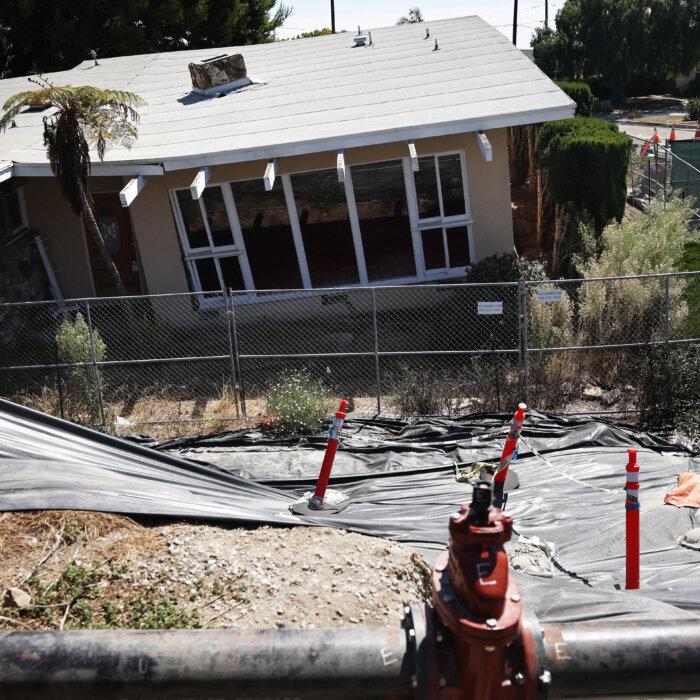
Affected homeowners will be responsible for cleanup, as the movement occurred on private property. The city advised the public to be cautious in the area.
“Out of an abundance of caution, the city is advising the public to avoid the shoreline in the immediate vicinity of Marguerite Drive as the bluff settles,” officials stated.
The latest land shift was not related to ongoing landslide activity in Portuguese Bend, city officials said.

Portuguese Bend was built on top of an ancient but active landslide. Geologists recently discovered land movement deeper underground than initially expected, which they said changed everything last year.
Geologists have worked on a plan since 2017 to deal with the landslide but have been hindered by heavy rains starting in 2022 and continuing through the early months of 2024, which produced more moisture than usual and created slippery conditions in the area.
Ground in the landslide area moved three to four feet every month last year.
Some residents in the Rancho Palos Verdes Peninsula were reconnected to electricity starting in October 2024. The power company serving the area had disconnected service to 274 homes earlier last year to avoid hazards posed by ground fissures.
Those affected were in the Portuguese Bend Community Association, Seaview, Portuguese Bend Beach Club, and the neighboring city of Rolling Hills.