The Kennedy Center said on June 19 that it is weighing whether to continue operating or partially close after a federal judge last month blocked the center’s planned two-year closure for renovations.
The options include a full closure with no ongoing programming or a partial closure that would allow “some continued public access and limited programming in spaces unaffected” by the construction work.
Another option involves implementing “a highly limited series of phased closures” to address the center’s most critical infrastructure needs while maintaining a full slate of programming, according to the filing.
The center said the court order “did not affirmatively require the board to reschedule programming that had previously been cancelled or to seek new programming,” and did not prevent the board from approving a closure of the center.
“Center management currently intends for the center and its building to maintain an operational model past the originally planned closure date of July 5,” the filing reads. “That model, which the center is currently following, contemplates continued public access to the center’s public spaces and to the living memorial for President Kennedy.”
Rep. Joyce Beatty (D-Ohio), who filed the lawsuit last year, said in the joint status report that the Kennedy Center has not complied with Cooper’s order, citing the center’s refusal to maintain operations.
“Defendants believe they need not do anything to maintain meaningful operations. Having gutted staff and programming, defendants believe they can sit back and allow their pre-planned shutdown to commence,” the plaintiff said.
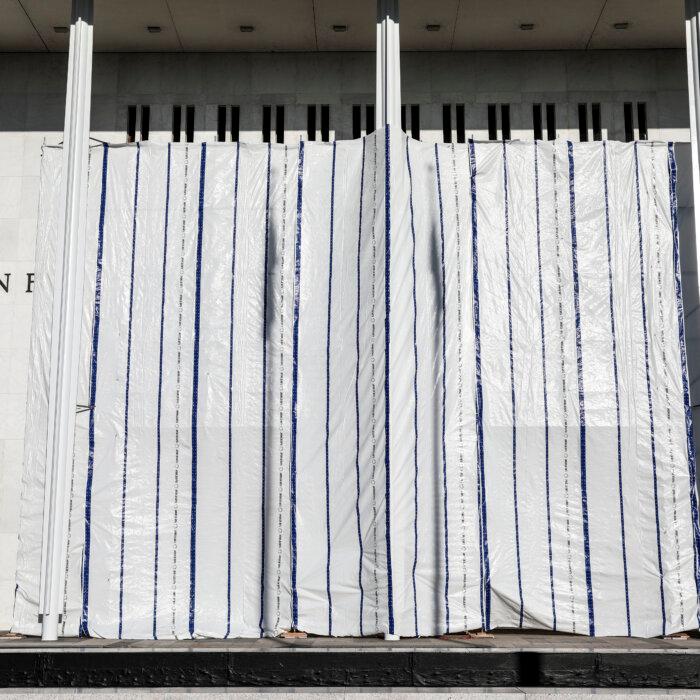
Beatty’s lawyers also argued that even though the center removed Trump’s name from its building as required by the court order, it left a tarp covering the area where the name had been installed, which they said “largely obscures John F. Kennedy’s name on the front portico.”
Trump, chairman of the center’s board, has made sweeping changes at the center after taking office for a second term last year, renovating the venue and firing the board and its president, billionaire philanthropist David Rubenstein, whom he said did not share his “vision for a Golden Age in arts and culture.”
In a Truth Social post on May 29, after the venue’s two-year closure and its renaming were blocked by the court, the president said the venue was originally scheduled to undergo “largescale renovations and construction due to years of neglect, decay, and poor maintenance.”