NEW YORK CITY—A jury has found the Chinese American who ran Beijing’s undercover police station in New York City guilty of being a foreign agent for China.
He was also found guilty of obstructing justice by deleting WeChat messages documenting his direct communications with his contact in the Chinese Ministry of Public Security (MPS).
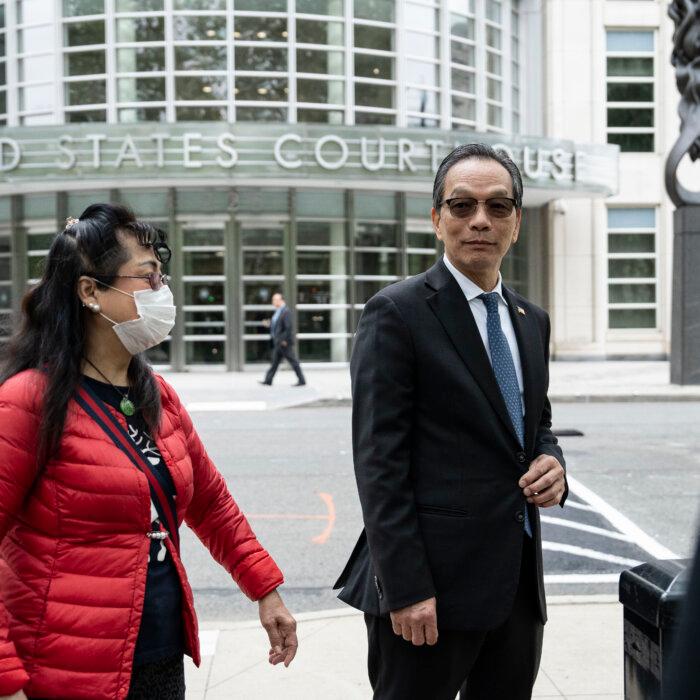
Lu Jianwang, 64, community leader and former president of the America ChangLe Association, was convicted on May 13 in Brooklyn Federal Court.
The jury found him not guilty of conspiring with others as a Chinese agent.
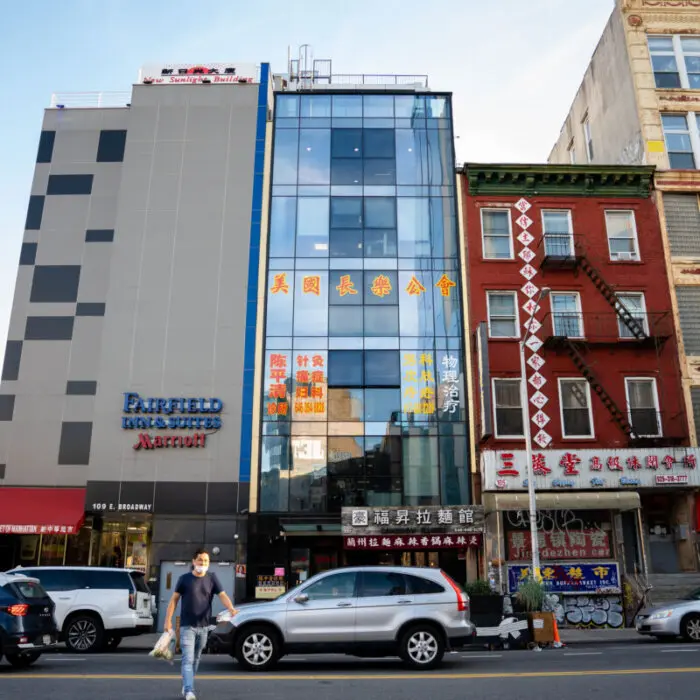
Lu ran the Overseas Chinese Police Service Center out of the offices of the hometown association on East Broadway in New York City’s Chinatown.
Lu is now being held accountable, and the police station has seen its “sinister purpose disrupted,” Joseph Nocella, U.S. attorney for the Eastern District of New York, said in a statement.
“Our Office remains resolute in protecting the rights of people seeking freedom from repression and speaking out to bring democracy, reform, and human rights to China.”
The New York City branch run by Lu was just one of 30 stations launched on Jan. 10, 2022, by the Fuzhou Ministry of Public Security.
Prosecutors said the station was part of a larger campaign of transnational repression to monitor and intimidate Chinese people living abroad.
“I think if you’re a member of a community that originated in another country, you have to be very, very, very careful how you deal with people from your home country,” said Lu’s attorney, John Carman. “That should make everybody very nervous about reaching out and doing good things when there’s somebody who’s a government official from another country.”
Carman also said Lu would be appealing the verdict.
The charge of not registering as a foreign agent for the Chinese regime carries a maximum prison sentence of five years. The maximum sentence for the obstruction of justice charge is 20 years in prison. A date for sentencing has not yet been set.
Lu, who first came to the United States in 1980, is a naturalized U.S. citizen.
Lu’s ties trace back to 2015, when the Chinese consulate called on New York City hometown association leaders to bring their members to a counter-protest during the 2015 visit by Chinese leader Xi Jinping to Washington, according to court documents.
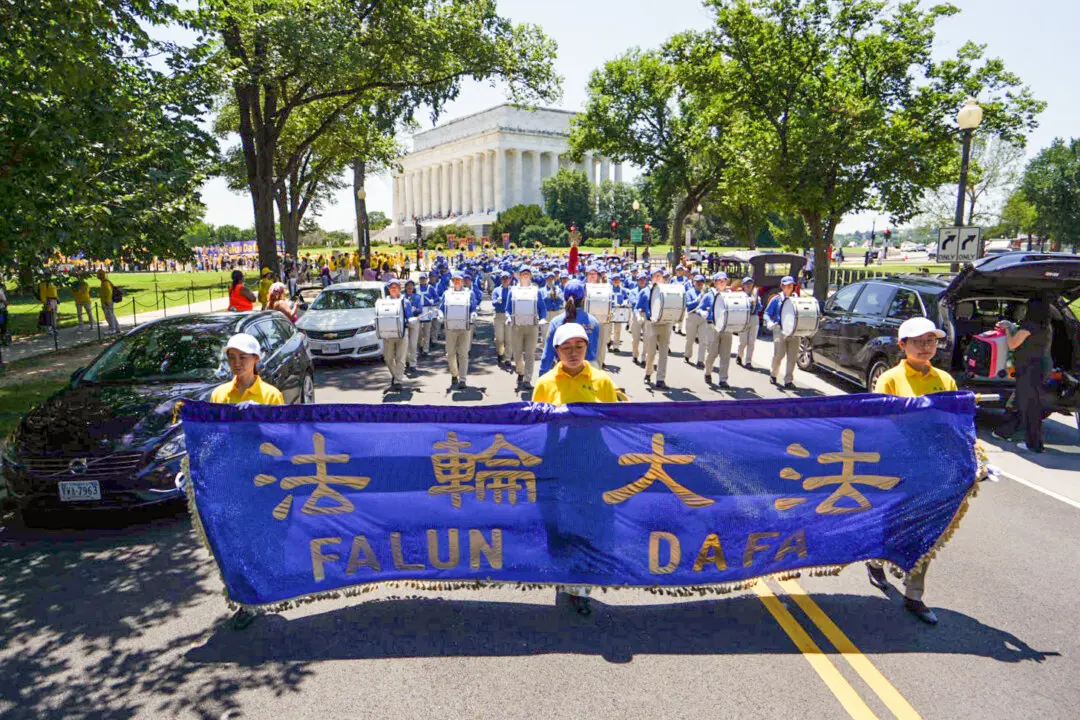
In interviews with the FBI, Lu said local leaders each sent 15 members to counter Falun Gong practitioners demonstrating against Xi.
Tasks for Chinese state security continued in 2018, with Lu receiving requests from Huang Jiesheng to inquire if two people practiced Falun Gong in the United States.
Prosecutors said Lu gained a position of trust and confidence with Chinese state security, assisting with their requests and providing information on other overseas Chinese as the regime spread its governance across the globe.
They said it was Lin Youping of the All-China Federation of Returned Overseas Chinese (ACFROC), a united front work group, who connected Lu with the Chinese Fuzhou Ministry of Public Security.
ACFROC is an influence operation that connects with overseas Chinese to involve them in supporting initiatives of the CCP.
Lu joined the overseas Chinese Police Service Stations during its launch on Jan. 10, 2022, in Fuzhou, Fujian Province.
When he returned to the United States in February 2022, he and the members of America ChangeLe Association created the banner for their New York City station and started operations.
FBI analysis of Lu’s device revealed that he was included in one WeChat group with MPS officials based in Fuzhou, including his main contact Liu Rongyan, as well as 65 individuals at police stations around the globe.
Once the New York City station got started, the offices opened up for two hours per week in the evening to facilitate Chinese driver’s license renewals for people living in the city.
Carman disputed the prosecution’s argument that Lu was working under the direct control of the Chinese regime.
“They had their own objective. Their objective was helping people,” said Carman, who portrayed Lu’s work as a community service provided during a time when traveling back to China would require waiting days in quarantine.
Prosecutors said this was just the overt side of what Lu was engaged in and that the darker side of the operation, which included tracking dissidents and other overseas Chinese to pressure them to return to China, started up shortly thereafter.
By March 2022, Liu, who was based in Fuzhou, asked Lu to confirm the address and existence of Xu Jie, a Chinese dissident who posted videos on YouTube criticizing the CCP.
Chinese dissident Xu, 61, who testified at the trial on May 11, moved to the United States in 2018 and lives in Pomona, California.
Xu testified that his office and vehicle were vandalized but that nothing was taken.
He said at the trial that he gave up on democratic rule under the CCP after seeing tanks run over students in Tiananmen Square in 1989.
Liu was the key MPS official in Fuzhou communicating with Lu and the American ChangLe Association in New York City that ran the unofficial police station.
Lu ran into a snag with Liu when, in July 2022, he and the America ChangLe Association started charging $100 fees for license renewal, calling it a donation for the association.
Liu was getting complaints and told Lu that the association must refund all of the money collected from local Chinese people who had used their license renewal platform.
Liu was concerned her superiors would find out.
Lu pushed back, saying it was too much trouble to reach out to each and every person who had come by.
Instead, the association agreed to send out a letter to advise all who had paid that a refund was available.
In Lu’s defense, Carman argued that Lu never paid back these donations and that the association simply wrote a letter announcing to those who paid that a refund was available.
Carman argued this was a clear example that Lu and others at the association were not agents of China’s MPS.
“If there was direction and control that money would be paid back,” Carman said.
The station was open for less than nine months—opening mid-February 2022 and closing Oct. 3, 2022.
In September 2025, nongovernment group Safeguard Defenders published a report on the 30 overseas Chinese police service stations operating around the world; the FBI saw the report and took action.
“The FBI was shocked and understandably embarrassed,” Carman said.
The FBI obtained a warrant and, on Oct. 3, 2025, searched the facility.
“But is it a police station? Whatever it is, it’s a computer, a monitor, and a banner,” Carman said, downplaying that the outpost served any other function for Chinese state security.
Once he was alerted that the FBI was investigating the association, Lu deleted all of his direct, one-on-one messages with Liu via WeChat.
For this, Lu was charged with obstruction of justice for intentionally hampering an official investigation.
Lu was charged with conspiring with Chen Jinping and Chen Jinxiong in the police station scheme to act as agents of the Chinese regime.