Judge Orders Utah to Redraw Congressional Map

The court allowed the plaintiffs and other parties to submit alternate maps should the Utah Legislature fail to deliver a compliant map on time.
Judge Orders Utah to Redraw Congressional Map
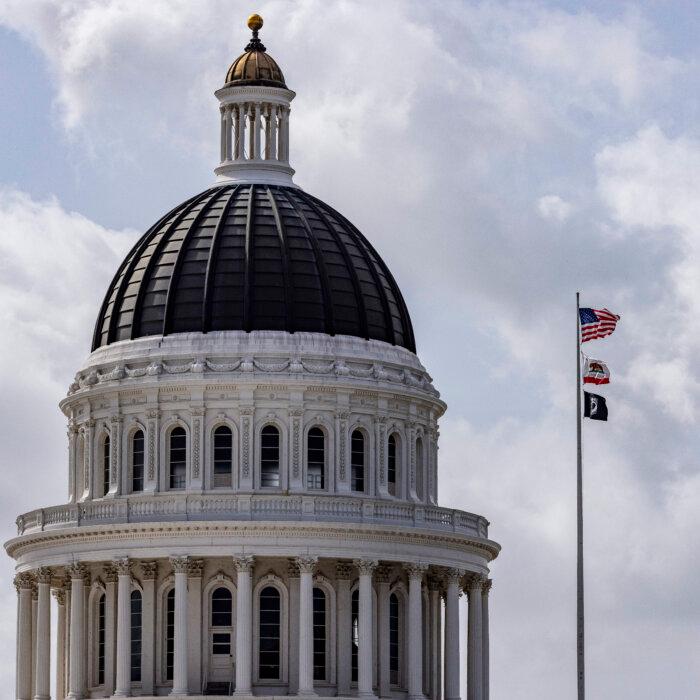
Utah State Capitol in Salt Lake City on April 25, 2025. Madalina Vasiliu/The Epoch Times
|Updated:
0:00

A Utah judge ruled on Aug. 25 that the state Legislature must redraw its congressional maps, saying that the repeal of a 2018 voter-approved ballot initiative was unconstitutional.

The ruling stemmed from a 2022 lawsuit filed by voting rights groups seeking to challenge the Utah Legislature’s repeal of the voter-approved ballot initiative known as Proposition 4.

Proposition 4 is a bipartisan citizen-led initiative narrowly approved by voters in 2018. It aimed to prevent partisan gerrymandering by forming an independent redistricting commission.
The Utah Legislature repealed the law in 2020 and replaced it with SB200 after negotiations with Better Boundaries, the group that spearheaded Proposition 4, to revise the redistricting process. Under SB200, the Legislature may, but is not required to, vote on or adopt maps recommended by the commission.
The Legislature adopted a new map in 2021 that divided Salt Lake County among the state’s four congressional districts, according to the court filing. The plaintiffs argued that the Legislature disregarded the commission’s nonpartisan recommendations and instead “devised a partisan gerrymandered map.”
In a 76-page order, Third District Court Judge Dianna Gibson ruled that the Utah Legislature had “unconstitutionally impaired” the people’s right to reform the redistricting process when it repealed Proposition 4.

“The Legislature intentionally stripped away all of Proposition 4’s core redistricting standards and procedures that were mandatory and binding on it,” Gibson wrote. “To permit the 2021 Congressional Plan to remain in place would reward the very constitutional violation this Court has already identified and would nullify the people’s 2018 redistricting reform that they passed through Proposition 4.”

The ruling restored Proposition 4 as Utah’s redistricting law and ordered the Legislature to produce a congressional map that adheres to the rules outlined under Proposition 4 ahead of the 2026 midterms.

Gibson stated that the plaintiffs and other third parties may submit alternate maps to the court should the Legislature fail to deliver a new map compliant with Proposition 4 by Sept. 24.

Katharine Biele, president of the League of Women Voters of Utah—one of the plaintiffs—applauded the ruling and said she hoped lawmakers would approve a map recommended by the commission moving forward.

“This ruling gives the voters of Utah what they have long worked for — fair districts,” Biele said in a statement. “Now the legislature has the opportunity to show it truly believes in representative government by heeding the voice of the people.”
Utah Senate President Stuart Adams in Salt Lake City on July 30, 2021. (Emel Akan/The Epoch Times)
Utah Senate President Stuart Adams in Salt Lake City on July 30, 2021. Emel Akan/The Epoch Times

Utah’s Republican legislative leaders, Senate President Stuart Adams and House Speaker Mike Schultz, said in a joint statement that they are disappointed by the ruling and are carefully considering their next steps.

Leaders from the Democratic National Committee and the Democratic Congressional Campaign Committee applauded the ruling.

The Utah Legislature did not respond to a request for comment by publication time.

The ruling comes as redistricting battles play out in Texas and California.

Last week, California Gov. Gavin Newsom signed a legislative package to put a measure on the Nov. 4 ballot aimed at redrawing the state’s congressional map to favor Democrats, in response to Texas Republicans’ redistricting plan.
The Associated Press contributed to this report.
Google LogoMark Us Preferred on Google
Aldgra Fredly
Aldgra Fredly
Author
Aldgra Fredly is a freelance writer covering U.S. and Asia Pacific news for The Epoch Times.