A judge on July 21 blocked the federal government’s attempt to strip work permits from immigrants who were granted temporary permission to live in the United States at a time when their home countries had been deemed unsafe.
He also said the government may not penalize asylum seekers for paying a new annual fee.
Immigrants in the country under Temporary Protected Status would have lost their permission on July 22 if the injunction had not been entered.
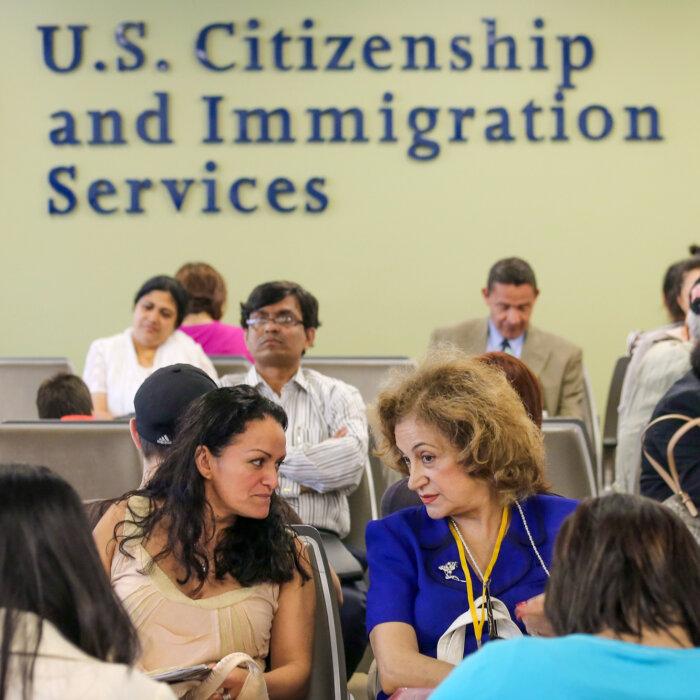
U.S. Citizenship and Immigration Services (USCIS) updated its regulations in 2025 in response to the One Big Beautiful Bill Act, which directed federal officials to implement new immigration fees and rules.
The agency said it would only provide employment authorization to Temporary Protected Status holders for up to one year, or the duration of the temporary status, whichever was shorter. It retroactively applied the rule to people who filed for work permit renewals before the enactment of the bill, but who received their renewals after the rule update.
USCIS also imposed an annual fee for asylum seekers who are waiting for judges to adjudicate their claims, and said immigrants who do not pay the fee may be subject to deportation.
Lawyers for immigrants said that the new rules were illegal, in part because they allegedly violate the federal law that governs Temporary Protected Status.
Government lawyers said that the immigrants waited too long to challenge the rules, and that the judge should reject the challenge.
“With respect to asylum applicants, the consequences for failure to pay the [fee] may result in rejection of the asylum application and the initiation of removal proceedings,” he said.
Gorton said that he was aware of the “danger of interfering with the executive branch” but that he weighed the interests of the parties and was ruling in favor of the immigrants.
He ordered the government not to withdraw work permits from people with Temporary Protected Status. He said the government can continue charging an annual fee for asylum seekers, but that officials cannot punish immigrants who do not pay.
The Department of Homeland Security, which oversees USCIS, did not immediately respond to a request for comment.
Lawyers for the plaintiffs estimate tens of thousands of people are affected by the decision.
“Without this relief, families who have followed the law and relied on longstanding humanitarian protections faced the sudden loss of their employment authorization and ability to support themselves through no fault of their own,” the coalition of plaintiffs, including the Venezuelan Association of Massachusetts, and their lawyers said in a statement. “Asylum seekers also faced rejection of their applications for relief. The order provides protections while the court considers the serious legal questions presented in this case.”