This copy is for your personal, non-commercial use only. Distribution and use of this material are governed by our Subscriber Agreement and by copyright law. For non-personal use or to order multiple copies, please contact The Epoch Times Reprints.
A federal judge has cleared the way for the Trump administration to move forward with its plan to dismantle the federal agency that funds libraries nationwide.
In a June 6 order, Judge Richard Leon of the U.S. District Court for the District of Columbia declined to block the administration from making cuts to the Institute of Museum and Library Services (IMLS), saying that his court doesn’t have jurisdiction over the challengers’ claims.
Leon had previously agreed to temporarily block the administration, saying at the time that those suing to preserve the IMLS were likely to show that President Donald Trump lacks the authority to unilaterally shut down an agency created by Congress.
But in the latest ruling, Leon wrote that as much as the “Court laments the Executive Branch’s efforts to cut off this lifeline for libraries and museums,” the case should be heard in a different court specialized in money damages claims against the federal government.
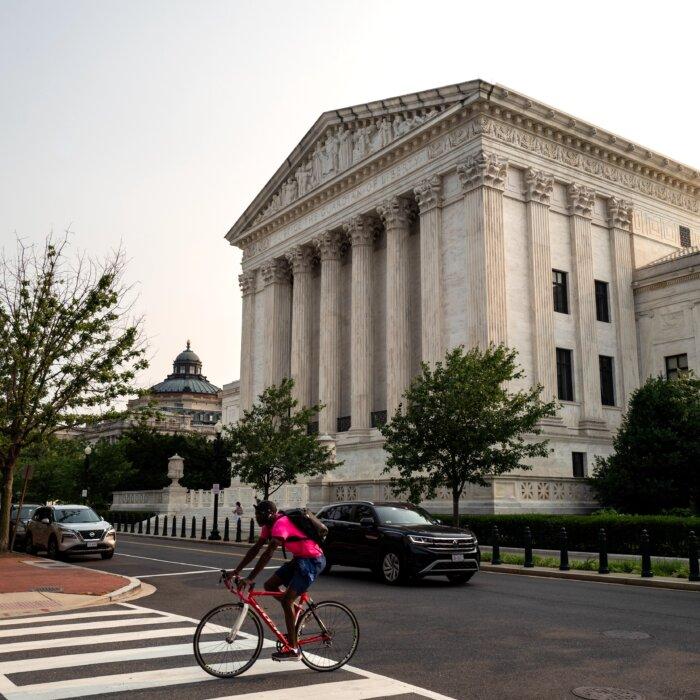
Specifically, he pointed to the U.S. Supreme Court’s 5–4 decision in April that granted the Trump administration’s emergency appeal to suspend more than $600 million in grants for teacher preparation programs amid ongoing litigation. The suspension is part of the president’s broader effort to make sure that no federal dollar goes to promote the ideology of diversity, equity, and inclusion in violation of anti-discrimination laws.
In an unsigned opinion, the high court’s conservative majority said a federal district court likely lacks the power to compel the government to make the payments under the federal law governing administrative agencies. Instead, the majority suggested that the challenge should have been brought in the Court of Federal Claims, which does have the power to hear lawsuits arising from contracts with the United States.
“I find compelling the Supreme Court’s ... reservations about a district court ordering enforcement of a contractual obligation against the Government,” Leon wrote, noting that the plaintiffs repeatedly ask to restore grant funding throughout their complaint. “It is the inherently contractual nature of the relief afforded that makes the Court of Federal Claims the exclusive forum for this suit.”
The suit was filed by the American Library Association (ALA) and the American Federation of State, County and Municipal Employees. It stems from Trump’s March 14 executive order naming IMLS as one of seven “unnecessary” federal agencies targeted for elimination to the maximum extent” permitted by law.
In the days following the presidential order, Deputy Secretary of Labor Keith Sonderling was installed as acting director of IMLS and tasked with overseeing the agency’s wind-down. That included bringing in members of the Department of Government Efficiency (DOGE), which is tasked by the president to conduct audits of federal agencies and identify wasteful spending. All but 12 of the agency’s 75 employees were let go, according to court filings.
Established by Congress in 1996, IMLS currently oversees 650 active grant awards to libraries and museums, totaling more than $450 million. In 2024 alone, it distributed $266.7 million in grants.
The agency also maintains the long-running Public Libraries Survey, which compiles data from approximately 9,000 public libraries and 17,000 library outlets across the country, tracking everything from circulation numbers to collection sizes and visitation rates.
“ALA is disappointed that the court did not grant our motion for preliminary injunction,” ALA President Cindy Hohl said in a statement. “The extent to which some libraries have already cancelled services and programming—and even lost staff in some cases—is evidence of the importance of IMLS. ALA will not rest until libraries in every state receive the funding promised and IMLS is back in full force to meet the information needs of all Americans.”