
Multiple water providers have lowered the amount of fluoride they add to water for millions of Americans, amid shortages stemming from the U.S.–Iran war.
The Baltimore City Department of Public Works said on April 13 that it is reducing the level of fluoride from 0.7 milligrams per liter (mg/L) to 0.4 mg/L.
The move, officials said, was driven by disruptions to the supply chain caused by the ongoing conflict in the Middle East. A key Israeli supplier, specifically, has been struggling to meet demand.
Some 1.8 million people in and around Baltimore, the most populous city in Maryland, are served water by the city of Baltimore utility.
Fluoride, a mineral, is put in water as a preventative for tooth decay and cavities. The Centers for Disease Control and Prevention recommends adding 0.7 mg/L.
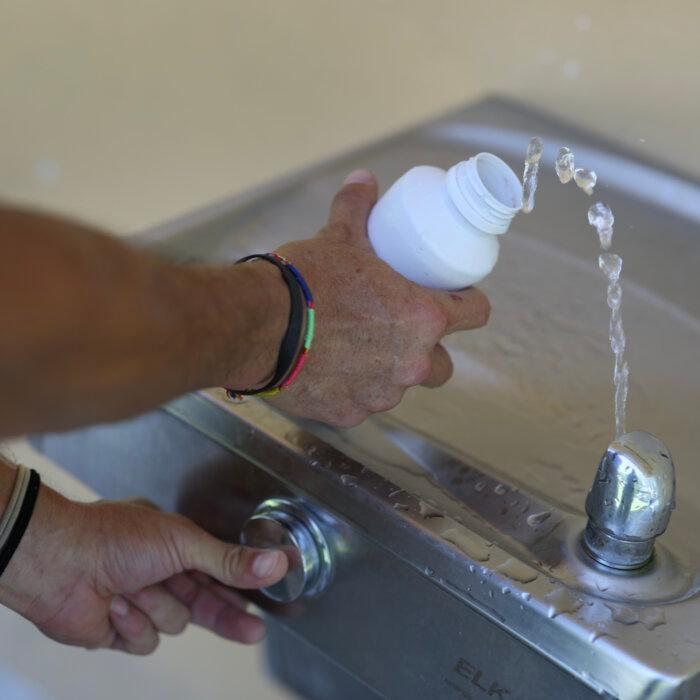

WSSC Water, which serves 1.9 million people in Montgomery and Prince George’s counties in Maryland, said earlier in April it would be adding only 0.4 mg/L because of “nationwide supply chain disruptions.”
Hydrofluorosilicic acid, an important compound for water fluoridation, has been hard to source amid the war, including from a supplier in Israel, the utility said. Israel is one of the world’s top exporters of fluorosilicic acid, according to the U.S. Environmental Protection Agency, and the United States is among the world’s top five importers of the product.
“This is a temporary adjustment driven solely by supply availability,” Ben Thompson, WSSC Water’s director of production, said in a statement. “We remain committed to maintaining safe, high-quality drinking water and will restore optimal fluoride levels as soon as supply conditions stabilize.”
In Pennsylvania, the borough of Lititz told its water customers in March that it had to halt fluoridation for a couple of weeks because of supply issues.
As the conflict continues, “there will likely be additional stressors placed on the supply chain, leading to shortages in additional communities,” said Dan Hartnett, chief policy officer for the Association of Metropolitan Water Agencies.
A few months’ drop in fluoride levels is probably not a cause for concern for most people, said Dr. Scott Tomar, an American Dental Association community water fluoridation expert. Lower levels can have an impact over the span of years, he said.
Tomar said younger children would be the first to experience tooth decay, because the fluoride strengthens enamel as their teeth are developing and once they have grown in.
Health Secretary Robert F. Kennedy Jr. has said that fluoride from toothpaste is sufficient to keep teeth strong.