This copy is for your personal, non-commercial use only. Distribution and use of this material are governed by our Subscriber Agreement and by copyright law. For non-personal use or to order multiple copies, please contact The Epoch Times Reprints.
Illinois Becomes 12th State to Allow Medically Assisted Suicide for Terminally Ill Adults
The law makes such options available to patients determined by two physicians to have six months or less to live. Opponents say it ‘legitimizes suicide.’
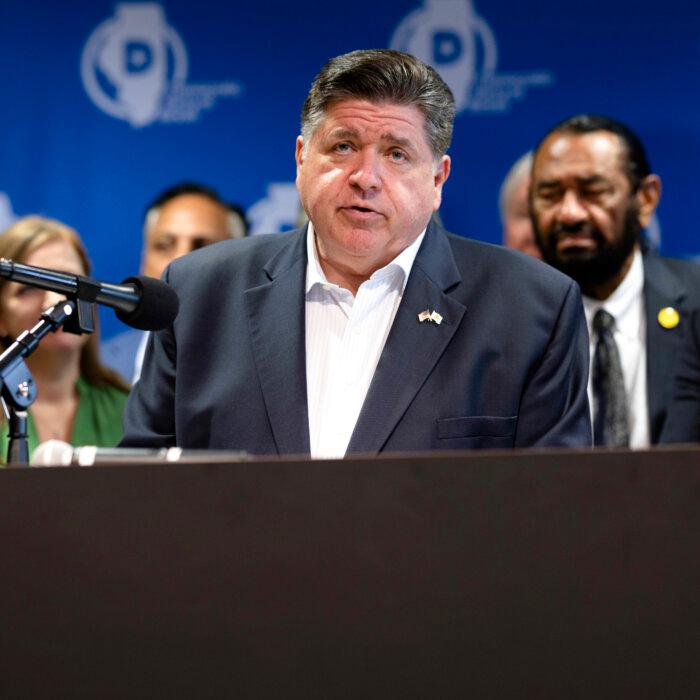
Illinois Gov. JB Pritzker signed a bill on Dec. 12 making medically assisted suicide available for terminally ill adults, and making Illinois the 12th U.S. state, along with the District of Columbia, to legalize the practice.
Opponents said the new law “legitimizes suicide.”
Senate Bill 1950, known as the “End-of-Life Options for Terminally Ill Patients Act” or “Deb’s Law,” will take effect by September 2026. The law was, in part, motivated by personal stories, including that of Deb Robertson, a retired social worker living with a rare terminal illness, who urged the law’s passing to ensure that others could access end-of-life options without needing to travel out of state.
Pritzker underscored the impact of testimonies from Illinois residents living with terminal illnesses.
“Today, Illinois honors their strength and courage by enacting legislation that enables patients faced with debilitating terminal illnesses to make a decision, in consultation with a doctor, that helps them avoid unnecessary pain and suffering at the end of their lives,” Pritzker said in a statement. “This legislation will be thoughtfully implemented so that physicians can consult patients on making deeply personal decisions with authority, autonomy, and empathy.”
Proponents, including Illinois House Majority Leader Robyn Gabel and state Senate Assistant Majority Leader Linda Holmes, called the law an extension of compassionate care and bodily autonomy.
“Both of my parents died of cancer,” Holmes said in a statement. “I’ll never forget the helpless feeling of watching them suffer when there was nothing I could do to help them. I believe every adult patient of sound mind should have this as one more option in their end of life care in the event their suffering becomes unbearable.”
To be eligible under the law, patients must be age 18 or older, residents of Illinois, mentally competent, and diagnosed with a terminal illness expected to lead to death within six months, as confirmed by two physicians.
Patients must be informed of all end-of-life options, such as hospice and palliative care, and make multiple requests—two oral and one written, with the last witnessed by two individuals attesting that the letter had not been written under duress.
If mental capacity is in question, patients are required to receive a referral to a mental health professional. Patients can withdraw their request at any time and must self-administer the medication.
No provider is mandated to offer self-assisted suicides, and organizations can prohibit staff involvement; coercion or forgery is a felony.
The law has faced opposition from the Catholic Conference of Illinois, which criticized it as placing the state on a “heartbreaking path,” saying it undermines the sanctity of life and could pressure vulnerable individuals.
“When Gov. Pritzker signed the physician assisted suicide bill into law, he put Illinois on a dangerous and heartbreaking path—one that legitimizes suicide as a valid solution for life’s challenges,” the organization said in a statement. “This law ignores the very real failures in access to quality care that drive vulnerable people to despair. It does nothing to ensure patients are offered services, protected from coercion, or surrounded by loved ones when they kill themselves.
Access Living, a disability rights organization that is also part of the Stop Assisted Suicide Illinois coalition, also opposed the law, voicing concerns that it could have “potentially grave consequences.”
Kimberly Hayek is a reporter for The Epoch Times. She covers California news and has worked as an editor and on scene at the U.S.-Mexico border during the 2018 migrant caravan crisis.