
Federal immigration officers in Southern California are now barred from posing as local police or using other deceptive tactics to conduct home arrests, under a court settlement approved this week in a class-action lawsuit challenging Immigration and Customs Enforcement’s practices.
The plaintiffs alleged that Immigration and Customs Enforcement (ICE) routinely misrepresented itself as local police, probation officers, or other authorities to gain entry to homes or lure residents outside for arrest. The lawsuit alleged systemic violations of constitutional protections against unlawful searches and seizures during warrantless home arrests.
“ICE’s practices violate the Fourth Amendment rights of both noncitizen and citizen residents of the home, as well as ICE’s own rules and regulations,” the original complaint states. “The Fourth Amendment does not permit ICE officers to coerce ‘consent’ to enter the home by impersonating another government official and misrepresenting their purpose in seeking entry.”

The Aug. 4 “Ruse Class” settlement applies to ICE’s Los Angeles Field Office, which oversees immigration enforcement in seven counties: Los Angeles, Orange, San Bernardino, Riverside, Ventura, Santa Barbara, and San Luis Obispo. It does not extend nationwide but could influence similar litigation or policy elsewhere.
Under the settlement, ICE officers assigned to the Los Angeles Field Office are required to accurately identify themselves when carrying out home arrests. The settlement forbids agents from presenting themselves as local police, probation officers, or other nonfederal authorities.
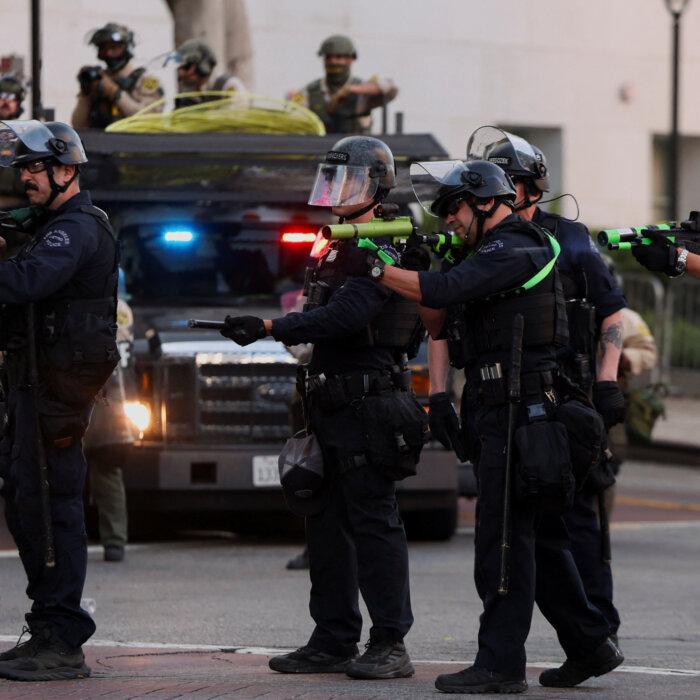
If officers wear gear marked with the word “POLICE,” they must also display equally prominent markings identifying themselves as “ICE,” preventing confusion among residents about the officers’ true affiliation.
The settlement also bars the use of ruses during enforcement operations. Officers may not fabricate public safety threats, falsely claim they are conducting a criminal investigation, or use unrelated photos or names to persuade residents to open their doors or step outside. Such tactics—central to the lawsuit’s claims—were deemed to violate residents’ constitutional protections and contributed to widespread mistrust in immigrant communities.
In addition, the agreement requires new training and oversight measures. ICE must revise its Fourth Amendment training for officers in the Los Angeles area, update procedures to reflect the settlement’s requirements, and document how agents identify themselves during residential arrests. For three years, ICE will provide plaintiffs’ attorneys with semiannual data on home enforcement actions to ensure compliance with the court‑approved terms.
Advocates praised the settlement agreement, which will remain in effect for three years, as a welcome check on ICE’s power.
CHIRLA Executive Director Angelica Salas said the agreement “creates a safer community” by ending alleged tactics such as ICE agents’ falsely claiming there was a problem with a resident’s vehicle to induce the person to come outside.
ICE and the Department of Homeland Security (DHS) deny any wrongdoing but agreed to settle to avoid the expense and uncertainty of continued litigation, according to settlement terms.
The Epoch Times has reached out to DHS for comment on whether the agency plans to modify its practices outside the Los Angeles area or appeal any aspect of the ruling.