The House of Representatives voted on Jan. 8 not to override President Donald Trump’s vetoes of two bills.
The tally for the first bill was 236–188, while the tally for the second was 248–177. Neither vote garnered the necessary two-thirds majority to override a veto, and therefore, Trump’s vetoes will stand.
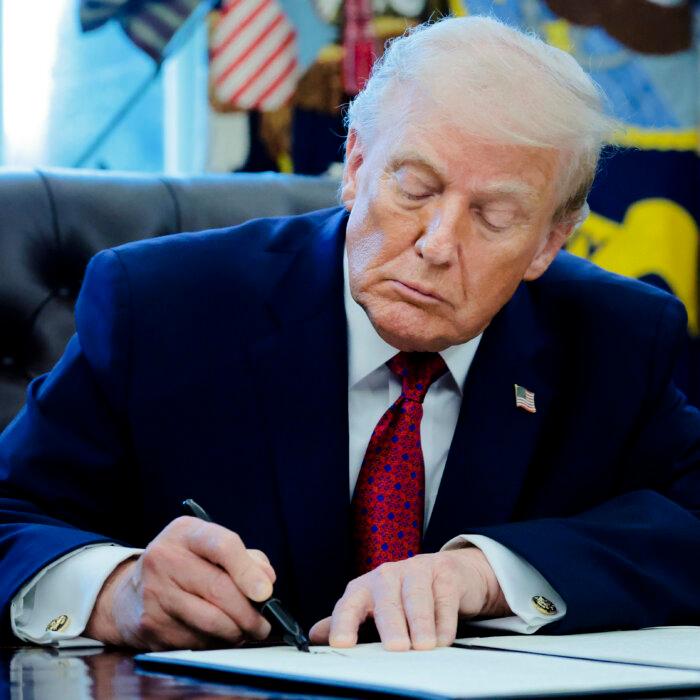
The president issued the first two vetoes of his second term on Dec. 31, 2025. One vetoed bill would have designated a site in Everglades National Park in Florida as part of the Miccosukee Indian Reservation. The other was designed to help finance the construction of a pipeline to provide water to tens of thousands of people in Colorado.
The Florida legislation that was vetoed is related to a $14 million project to protect Osceola Camp in Everglades National Park, inhabited by members of the Miccosukee tribe of Native Americans.
That legislation was sponsored by Rep. Carlos Gimenez (R-Fla.), whom Trump has endorsed.
The tribe had fought Trump’s efforts to build a makeshift detention center for illegal immigrants in the region. Dubbed “Alligator Alcatraz,” the facility was ordered shuttered by a federal judge.
The Finish the Arkansas Valley Conduit Act passed both chambers of Congress with unanimous support. It was intended to provide funding for a decades-long project to bring safe drinking water to 39 communities in Colorado’s Eastern Plains region. In the area, groundwater is high in salt, and wells have sometimes released radiation into the water supply.
He cited the potential $1.3 billion cost of the project over the long term.
Rep. Lauren Boebert (R-Colo.), sponsor of the bill, disputed this projection, saying that the numbers had been misrepresented to Trump.
“I’m frustrated with the way it was communicated to him,“ Boebert told reporters at the U.S. Capitol on Jan. 6. ”This isn’t something that’s going to cost taxpayers more than a billion dollars. ... This isn’t something that is costly and not fiscally conservative.”
Speaking to reporters after the vote, Boebert said she was disappointed that only 35 of her colleagues had voted to override the veto.
“This had nothing to do with policy and a disagreement,” Boebert said, adding that her colleagues were “scared of getting a mean tweet [or] getting attacked.”
Rep. Glenn Ivey (D-Md.) told The Epoch Times he was surprised that the bill had come to the floor at all.
“I was a little surprised that Republicans would stand up in opposition to him,” Ivey said.
In comments to the press on Jan. 6, Boebert said Trump had some legitimate grievances with her state.
“I think the President is very frustrated with poorly run Democrat states, and certainly Colorado is a sanctuary state,” Boebert said.
Trump has had several disputes with Colorado and has called it a sanctuary jurisdiction. Colorado Gov. Jared Polis, a Democrat, has rejected such a characterization.
Boebert said those affected by the water problems in the area voted for Trump in the 2024 presidential election.
Trump has also called for Colorado to release former Mesa County Clerk Tina Peters, who is serving a nine-year prison sentence for giving unauthorized access to voting machines during the 2020 election. Peters said her actions were intended to investigate and expose voter fraud. Trump issued a federal pardon for Peters, who was convicted on state charges.
The last time Congress overrode a veto was Jan. 1, 2021, when it overturned Trump’s veto of the National Defense Authorization Act, the annual blueprint for the Department of Defense, now called the Department of War.