Reforms may be on the horizon for the Federal Reserve System, as a new bill aims to alter the U.S. central bank’s dual mandate.
“For too long, the Federal Reserve has been stretched between competing objectives. It’s time to return to a clear, singular focus: protecting the wallets of American families by keeping inflation in check,” Hill said in a statement.
In 1977, Congress formally introduced the twin mandate of ensuring maximum employment and price stability through an amendment to the Federal Reserve Act of 1913. The broader legislative initiative emerged as the U.S. economy struggled with higher unemployment, rising inflation, and volatile GDP growth rates.
Now, a chorus of GOP lawmakers says the institution’s expanding regulatory and supervisory purview over the years is hindering the central bank’s efforts to stabilize prices and threatening the central bank’s independence.
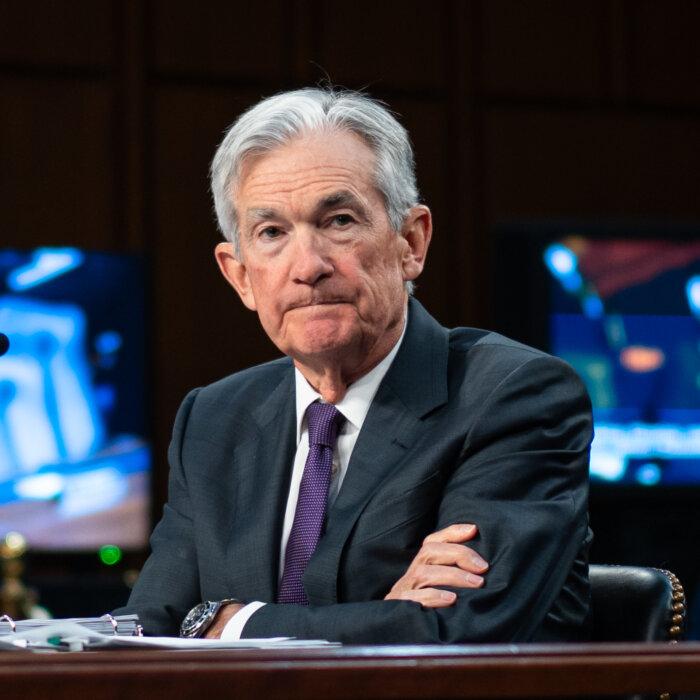
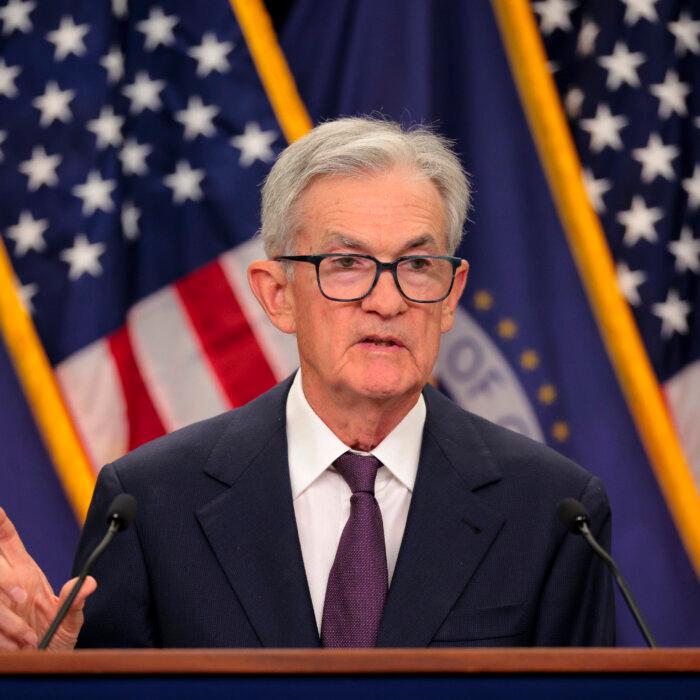
“The Fed’s actions must stay squarely within congressional intent.”
It is unclear how much broad support there is in the upper chamber for reforming the dual mandate.
Rep. Thomas Massie (R-Ky.) told The Epoch Times that he would support removing all mandates and “just eliminate it ... get rid of the Fed.”
“The fact that they’re trying to do something to it means that it is broken,” he said.
The legislative proposal from GOP lawmakers comes soon after the Fed completed its review of its monetary policy framework, which, in part, examined the dual mandate.
Fed officials agreed to return to flexible inflation targeting in the policymaking blueprint and abandoned the “makeup strategy,” a key component of the 2020 framework.
“The document continues to explain how we interpret the mandate Congress has given us and describes the policy framework that we believe will best promote maximum employment and price stability,” Fed Chair Jerome Powell said last month in his speech at the central bank’s annual Jackson Hole retreat.
Talking Reforms to the Federal Reserve
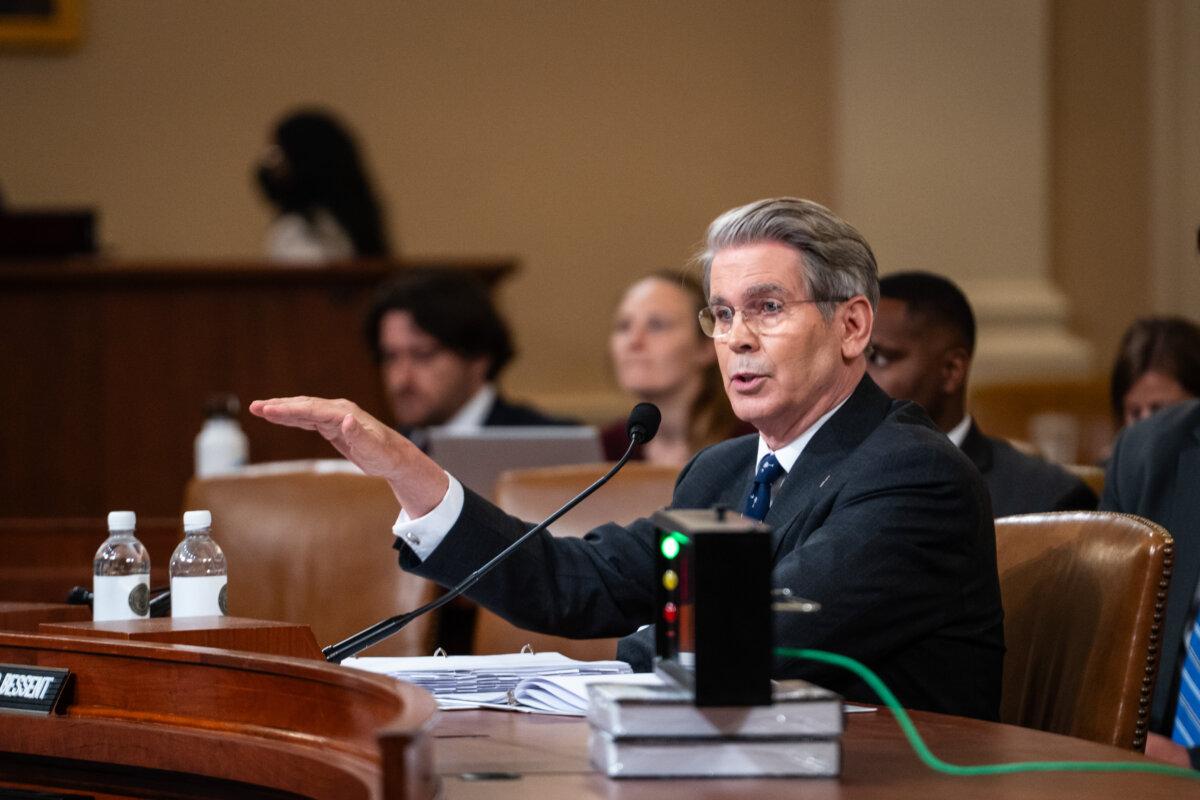
In recent months, several senior administration officials and economic observers have recommended a full review of Fed operations.The piece was a sharp critique of how the Federal Reserve has evolved since the 2008 global financial crisis. Bessent, who has been a frequent critic of the century-old entity over the past year, stated that the Fed has engineered new powers, pointing to, for example, quantitative easing—an unconventional monetary policy tool that consists of creating ultra-low interest rates, buying government bonds, and injecting liquidity into the U.S. financial system.
According to Bessent, the Fed has distorted financial markets, diminished independence, and manufactured adverse consequences for the economy.
“Overuse of nonstandard policies, mission creep, and institutional bloat are threatening the central bank’s monetary independence,” Bessent wrote.
He proposed a full-scale “honest, independent, and nonpartisan review” of the entire Federal Reserve System, such as monetary and regulatory policymaking, communications, staffing, and research.
Others have also called for reviewing and reforming the U.S. central bank.
The Fed had been pressured during World War II to keep interest rates artificially low to help fund war efforts with cheap debt. A burst of inflation occurred after the war’s end, but it was not until after the accord that the Fed started tightening monetary policy.
Warsh said a new arrangement should enable the Fed and the Treasury to communicate their objectives to the financial markets.
“We need a new Treasury-Fed accord, like we did in 1951, after another period where we built up our nation’s debt, and we were stuck with a central bank that was working at cross purposes with the Treasury. That’s the state of things now,” he said.
“So if we have a new accord, then the Fed chair and the Treasury secretary can describe to markets plainly and with deliberation, ‘This is our objective for the size of the Fed’s balance sheet.’”
The paper proposed reforming term limits, closing the revolving door between the executive branch and the Fed, addressing the FOMC voting structure, and bolstering the “influence and independence” of regional central banks.
“Only by providing for both accountability and a reliable measure of independence can the Fed restore its reputation in the eyes of the public,” the report stated.
At the Sept. 17 post-meeting press conference, when asked if he would support an independent review, Powell signaled he was open to the idea.
“We’re certainly open to always trying to do better,” Powell said.
The Fed followed through on its first rate cut of the year at the September Federal Open Market Committee policy meeting. Officials voted 11–1 to reduce the benchmark federal funds rate by a quarter point to a target range of 4.00 percent to 4.25 percent.
The rate-setting FOMC will convene its next two-day policy meeting on Oct. 28 and 29.