The House of Representatives on July 22 passed a $1.15 trillion defense policy bill that attaches a key election integrity bill championed by President Donald Trump.
The tally for the National Defense Authorization Act (NDAA) was 216–212. Six Democrats crossed the aisle to back passage of the bill, while six Republicans—among them Reps. Eli Crane (R-Ariz.) and Chip Roy (R-Texas)—opposed the bill.
With the final vote, Republicans agreed to attach their election integrity bill, the Safeguard American Voter Eligibility (SAVE) America Act, to the defense measure following its passage. House Republicans have attached the SAVE America Act to other major bills passed this month by the lower congressional chamber and forwarded to the Senate.
The Senate Armed Services Committee advanced the bill to the Senate floor on June 11 in a bipartisan 18–9 vote.
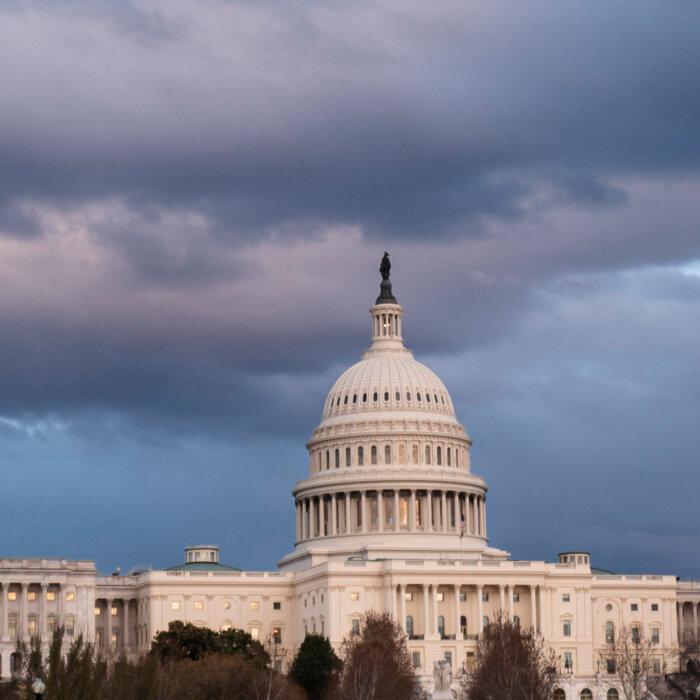

However, Republicans and Democrats failed to agree on top-line defense and non-defense spending levels, creating tension between the two sides.
Democrats cited the resumption of the war in Iran as a reason for their opposition to the procedural vote.
“Now the White House has formally notified Congress that hostilities have resumed, that American strikes are underway again and our forces remain positioned for more,” Senate Minority Leader Chuck Schumer (D-N.Y.) said on the floor before the vote.
“Yet Republicans want the Senate to take up the NDAA, the defense bill, as though none of this is happening.”
Senate Armed Services Committee Chairman Roger Wicker (R-Miss.) said the vote was unprecedented.
“It’s unprecedented not to pass the motion to proceed on the NDAA, and it reflects a decision and a mindset on the part of ... Schumer not to cooperate at all because so much of this has been done on a bipartisan basis,” he said.
“It really is a new low.”
The $1.15 trillion measure would allocate almost $1.1 trillion to the Department of War, more than $41.14 billion to the Energy Department to manage the nation’s nuclear arsenal, and $11 billion to other defense-related activities.
The NDAA includes a 3.6 percent pay raise for all military members.
It would also fund educational agencies affected by the enrollment of military and Department of War civilian dependents.
Many House conservatives have for weeks pushed for House leaders to put pressure on the Senate to pass the SAVE America Act.
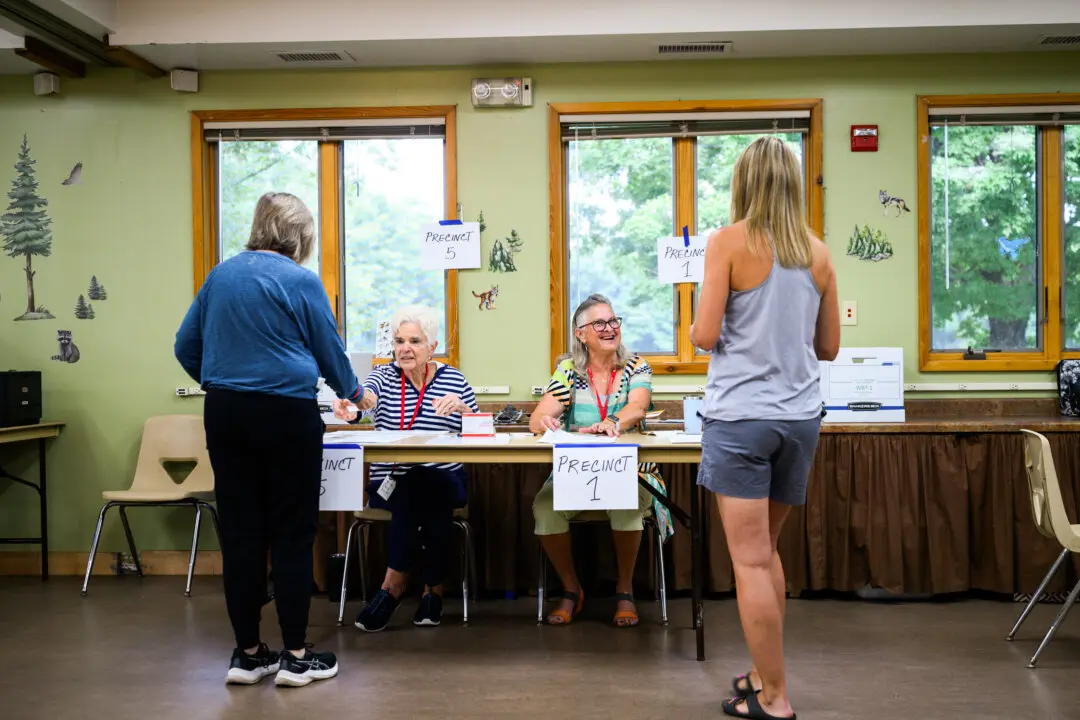
The legislation is highly favored by President Donald Trump, who has called it a “common sense” measure to require photo ID to register to vote and ensure that only eligible voters cast ballots.
Critics of the bill say that it would make it harder to vote, imposing strict requirements that would require most Americans to have either a U.S. passport or a copy of their birth certificate to vote.
Democrats in the Senate have vowed to oppose the bill, and its prospects with the upper chamber’s Republicans are unclear.
In view of these difficulties, Republicans are also pursuing passage of a grant-style program that would provide rewards for states that pursue programs similar to the SAVE America Act.