
This copy is for your personal, non-commercial use only. Distribution and use of this material are governed by our Subscriber Agreement and by copyright law. For non-personal use or to order multiple copies, please contact The Epoch Times Reprints.

The Epoch Times
The Epoch Times
AD
The Epoch Times
Education

House Commerce Committee Advances Bills to Protect Children Online

Lawmakers advanced the bills in hopes of securing a floor vote before the November election.
Google LogoMark Us Preferred on Google
House Commerce Committee Advances Bills to Protect Children Online
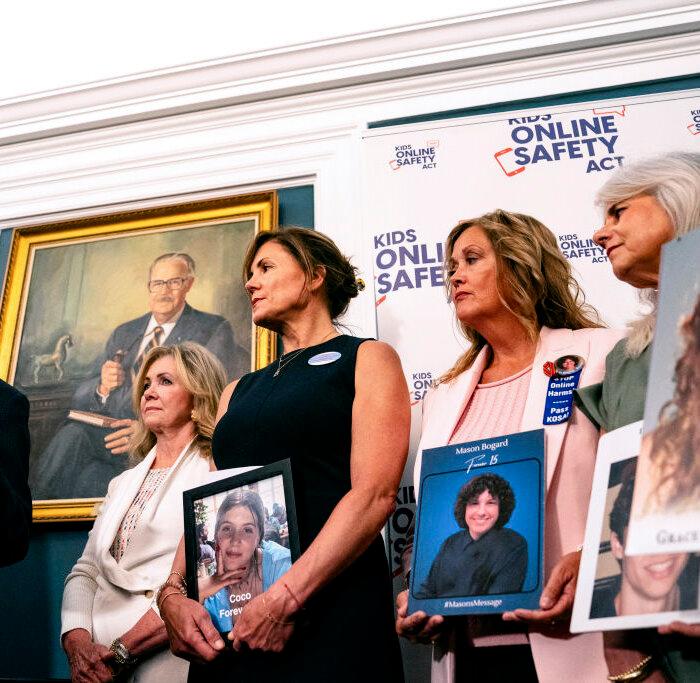
Supporters of the Kids Online Safety Act at a rally on Capitol Hill in Washington on Jan. 31, 2024. Jemal Countess/Getty Images for Accountable Tech
Terri Wu
Terri Wu
9/19/2024|Updated: 9/19/2024
0:00
The House Energy and Commerce Committee advanced two bills on Sept. 18 that would help to protect children’s safety and privacy online.
The Kids Online Safety Act (KOSA) would require social media companies to improve their platform designs to prevent physical violence, sexual exploitation, and the promotion of narcotic drugs.
Another bill, the Children and Teens’ Online Privacy Protection Act, would expand the age limit for protected minors from 13 to 16 and require social media platforms to obtain consent from users aged 13 to 16 before collecting their personal information. It would also ban advertising targeting children and teens.
Both bills were passed in the Senate by a vote of 91–3 at the end of July. The White House has said the measures would “finally advance bold actions to hold Big Tech accountable.” It urged Congress to send them to the president’s desk “without delay.”

KOSA’s House version differs from the Senate version by removing key measures that would hold tech companies accountable, including making them responsible for implementing design features to prevent or reduce “patterns of use that may indicate or encourage addiction-like behaviors” in child users, and for preventing the spread of harmful content such as content relating to suicide, eating disorders, bullying, and drugs, on their sites.
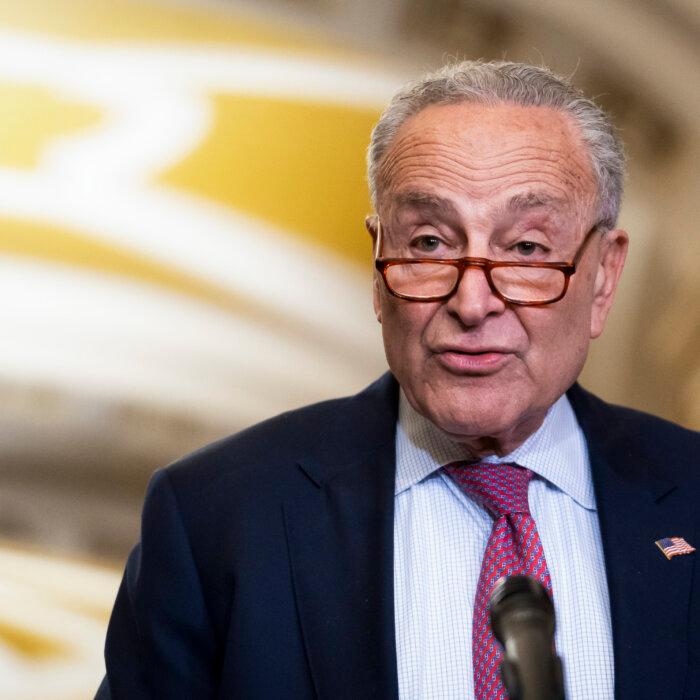
Reps. Gus Bilirakis (R-Fla.) introduced the initial version in April, with Kathy Castor (D-Fla.), Erin Houchin (R-Ind.), Kim Schrier (D-Wash.), and Larry Bucshon (R-Ind.) as original co-sponsors. The committee reviewed an updated version that included an amendment by Bilirakis.
Related Stories
The Epoch Times
Senate Passes Bills to Protect Children’s Safety, Privacy Online
The Epoch Times
Senate Advances Bills to Protect Children’s Online Safety and Privacy

Castor, one of the original sponsors of the KOSA bill, called the updated House version “weakened” compared to what the Senate passed in July.

“We can’t allow unintended consequences to creep in because there were politics played with KOSA here at the 11th hour,” she said at the committee meeting on Sept. 18. “I don’t know that I could support this version if it comes to the House floor in this manner.”

She expressed hope that the bill’s language may be changed. “I think in the spirit of what we need to do as responsible legislators, we should go ahead and move this forward today with the understanding that we probably need to move towards the Senate version of the bill and not go backward at this time,” she said.

Other Republican lawmakers expressed the same sentiment—advance the bill out of the Committee to secure a chance to be considered by the leadership for a floor vote.

Rep. Dan Crenshaw (R-Texas) supported KOSA and said it has “some good provisions” that give parents tools to guide their children’s social media use.

However, he is concerned that the bill would give the Federal Trade Commission too much authority, as the agency would have the power to regulate how social media companies design their algorithms. In his view, algorithm and content go hand in hand, and thus algorithm regulations will almost inevitably spill over to affect content moderation.

The Electronic Frontier Foundation, a digital rights advocacy group, has raised concerns that government officials would have “dangerous and unconstitutional power” over legal online content if it were deemed harmful. The organization said Bilirakis’s amendment to the original Senate bill doesn’t fully address this issue.

A day before the committee meeting, Meta announced new accounts for teenagers on its platform Instagram that would provide stricter safety measures and require parents’ permission to change the default settings to be less strict.
U.S. Surgeon General Vivek Murthy warned in an advisory last year that excessive use of social media might lead to anxiety and depression. In June, he called for a warning label on social media platforms, similar to those on tobacco products.
Three of four voters support requiring a social media warning label, according to a Quinnipiac University poll released on June 26.

If enacted, KOSA would authorize the warning proposed by Murthy.

Google LogoMark Us Preferred on Google
Terri Wu
Terri Wu
Author
Terri Wu is a Washington-based freelance reporter for The Epoch Times covering education and China-related issues. Send tips to [email protected].
Author’s Selected Articles
Rare Knowledge About Rare Earths—One Insider’s Mission to Free the West From China’s Grip
Jun 23, 2026
Rare Knowledge About Rare Earths—One Insider’s Mission to Free the West From China’s Grip
A Strange Email, a Five Eyes Warning, and the New Front Line of Chinese Espionage
Jun 16, 2026
A Strange Email, a Five Eyes Warning, and the New Front Line of Chinese Espionage
How America Keeps Getting China Wrong—And How China Can Get It Right
Jun 09, 2026
How America Keeps Getting China Wrong—And How China Can Get It Right
US Begins to Tackle Commercial Maritime Lag as China Hogs Supply Chains
Jun 08, 2026
US Begins to Tackle Commercial Maritime Lag as China Hogs Supply Chains
AD
Add to My List
Save
The Epoch Times
Copyright © 2000 - 2026 The Epoch Times Association Inc. All Rights Reserved.