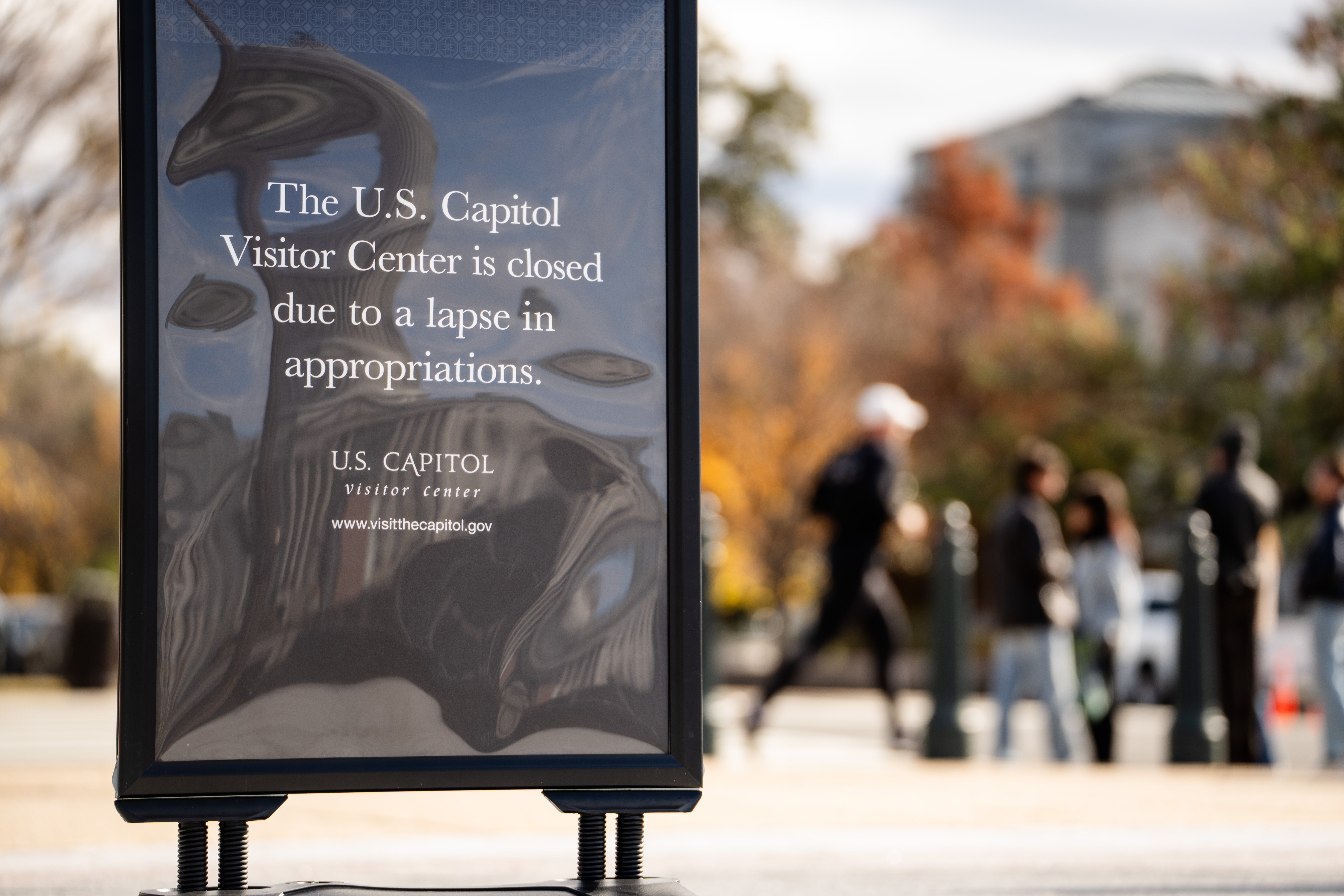

The recent 43-day government shutdown—the longest in U.S. history—resulted not from an impasse over a piece of legislation but from the deepening political divide in the country that has left politicians and voters alike spoiling for a fight, some experts say.
Political moderates, once the largest ideological group, have diminished in number for decades, Gallup found. Meanwhile, the number of Americans describing themselves as “very conservative” and “very liberal” has increased.
Prompted by Frustration, not Legislation
This shutdown differed from others in that the partisan standoff appeared imminent despite the initial lack of a particular legislative focus.

“There’s widespread anger among Democrats about everything associated with this administration,” Wilson said. “There are a lot of people on the Democratic side that wanted to do something dramatic.”
Commenting on the impending end of the shutdown, House Minority Leader Hakeem Jeffries (D-N.Y.) said on Nov. 10 that extending the health care subsidies “was the main reason for the shutdown in the first place.”
He then blamed several economic issues, including the cost of housing, electricity, child care, and groceries, along with health care, on the current administration and described them as the impetus for the shutdown.
“America is too expensive, and far too many people are struggling to live paycheck to paycheck,” Jeffries told reporters. “That’s why Democrats have been waging this fight.”
Sen. Bernie Sanders (I-Vt.), who caucuses with Democrats, criticized a Senate vote on Nov. 9 that cleared the way for the shutdown to end.
Higher Pain Threshold
Both parties appeared more willing than in the past to allow the shutdown to drag on regardless of its impact.“Shutting down the government seemed to have no political effect for about the first four weeks of the shutdown,” Henry Olsen, senior fellow with the Ethics and Public Policy Center, told The Epoch Times.
“That’s unusual, and I think that’s attributable to the polarization,” Olsen added.
Even as the shutdown droned on, both parties appeared to believe the public would blame the other.
“When both sides think they’re winning, there’s no incentive to stop,” Olsen said.
Wilson believes flight cancellations were the straw that eventually broke the camel’s back. “That affects the political class,” Wilson said. “We’re talking about members of Congress themselves being affected by flight delays and cancellations.”
Tactics Are Evolving
As government shutdowns have become longer and more common, administrations have become more adept at responding to them.Amid the 2013 shutdown, during the Obama administration, all national parks were closed. Later polling by Hart Research for the Center for American Progress showed that 52 percent of Americans viewed the closure as a big problem, and 57 percent blamed Congress rather than the president.
During the recent shutdown, the Trump administration kept most parks at least partly open with a reduced staff, which may have influenced public opinion as well.
“The Trump administration tried to keep it from affecting most people for the first couple of weeks,” Olsen said. In fact, Trump’s approval rating increased marginally during that time, according to RealClear Politics.
Wilson noted that the administration arranged for active duty service members to be paid in mid-October, a move that would likely please Republican constituents.
Both parties proposed bills that would have paid civil service employees during the shutdown, but none passed. The employees’ union eventually called on Democrats to end the shutdown.
“This was a step beyond what we have seen in the past,” Wilson said of the administration’s shutdown management strategy.
What’s Next
While the sharp political divide persists in the country, shutdowns could grow longer and costlier, Nicholas Higgins, chair of the political science department at North Greenville University, told The Epoch Times.“It is becoming the new normal,” Higgins said.
“The danger is that this becomes a routine tool that parties use to try to advance their agendas,” Wilson said. “It speaks to broader issues of congressional dysfunction and problems with the budget process in the United States.”
Wilson believes procedural changes are needed to mitigate the “choke points” that allow for shutdowns, such as the debt ceiling and the end-of-year deadline for all spending bills.
“In a highly polarized age, both sides have less inclination to compromise, and both sides will see less harm to their position,” Olsen said. “When 90 percent of America is pretty much dug in, there’s not a whole lot of room to move.”